Home Blog Page 45

The incredible journey of Ocon and Gasly: a shocking story no one could have predicted

0

The 2024 Brazilian Grand Prix gave Alpine F1 Team fans an unexpected but memorable moment: Esteban Ocon and Pierre Gasly found themselves side by side on the podium.

For the first time, the two Alpine F1 Team drivers, childhood friends turned rivals and then teammates, managed to join forces under the rain at Interlagos to secure second and third place. A real boost for Alpine, which has struggled to keep pace this season.

Read more:

Ocon and Gasly, childhood friends

The type of relationship that exists between Ocon and Gasly is quite rare in Formula 1 history. The two drivers grew up in the same region in the north of France: Normandy. Used to racing together in karting when they were young, you could even say they were good friends. Unfortunately, their on-track rivalry eventually took over, and the two drifted apart. It’s already crazy to think that a few years later, they’d both end up in Formula 1, but then also in the same team — and even for a brand created in Normandy! I think it’s the wildest story ever seen in F1. But here we are, and despite the high expectations, the dynamic duo didn’t work out, and Alpine F1 Team is one of the weaker teams on the grid this season.

A rocky road for Alpine F1 Team in 2024

Alpine has had a challenging 2024 season. Despite constant efforts, the F1 car often lagged behind the top teams. That makes Ocon and Gasly’s podium in Brazil even more precious, allowing the French team to climb up in the constructors’ standings. Thanks to a very daring strategy in wet track conditions, the two drivers seized this opportunity to bring home a result the team desperately needed. Beyond the points gained, this podium sends a strong message to the paddocks: Alpine is still in the race, and its two drivers can shine even under tough circumstances. This race showcased the talents of these two French drivers because, while half the other drivers made mistakes, they kept it clean! Kudos to them.

The colossal challenge awaiting Bortoleto at Stake F1 Team to follow in the footsteps of Ayrton Senna

Nostalgic reunion under the Brazilian rain

For Ocon and Gasly, this race wasn’t just another performance in their respective careers; it revived childhood memories. The two drivers grew up together in Normandy, where they’d spend hours racing in karting, often in the rain. Despite the tensions that developed over time, this podium seems to have rekindled an old bond. “Remember our rainy races in Anneville?” Ocon asked in a post-race interview, smiling. Gasly replied with a touch of nostalgia, even recalling races in the snow, proving that their passion always pushed them beyond limits, even under the worst weather conditions. As a fan of both drivers, it was truly heartwarming to see them celebrate their podium together. It’s almost as beautiful as their respective wins in Hungary and Italy.
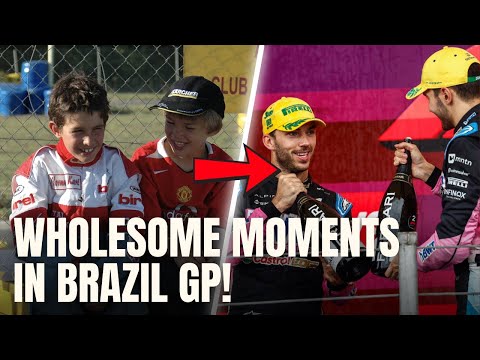
This article explores how Esteban Ocon and Pierre Gasly’s podium in Brazil marks a new chapter in their relationship, while also giving Alpine a reason to rejoice despite a tough season. This moment of camaraderie might just stay etched in their memories as drivers and in the memories of F1 fans.

The colossal challenge awaiting Bortoleto at Stake F1 Team to follow in the footsteps of Ayrton Senna

0

The Sauber Stake F1 Team, on the verge of its fusion with Audi, has just announced its second driver for the 2025 season: Gabriel Bortoleto, the current leader of the F2 championship.

The 20-year-old Brazilian will make his Formula 1 debut alongside Nico Hülkenberg, seizing this coveted opportunity in a team that’s about to undergo a major transformation. But a colossal challenge awaits him if he wants to follow in the footsteps of Brazil’s F1 giants.

Read more:

Who is Gabriel Bortoleto?

Bortoleto’s journey in junior categories has been marked by a quick ascent and undeniable talent. Crowned FIA F3 champion in his rookie season, he continued to impress in F2, where his consistency and point-scoring ability were standout qualities. With two victories and several podium finishes, Bortoleto quickly caught the eye of Sauber’s talent scouts, despite his initial development contract with McLaren. In a show of sportsmanship, McLaren’s team principal, Andrea Stella, supported the decision to release Bortoleto, allowing him to seize this unique chance in F1. Now, he will need to prove that he can shine in Formula 1, following in the footsteps of Brazil’s legendary figures like Ayrton Senna, but if we look at Sauber’s 2024 season, it’s an impossible mission

A new dynamic with Hülkenberg as teammate

Bortoleto’s arrival aligns with the recent departure of Valtteri Bottas and Zhou Guanxu, highlighting Sauber’s intent to rejuvenate the team. Partnering with Nico Hülkenberg, the duo brings an ideal blend of youth and experience. Hülkenberg, an F1 veteran, brings a wealth of race knowledge, while Bortoleto represents the new generation of drivers. Mattia Binotto, head of operations at Sauber Motorsport, sees this partnership as instrumental in positioning the team among the top contenders in the paddock in the coming years. “Gabriel has shown he has everything it takes to be a winning driver,” Binotto stated. “His addition is a strategic asset as we step into a new era under the Audi banner.” This long-term vision, supported by young talents like Bortoleto, could be precisely what helps Audi reshape its image and influence within Formula 1.

Audi’s strategy: investing in youth for long-term success

Bortoleto’s signing fits perfectly with Audi’s strategy of integrating young talent into its future F1 team, reinforcing its commitment to an ambitious sporting project. Gernot Doeliner, chairman of Sauber Motorsport, called this signing a “milestone” for the team, one aimed at refreshing its image and ensuring competitiveness for the long haul. By bringing Bortoleto on board, Audi is making a clear statement about its intent to compete with F1’s elite, building on promising talent to achieve it.

F1 cockpit can reach up to 120°F but that’s practically ice-cold compared to the rest of the car

This article explores Gabriel Bortoleto’s rise and his integration into Sauber/Audi, a strategic move for the team’s F1 future. The partnership with Hülkenberg, Audi’s commitment, and the young driver’s debut offer a glimpse into what could be the start of a new era for the Swiss team in Formula 1.

F1 cockpit can reach up to 120°F but that’s practically ice-cold compared to the rest of the car

0

Formula 1 drivers must withstand temperatures that can reach up to 120°F in their cockpit. But that’s nothing compared to the rest of the F1 car. This is without a doubt the most extreme sport in the world

What about the temperatures reached when the F1 car is on the track? If you’ve ever wondered just how hot an F1 car gets, you’re in the right place. Let’s dive into the heat of a Grand Prix.

Read more:

How hot are an F1 car’s tires?

The tires on an F1 car are pretty unique. With a specific structure and mix of materials, they let the car grip the track even under huge physical forces. Nowadays, only one tire manufacturer supplies all the teams: the Italian Pirelli. There are several types of tires, from the softest, which gives top performance but wears out quickly in few attack laps, to the hardest, which lasts longer but doesn’t grip as much. To work properly and get that “chewing gum” texture on the track, these tires need to reach a specific temperature based on their type. For soft tires, that ideal heat is around 230°F. Beyond that, the tire risks overheating and losing grip. But if it’s not hot enough, it can slip too, as the rubber won’t be soft enough to cling to the asphalt. Drivers and engineers constantly have to keep an eye on these temperatures.

The temperature of an F1 engine

Compared to the engine and exhaust, the tires are like ice cubes. When running full power, a Formula 1 engine churns out over 1,000 hp, which means a ton of heat. During a race, an F1 engine can hit up to 1,500°F. But no worries, the engine stays cool thanks to special cooling systems and the sheer speed of the car itself. Without that airflow, it wouldn’t last long. Next time you watch a qualifying session, look for the mechanics who hook up blowers to the car’s air intakes! Even hotter than the engine, though, is the exhaust. The exhaust lets out gases so hot they can reach 1,650°F. Definitely not a place to put your hand.

Did you find the brazilian grand prix incredible? Then you haven’t heard about the craziest race in history, with only 3 cars finishing

How hot do the brakes get?

If you’re wondering what part of an F1 car gets the hottest, it’s definitely the brake system. The brakes let a car weighing hundreds of kilos go from 205 mph to 60 mph in just a few feet. The temperature goes up and down with each braking and each straight line. After a big braking zone-like the first turn at Bahrain, for example-the brakes can easily hit 2,150°F! Thankfully, air scoops channel airflow directly onto the brake discs to cool them down. Sometimes, they get so hot that they glow like molten lava.


Glowing brakes in F1

This article explores the different temperatures found inside a Formula 1 car, from the cockpit to the brakes, along with key elements like the engine and tires and how these parts kept cool.

Did you find the brazilian grand prix incredible? Then you haven’t heard about the craziest race in history, with only 3 cars finishing

0

Chaos in the Casino: The unforgettable 1996 Monaco Grand Prix.

On a damp May afternoon in 1996, Formula One was set to witness one of its most phenomenal and expensive races during the Monaco Grand Prix. Known for its glitz, glamour, and unforgiving street circuit, Monaco’s race that year unfolded into a saga of dramatic retirements and racing chaos, making it a historic event in the annals of Formula One.

You can also:

Pre-race drama sets the tone at Monaco Grand Prix 1996

The race day began under uncertain skies, with a heavy downpour leading to a 15-minute acclimatisation session to allow drivers to adjust to the slippery track. The drama started early when Mika Hakkinen lost control of his McLaren at Tabac corner, crashing into the wall and severely damaging his car. He wasn’t the only driver in trouble even before the race began, as Andrea Montermini crashed his Forti Ford during the warm-up lap, eliminating him from the race due to the team’s lack of a spare car.

What happens when a qualifying session is canceled in Formula 1

A chaotic start

As the race started, Michael Schumacher from pole position lost his lead to Damon Hill due to excessive wheelspin. The first corner at Sainte Devote was a hotspot for collisions, with two Minardi drivers, Giancarlo Fisichella and Pedro Lamy, crashing into each other, and Jos Verstappen finding the wall. This set the tone for the race, with six drivers eliminated before even one complete lap.

Unrelenting incidents

The iconic hairpin saw more action as the cameras caught Michael Schumacher in a Ferrari crawling down the escape road with severe damage—a shock for fans and a significant moment called out by commentator Murray Walker. By lap three, retirements included high-profile names like Ukyo Katayama and Ricardo Rosset due to mechanical failures and crashes.

Mid-race mayhem

The middle segments of the race were no less dramatic. Pedro Diniz retired with a transmission issue, and Gerhard Berger’s Benetton suffered a gearbox sensor failure. As the race progressed, overtaking was minimal due to the tight nature of the circuit, but collisions continued to alter the standings, with Eddie Irvine and Heinz-Harald Frentzen making contact at Turn 1.

A stunning conclusion

The final laps of the race were just as tumultuous. Damon Hill, leading comfortably, retired due to an engine failure. Jean Alesi briefly took the lead before he too retired with a mechanical issue. Oliver Panis, in a Ligier, found himself in a surprising lead—a position he maintained until the end, marking his first and only F1 victory. As the race concluded, only three drivers crossed the finish line, with Panis leading David Coulthard and Johnny Herbert. The 1996 Monaco Grand Prix remains one of the most eventful races in F1 history, with its high number of retirements and dramatic twists, embodying the unpredictable and thrilling nature of motorsport at one of its most iconic venues.

Reflections on a race of survival

Twenty years on, David Coulthard’s remark that “catching is one thing in Monaco, overtaking is another” encapsulates the challenge of the circuit. The 1996 Monaco Grand Prix wasn’t just about the few overtakes but the relentless drama and chaos that tested the endurance and skill of every driver on the track.

At only 19 years old Ollie Bearman already holds a Formula 1 record after just 2 races and this is just the beginning

This grand prix, forever etched in the memories of F1 enthusiasts, highlights not only the technical challenges of Formula One but also the sheer unpredictability that can lead to underdog victories and unforgettable races.

Daniel Ricciardo finds a new vibrant passion after F1 and it’s not what you think

0

Not too long ago, Daniel Ricciardo still thought he’d be on the starting grid at the Brazilian Grand Prix, in the role of an F1 driver.

But following his anticipated replacement by Liam Lawson at Visa Cash App RB, the Australian took a completely different direction, spending his weekend in Buffalo, USA. A totally different experience for someone with eight Grand Prix victories, but he seems to have found a way to enjoy his new freedom.

Read more:

A tough start, but a smile regained

At Racing Bulls (VCARB) this season, Ricciardo often struggled against his teammate, Yuki Tsunoda. More generally, it’s been since his return in 2023 that he’s had trouble making his F1 car work. The statistics speak for themselves: Tsunoda has doubled the Australian’s points tally, dominating both in qualifying and in the race. Meanwhile, Red Bull Racing was questioning its options, given Sergio Perez’s inconsistent performances, and ultimately decided to test Liam Lawson, a young New Zealander. A decision that must have been hard for Ricciardo to swallow, but he quickly bounced back.

A full weekend supporting the Buffalo Bills

Instead of the hustle and bustle of the Formula 1 paddocks, it was the Buffalo Bills stadium that welcomed Ricciardo this weekend. Surrounded by friends, he attended the Bills’ game against the Miami Dolphins, posting photos of himself sporting the local team’s colors. Luckily, his support proved useful, as the Bills clinched victory! Ricciardo even received a little shout-out from the team on social media, inviting him to come back anytime. A real treat for the former Australian driver, who has never hidden his love for American culture. Honestly, it’s nice to see him happy like this, despite the challenges he’s faced these last two seasons. His return to Formula 1 didn’t work out, but that doesn’t take away from what a fantastic person he is!

Enjoying a very different daily life and a golf cart

Clearly in great shape, Daniel Ricciardo had a blast, including getting behind the wheel… of a golf cart! Yes, you can’t change a good old habit; keeping a driver away from the wheel is a tough task. A scene far removed from the ultra-powerful 1000hp F1 cars he’s used to, but it shows how the Australian has managed to see the bright side of his retirement. Smiles and shared moments filled this weekend in Buffalo, showcasing a relaxed Ricciardo ready to embrace new experiences. Beyond his passion for sports, Ricciardo also ventured into winemaking, with a vineyard called DR3, for Daniel Ricciardo, with the 3 being the number he carried on track.

The unusual penalty given to Hulkenberg at the Brazilian GP hadn’t been seen in F1 for 17 years

This article explores how Daniel Ricciardo managed to bounce back after leaving F1, enjoying a weekend away from the paddocks. From reunions with friends to showing support for the Buffalo Bills, discover how the Australian is gradually distancing himself from the pressures of F1 to better refocus.

Featured image: Red Bull Content pool

The unusual penalty given to Hulkenberg at the Brazilian GP hadn’t been seen in F1 for 17 years

0

At the 2024 Brazilian Grand Prix, Nico Hulkenberg saw his race take a dramatic turn due to an incident as rare as it was unexpected.

Once again, Interlagos reminded us why its first corner is so feared, trapping the Haas driver in an improbable situation. Let’s dive into the details of this spectacular race, the rules involved, and how this type of disqualification remains unique in modern Formula 1 history.

Read more:

The incident at the first corner

Interlagos and its famous first corner have never been kind to Hulkenberg. This very corner had already cost him a potential victory in 2012 after a collision with Lewis Hamilton. This time, the German driver found himself stuck in the runoff area, his car perched on an edge with the rear wheels lifted off the ground. It was a surreal sight for the paddock, as the flat floor of the Haas scraped the ground with no traction possible. Already rare enough to mention, but this was just the beginning. The track marshals, seeing the Haas driver in distress, physically assisted in freeing the car by pushing it backward so he could get unstuck. This is where the troubles began, as in F1, receiving external assistance to get back on track is a serious infraction, leading to strict penalties regardless of the assistance.

Marshal intervention that causes disqualification

After the marshals managed to free the Haas, Hulkenberg rejoined the track, unaware that this would cost him dearly. While this kind of assistance is common to clear cars in distress, F1 enforces a strict rule: a driver cannot rejoin the race after external intervention. The penalty came swiftly, with Hulkenberg shown the black flag, signaling immediate disqualification. This black flag, as rare as it is feared, has only appeared a handful of times in recent F1 history. The last instance was at the Canadian Grand Prix in 2007, when Felipe Massa and Giancarlo Fisichella were also disqualified for ignoring a red light at the pit exit. For Hulkenberg, this was a big shock, especially with the enthusiastic reaction of the marshals, who, ironically, were celebrating their intervention.

The rules and their unforgiving consequences

In Formula 1, every infraction is subject to immediate sanctions, and Hulkenberg’s case once again showed how strictly regulations are enforced. In this instance, the external assistance clearly worked against him, even if the scene itself was unusual. The Haas driver expressed his frustration with the situation, saying that he was more focused on finishing the race than on any potential consequences. This unusual episode reminds fans and teams that F1 races can turn in an instant, especially on a challenging circuit like Interlagos. In the future, drivers will likely keep this incident in mind, especially when it comes to decisions about runoff areas and on-track penalties. Could he have gotten unstuck without the marshals’ help? Honestly, I don’t think so.

We finally know Max Verstappen’s secret technique for being unstoppable in rainy races

This article explores Nico Hulkenberg’s unexpected disqualification at the 2024 Brazilian Grand Prix due to external assistance, recalling past experiences at Interlagos and highlighting the unforgiving nature of F1 regulations. The incident showcases how even minor infractions in high-stakes races lead to severe penalties, adding yet another layer to the sport’s complex rulebook.

Featured image: Haas F1 Team

We finally know Max Verstappen’s secret technique for being unstoppable in rainy races

0

The 2024 Brazilian Grand Prix was a true spectacle, with Max Verstappen dazzling everyone by clinching victory after starting from 17th on the grid.

A performance that certainly didn’t go unnoticed, as it reminds fans why Verstappen is often considered the best driver in wet conditions. Let’s dive into what makes him the undisputed master of rainy races.

Read more:

Verstappen: a rain master

Max Verstappen truly put on a masterclass in this race in São Paulo, winning from a starting position far from P1. This is quite rare in F1; only five drivers in Formula 1 history have managed to win a race from 17th place or lower. This performance brings to mind his achievement in 2016 when he finished on the podium after starting from 16th place. Back then, he already showed promising skills in the rain. Looking back, Verstappen realizes that these past experiences prepared him for today’s challenges. In his own words: “This one is definitely much more crucial than back then,” highlighting that he had to approach this race with a more thoughtful strategy, given the stakes in the championship. Just a reminder, Lando Norris still has a chance to win, even though his odds are shrinking with each Grand Prix.

Max Verstappen wins the 2024 Brazilian GP

The importance of rain experience

One factor that plays in Verstappen’s favor in the rain is his karting experience, where he often had to deal with wet conditions. “The guys who were good in the wet in karting are also good in Formula 1,” he explains. This is especially true for drivers who grew up in rainy countries, like the British, for example. This early foundation allowed him to learn how to handle cars in challenging conditions. For Verstappen, training in the rain enabled him to develop a confidence and ease on the track that few drivers can match. Paired with the RB20, which remains a solid F1 car, he’s able to feel perfectly comfortable. This translates into an ability to anticipate challenges and quickly react to changing track conditions, adjusting his trajectory as needed.

Why did Lance Stroll end up in the gravel trap on the formation lap of the Brazilian GP

Flawless strategy and tyre management

Verstappen’s victory doesn’t rest solely on his driving skills but also on his ability to adapt to delicate situations. During the race, he skillfully took advantage of circumstances, especially during safety car periods and yellow flags, which can change the course of a race in an instant, as we saw with the two Alpine F1 Team drivers. He also showed strategic finesse by making crucial decisions during pit stops, ensuring he had the right tires to maximize grip on the ultra-slippery track. Tire management is essential in F1, especially in the rain, where every second counts. This skill in optimizing his car’s performance under changing conditions was key to his victory, and perhaps even delivered the fatal blow to his rival Lando Norris.

This article explores why Max Verstappen’s is so fast in wet conditions during the 2024 Brazilian Grand Prix. We see how his past experiences shaped his approach to racing and how his karting background gave him an edge over the competition.

Images: Red Bull Content pool

Why did Lance Stroll end up in the gravel trap on the formation lap of the Brazilian GP

0

Terrible weekend for Lance Stroll at the São Paulo Grand Prix, where his race ended before it even began, right on the formation lap. But for what reason?

Stuck in the gravel, the Aston Martin driver reported a potential brake issue, highlighting malfunctions that affected both him and his teammate, Fernando Alonso during the 2024 Brazilian Grand Prix in Sao Paulo.

Read more:

Stroll off track on the formation lap

Right from the start, during the warm-up lap, Stroll’s Grand Prix took a surprising turn. Starting from a respectable 9th on the grid, he lost control of his Aston Martin at Turn 4, ending up in the gravel trap. In an attempt to get back on track, his AMR24 got stuck, forcing him to retire even before the race began. The Brazilian crowd, visibly less than favorable toward the Canadian, used this unexpected exit to cheer for local reserve driver Felipe Drugovich. Stroll expressed doubts about his brakes: “As soon as I hit the brakes, rear locking made me lose all control.” It’s true that this kind of incident is rare in Formula 1, and with the wet conditions, even a minor slip is irrecoverable. This unexpected failure sparked speculation about recurring brake issues at Aston Martin. Honestly, he could have had a brake problem and gone off track. But the way he gets stuck in the gravel doesn’t come from a technical failure…

A challenging weekend for Alonso too

As for Fernando Alonso, things weren’t much better. Although he did start the race, the Spaniard also reported braking issues with his F1 car. According to him, adjustments were made to his car after a qualifying accident, but these changes didn’t yield the expected results in the race. “I felt unstable brake balance, especially during restarts, with the balance shifting randomly toward the rear,” explained Alonso. Not ideal when looking for maximum stability in the rain. This issue contributed to a performance well below expectations, finishing second-to-last of the remaining drivers on track. And we know rain is the ultimate test for skilled drivers-and with his 401 race starts, Alonso is undoubtedly among the best despite the difficult race he endured because of the bumpy track.

Aston Martin under pressure to solve the issue

Team principal Mike Krack confirmed investigations are underway to understand the cause of the incident. The team’s difficult season appears to drag on, and this brake failure heightens concerns about the AMR24’s technical performance. “We need to look closely at the situation because this incident was unexpected,” he stated. With three races left in the season, Aston Martin is under pressure to address these technical issues and provide their drivers with a more reliable car heading into a stronger 2025 season. I hope they can turn things around because the start of their 2022 season was promising.

$30 million jackpot for Alpine at the São Paulo GP thanks to Ocon’s and Gasly’s incredible P2 and P3 finishes

This article explores the unexpected brake issues that led to Lance Stroll’s premature exit from the Brazilian GP, how Fernando Alonso also faced braking difficulties, and Aston Martin’s efforts to address these recurring problems before the season’s end.

Featured image: Aston Martin F1 Team

$30 million jackpot for Alpine at the São Paulo GP thanks to Ocon’s and Gasly’s incredible P2 and P3 finishes

0

After the torrential rain in Sao Paulo, it’s sunny skies for Alpine F1 Team as they secure a double podium at the 2024 Brazilian Grand Prix!

This race will be memorable for the team and the two French drivers, with Ocon finishing P2 and Gasly P3. A real breath of fresh air for Alpine, this podium could literally bring them big rewards—let’s see why.

Read more:

A strategic stroke of genius in challenging conditions

The Interlagos race featured capricious weather conditions, pushing teams to play the strategy card. Ocon and Gasly took the risk of delaying their pit stops, hoping for a safety car to be triggered—a bet that turned out to be more than rewarding. This bold choice allowed both drivers to maintain their track position as the rain intensified, while others dove into the pits for fresh intermediates. Even better than a safety car, it was a red flag that allowed them to change their tires without losing a second. It seems luck finally smiled on Alpine, though we must highlight the brilliance of their risk-taking. This impeccable timing propelled both French drivers to the front during the restart, resulting in a double podium finish. P2 for Esteban Ocon, P3 for Pierre Gasly.

Pierre Gasly P3 at the 2024 Brazilian GP

A breath of fresh air for Alpine F1 Team

Beyond the on-track feat, this podium represents a true breath of oxygen for Alpine F1 Team, which is experiencing one of its worst seasons in Formula 1. Oliver Oakes, the newly arrived sporting director, praised this performance, stressing the impact of this victory on the motivation of the teams in Enstone and Viry Chatillon. “Since I arrived, l’ve seen a real effort in development, and today’s result is the fruit of hard work,” he stated. This podium helps Alpine boost its morale after months of doubts, but also elevates them from 9th to 6th place in the constructors’ standings. If they can maintain this position over the next three Grands Prix, Alpine could snag an additional cash prize of $30 million compared to finishing 9th! To remind, each team receives a cash prize at the end of the season. The higher they rank, the bigger it is.

From friends to rivals to teammates: the story of Gasly and Ocon.

If the collaboration between Gasly and Ocon has sometimes been tense, this double podium marks an extremely symbolic milestone in their strong relationship. Rivals since their early karting days in France, the two drivers have managed to work hand in hand to help Alpine out of the pit. “We can be proud of how we’ve lifted the team up,” Gasly said after the race. This result showcases the importance of synergy between teammates, even for such strong personalities. For Ocon and Gasly, this podium reflects a collective effort that will positively impact team morale for the remainder of the season. Yesterday, we witnessed a beautiful sight with both of them on the podium; I hope you got to enjoy it. It’s great to see them celebrating like this!

EPIC win for Verstappen at the Brazilian Grand Prix amid the most chaotic race of 2024 F1 season

This article explores Alpine’s surprise double podium at the Brazilian GP, a strategic move that turned the tide for their season, and how teamwork between Ocon and Gasly played a pivotal role in achieving this historic result.

Images: Alpine F1 Team Newsletter

EPIC win for Verstappen at the Brazilian Grand Prix amid the most chaotic race of 2024 F1 season

0

This São Paulo Grand Prix will definitely be remembered for Max Verstappen’s spectacular comeback, starting from 17th position to finish on top!

With rain playing havoc, multiple safety cars, and numerous race incidents, this  2024 Brazilian Grand Prix was packed with excitement. Let’s take a closer look at why this race was so thrilling.

Read more:

Verstappen: from P17 to P1 – Simply stunning

From the start, Max Verstappen made it clear he wasn’t about to stay at the back. Starting 17th on the grid, he climbed through the pack as early as Turn 3, showing absolute confidence in his F1 car-even in the wet. As expected, the Red Bull driver was fierce in the rain, pulling off daring overtakes lap after lap, especially in the first corner braking zones, where his moves were masterfully precise. His pass on Esteban Ocon, the race leader at the safety car restart, sealed the deal. He then widened his lead as conditions worsened, once again proving his ability to dominate even in the toughest scenarios. The paddock was full of praise for this performance, which underscores his determination to secure a fourth World Championship title. Honestly it’s been a while since we’ve seen him celebrate a win like that-il’s great to see!

Race incidents: a barrage of safety cars and yellow flags

The Grand Prix was no easy task for race stewards, who managed more incidents than usual. On the warm-up lap, Lance Stroll went off-track, prompting a yellow flag and forcing the grid to abort the start. Shortly after, Nico Hülkenberg’s engine gave out, triggering a Virtual Safety Car. This timing allowed several drivers to change tires, unexpectedly shaking up the grid—-particularly benefiting Alpine F1 Team, who found themselves in P1 and P3. Each new interruption led drivers to rethink strategies, looking for an edge. The flurry of yellow flags and safety cars brought a chaotic pace to the race, adding immense pressure to all competitors.

What happens when a qualifying session is canceled in Formula 1

Incredible double podium for Alpine F1 Team

While Verstappen made headlines, other drivers also had intense races. Starting from pole, Lando Norris struggled early and quickly lost the lead to George Russell in Turn 1, ultimately finishing sixth-far below his initial expectations. This was particularly surprising given that several lower-ranked starters finished ahead. Alpine’s Esteban Ocon and Pierre Gasly dazzled, securing a double podium, a historic achievement for the French team that boosted them in the Constructors’ standings from 9th to 6th. Russell, despite a stellar early performance, had to settle for fourth after being overtaken in the closing laps. With overtakes, weather challenges, and penalties, this Brazilian GP reshuffled the deck-definitely one not to miss!

This article explores Verstappen’s stunning victory from 17th position, the numerous safety car interruptions, and the surprising performance of Alpine drivers who secured podium finishes in this rain-soaked 2024 Brazilian Grand Prix.

Featured image: Red Bull Content pool