

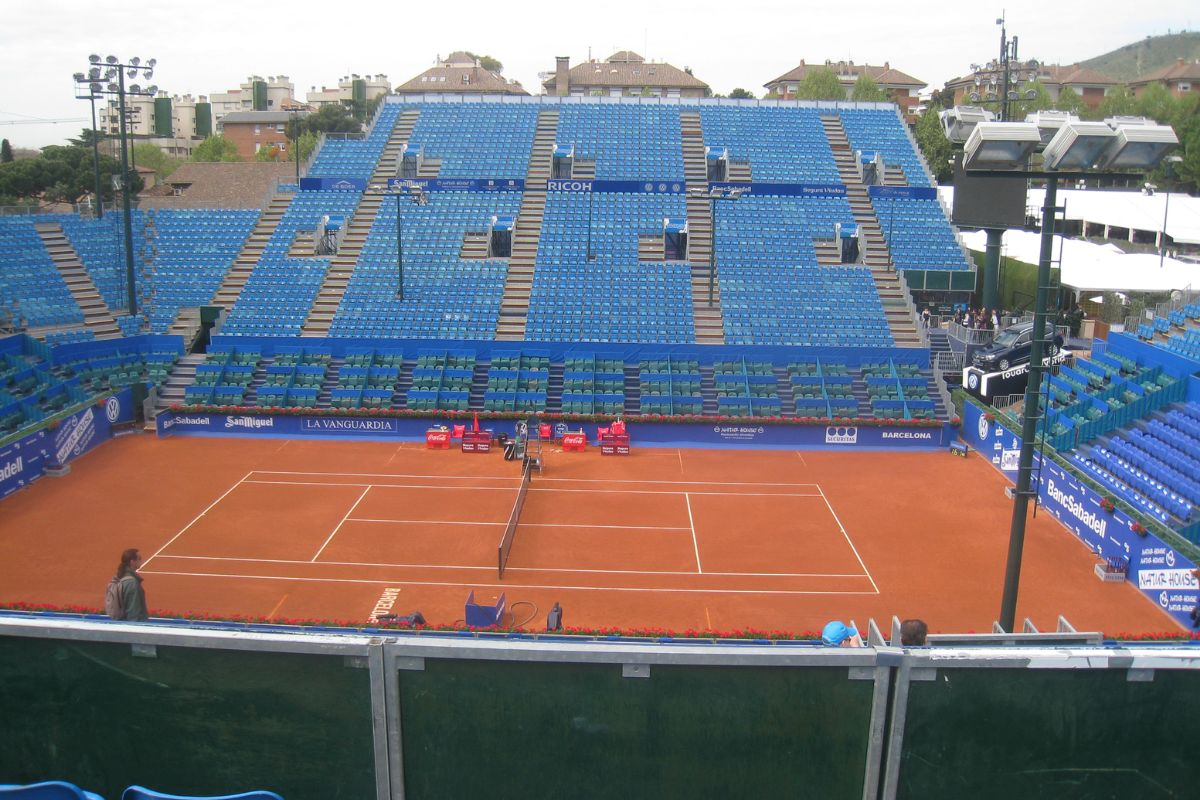
Carlos Alcaraz did not take the court for his scheduled session on Wednesday at the Barcelona Open, with his practice canceled as the tournament moved deeper into the week.
The change to his routine was noticed quickly on site because his training blocks normally draw large crowds and a dense media presence.
No official medical bulletin was released at the time of the cancellation, and tournaments commonly treat practice plans as flexible. Still, any interruption around an elite player during the European clay swing gets read like a signal, because margins are thin and the calendar is packed with high-stakes stops leading into Roland-Garros.
Related articles:
- ATP Tennis: Richard Gasquet wins tournament 22 years after turning pro
- Is the US Open the loudest Grand Slam on the ATP circuit?
Barcelona Open schedule shift puts Alcaraz under immediate spotlight
On a typical Barcelona week, the rhythm is predictable, players hit for 45 to 75 minutes, do short sprint work, then disappear into the gym or physio room. When Alcaraz cancels a session, the vacuum creates instant speculation because fans and broadcasters plan around his court time. The tournament’s practice courts, usually a controlled environment, turn into a rumor mill within minutes.
From a reporting perspective, the key point is that practice cancellations are not automatically injuries. Teams cancel for tactical reasons, for recovery, or because a player’s match schedule shifts after weather delays. In Barcelona, where clay can play heavier when humidity rises, a staff might decide that additional hitting is unnecessary, or even counterproductive, if the player already logged long minutes the day before.
Still, the optics matter. A player ranked at the top end of the draw is expected to show normal routines, and any deviation becomes part of the story. It is the same dynamic seen in other sports, a star skipping a shootaround in the NBA gets discussed even when it is routine maintenance. In tennis, the lack of a mandatory injury report amplifies that uncertainty.
One member of the Spanish media contingent, who asked not to be named because he was not authorized to speak for the team, framed it in practical terms: “On clay, you can feel great in the morning and tight by lunch. A canceled practice can be nothing, or it can be a warning sign. The problem is you never know which one until the next match.” That ambiguity is why Wednesday’s change drew attention.

Inside Alcaraz’s team routines on clay: recovery, physio, and minute-by-minute planning
Elite clay-court preparation is less about endless ball striking and more about managing load. A standard day for a top player can include a warm-up, a hitting session, gym work, and treatment, easily adding up to three to five hours of physical stress. For Alcaraz, whose game is built on explosive acceleration and heavy topspin, the legs and lower back are constant areas of monitoring.
Coaches often use internal metrics, heart-rate variability, perceived exertion scores, and simple movement screens, to decide whether a practice should proceed. A canceled session can mean the staff saw something small, a slight change in sprint mechanics, or a spike in fatigue markers, and chose to protect the next match. The clay season is a chain of events, and Barcelona is rarely treated as an isolated week.
A veteran ATP fitness coach, “Mark,” described the decision-making in blunt terms: “You don’t get bonus points for a perfect practice schedule. If the player is at a 7/10 fatigue and you push it to 9, you pay later. Clay makes that worse because sliding forces stabilizers to work overtime.” He added that teams sometimes replace on-court work with bike intervals and mobility sessions to keep the engine sharp without pounding joints.
There is also a tactical angle. If a player expects a certain opponent, the team may prefer video work and short, specific drills rather than a full practice set. That can look like a cancellation to outsiders, even if the day is full behind the scenes. The nuance is easy to miss, and it is fair to say tennis does a poor job explaining it publicly, which leaves fans to fill in the blanks.
What a canceled practice can indicate: minor tightness, illness, or strategic rest
There are three common buckets for a last-minute practice cancellation: physical tightness, illness, or strategic rest. Tightness is the most frequent on clay because matches demand repeated stop-start bursts and deep knee flexion. A player can wake up with a stiff adductor or a sore ankle and decide the risk of aggravation is not worth another hour of sliding.
Illness is the quiet factor that teams rarely advertise. Travel, packed player areas, and variable spring weather can lead to colds or stomach issues. In those cases, the best move is isolation and hydration, not grinding through a session for optics. When a player is a major draw, the tournament may still keep details private unless a withdrawal becomes necessary.
Strategic rest is the most boring explanation, but often the correct one. If a player has already spent 2+ hours in a previous match, adding a full practice can be redundant. Tennis coaches will tell you that match play is the highest-quality training, and the goal becomes freshness. The modern tour is a workload puzzle, and even young athletes can burn out if they chase perfection every day.
There is a criticism worth making here: the sport’s communication culture invites overreaction. Fans are asked to buy tickets and subscriptions, but they get minimal clarity when routines change. A simple statement, “rest day” or “precautionary,” would calm the noise without revealing sensitive details. Until that becomes standard, every canceled session for a star like Alcaraz will trigger the same cycle.
Barcelona’s clay conditions and match load: why legs matter more than headlines
Clay in Barcelona is not Monte Carlo, and it is not Madrid. The sea-level air and often heavier moisture can slow the ball, extending rallies and increasing physical demand. Longer points mean more deceleration steps, more slides, and more recovery sprints. For a player whose identity is built on speed, the legs are the first place fatigue shows up, even when the arm feels fine.
A useful comparison is the way players talk about “dead legs” after a heavy clay match. The sensation is not just soreness, it is reduced reactivity, the half-step that turns a winner into a forced error. Coaches watch for that in warm-ups, and if it appears, they will cut court time immediately. A canceled practice can be a sign that the team is prioritizing that half-step for match day.
Data from recent ATP seasons shows that clay matches tend to run longer than hard-court matches, with more points per game and more breaks of serve. Even without exact numbers for a specific day in Barcelona, the pattern is consistent: clay increases physical load. If a player is aiming for a deep run, the staff will budget energy like a manager budgets innings in baseball.
This is where Barcelona becomes a tricky stop. It carries prestige and pressure, but it sits in a stretch where players often target multiple titles. The smart approach is not always the most popular one. Fans want to see a full practice, reporters want certainty, but the body does not care about narratives. If the team believes one skipped session protects two later matches, they will take that trade.
ATP tour context: recent precedents and what to watch in Alcaraz’s next match
The tour has plenty of precedents where a canceled practice meant nothing, and others where it foreshadowed a withdrawal. Rafael Nadal spent years managing his schedule with late decisions, sometimes practicing lightly or not at all, then playing at a high level. On the other side, players have skipped practice due to a minor issue that became a bigger limitation once match intensity arrived.
For Alcaraz, the next match is the real information point. Watch his first 20 minutes, especially movement on defense, how often he slides into the backhand corner, and whether he avoids open-stance forehands that load the hip. Also watch serve speed and second-serve kick, because players protecting a lower-body issue sometimes reduce leg drive unconsciously.
Another clue is the warm-up routine. If he spends extra time with bands, does more short sprints, or receives treatment right up to walk-on, it can indicate management rather than a clean bill of health. None of this guarantees a problem, but it is the kind of detail coaches and scouts track. Tennis is a sport where small physical constraints can reshape tactics quickly.
From the tournament’s perspective, the priority is whether the draw keeps its main attraction on court. From the player’s perspective, the priority is the season arc, not one Wednesday session. If Alcaraz plays freely in his next outing, the cancellation will be filed as routine load management. If he looks restricted, the conversation shifts to risk, scheduling, and how aggressively a young star should be pushed during the clay swing.
