Home Blog

Anisimova lights up Wimbledon: could this be the first American champion in nearly 3 decades?

The stars and stripes are back on Center Court — and Amanda Anisimova is leading the charge.

It’s been 29 years — yes, almost three full decades — since an American woman lifted the Wimbledon trophy. The last to do it? Venus Williams, way back in 2000. Since then, not even Serena — despite her dominance — managed to claim the crown after 2016. Now, out of the shadows, comes Amanda Anisimova. And suddenly, Wimbledon has red, white, and blue written all over it.

At 23 years old, Anisimova just pulled off the biggest shock of the tournament, knocking out world No. 1 Aryna Sabalenka in a thrilling 6-4, 4-6, 6-4 semifinal. The crowd on Centre Court? Electrified. The tennis world? On notice. And back home in the States? Hope is soaring.

You can also read:

“I can’t believe it. This is everything I’ve dreamed of.”

Anisimova, once called the future of American tennis, is finally living up to that billing — on the biggest stage of all. She didn’t just beat Sabalenka, she outplayed her. When the pressure spiked, Amanda got sharper. When the rallies stretched, she held her nerve. When it looked like Sabalenka might bully her into submission, she punched right back — clean, fearless, and focused.

And now, for the first time since Serena’s run in 2016, an American woman will stand on Centre Court on the final Saturday of Wimbledon.

America’s 29-year drought on the line

Let’s put this into perspective.

Since 2000, no American has held the Wimbledon women’s trophy. Not Serena after 2016. Not Sloane. Not Coco — not yet. We’ve had heartbreaks, near misses, and early exits. Wimbledon started to feel like foreign ground. Until now.

Anisimova’s run has reignited something.

You can feel it in the roar of the crowd, in the buzz on social media, in the headlines building back home. A calm, composed, big-hitting American is one match away from ending a drought that’s lasted longer than her entire adult life.

The weight of the moment, and the grace to carry it

And let’s not forget — Amanda isn’t new to big stages. At 17, she made the semifinals at Roland-Garros. Everyone predicted greatness. Then came personal tragedy, mental health struggles, and injury setbacks. For a time, she disappeared from the tour. Many wondered if she’d walk away entirely.

But here she is.

Not asking for sympathy. Not demanding attention. Just playing the kind of tennis that wins Grand Slams.

Swiatek or Bencic — history either way

On the other side of the net in the final will be either Iga Swiatek, world No. 2 and a clay-court queen finally cracking grass — or Belinda Bencic, a mother and Olympic gold medalist fighting for her first Slam title.

But whoever it is, they’re not the story right now.

The story is Amanda. The story is America. The story is Wimbledon.

And if she wins?

She won’t just lift a trophy. She’ll lift a nation that’s been waiting 29 long years to call its champion “ours” again.

Sources:

  • Wimbledon Media Center
  • USTA press communications
  • Match analysis via ESPN Wimbledon 2025
  • Historical Wimbledon stats from WTA archives


Tennis: just a clown or the best Italian in tennis for the past 20 years? This former world No. 9 retires today after one final masterpiece against Alcaraz

No fanfare, no final tour — just one last brawl on the sport’s grandest stage.

He didn’t lift the trophy. He didn’t even make it out of the first round. Yet on the first day of Wimbledon 2025, Fabio Fognini, 38 years old, ranked 138th in the world, played what might go down as one of the most unforgettable exits tennis has seen in a while.

Five sets. Four hours and thirty-five minutes. And across the net, none other than Carlos Alcaraz, back-to-back Wimbledon champ and top seed. Fognini didn’t win — the score read 7-5, 6-7(5), 7-5, 2-6, 6-1 in favor of the Spaniard — but he knew what it meant. In tears, behind the curtain of the locker room, he decided that was it.

You can also read:

Then end for Fognini: “It’s time to be honest with myself.”

He said those words the following day, standing in front of the press at the All England Club. “This is the best way to say goodbye,” he added, visibly emotional but not broken. Fognini knew the past few years had chipped away at his form and ranking. The injuries, the time off, the frustration of fighting a body that no longer answered the call — it had all built up.

And yet, against a player half his age and twice his pace, Fognini turned back the clock for one final showdown. He hit backhands that curved like poetry and forehands that slapped the grass like thunder. After that, he had no interest in another Challenger event or dragging himself through another rehab cycle. “I still love this game,” he said. “But after that match, I don’t want to look back.”

A career that was always a little different

Fognini was never built for predictability. He wasn’t Djokovic’s clinical consistency. He wasn’t Nadal’s warrior resolve. He wasn’t Federer’s ballet. What he was — was human. Brilliant. Frustrating. Impossible to ignore. In a sport of automaton forehands and robotic point-building, Fognini played with feeling. Some days it worked wonders. Other days it cost him dearly.

Still, his résumé stands proud:

  • 9 ATP singles titles, including the Monte-Carlo Masters in 2019 — the first Italian man to win a Masters 1000 title
  • Australian Open 2015 doubles champion with Simone Bolelli — the first all-Italian duo to win a Grand Slam in the Open Era
  • Peaked at World No. 9 in singles in July 2019
  • Quarterfinalist at Roland-Garros in 2011

That Monte-Carlo title? He beat Nadal on clay on the way to it. Only a handful of men can say that out loud.

Fabio Fognini at the Wimbledon tournament in 2013.

“I’ve been in this sport for 20 years. I don’t know anything else.”

It’s always the moments after the match that sting most. “I was dead after two sets,” Fognini admitted. “But the rhythm, the atmosphere, the crowd — they carried me.” The crowd, in return, gave back as much as he gave. Center Court roared with every drop shot, every sliding return, every fist-pump that hinted this wasn’t a player from the future — this was one from the past, giving his last breath to the game.

“Losing that way felt like a win,” he confessed. “The way Carlos said goodbye to the crowd, the way I left that court, the way I hugged my family… That was more than any trophy.”

No farewell tour. No victory lap. Just goodbye.

Fognini said his plan had been to hang up the racquet next year in Monte-Carlo, the tournament he cherishes most. “But life doesn’t always go by script,” he said. He decided instead to retire here, now, without another point to play.

He won’t play another tournament. That’s it.

And as odd as it may seem, there’s a lesson there. Sometimes the best way to leave is while you’re still burning. Not after you’ve faded, not after you’ve slipped away unnoticed. Fognini went out throwing punches — elegant, unpredictable, full-hearted ones.

An Italian original, a tennis one-off

What made Fabio different wasn’t just his tennis. It was the mood swings, the chaos, the unpredictability. It was yelling at himself mid-match. It was winning while looking like he was losing, and losing in a way only he could.

He wasn’t everyone’s cup of tea. That’s fine. This wasn’t a man trying to be liked. This was a man trying to feel something on a tennis court.

And after 20 years, the feeling never left.

Sources:

  • Wimbledon Official Media Center
  • ATP Tour archives
  • Post-match press conference with Fabio Fognini
  • Tennis Channel interview segments from July 8–9, 2025

This is America: buying a $400,000 supercar in cash, only to find out later it belonged to a world-famous icon

He buys a Lamborghini with $400,000 in cash—and finds out who used to own it…

Buying a supercar is already the stuff of dreams. Buying one with stacks of cash? That’s way less common. And finding out it used to belong to a global superstar? That takes it to another level. That’s exactly what happened to Steve Hamilton, the YouTuber behind The Hamilton Collection, when he went to pick up a Lamborghini Huracán STO from a dealership in Illinois. With bags full of cash, of course. But behind this wild American story is a car built for serious track enthusiasts—and a good excuse to take a closer look at one of Lamborghini’s most extreme machines.

Read more:

A Lamborghini Huracán like no other

In the world of supercars, the Huracán STO holds a special place. It’s the ultimate version of the Huracán, one that pushes the concept all the way to the track. STO stands for “Super Trofeo Omologata,” essentially a race car adapted for the road. Under the hood is the famous naturally aspirated 5.2-liter V10, pumping out 640 horsepower with a completely intoxicating roar. But what makes the STO even more unique is what Lamborghini took out. No all-wheel drive, no unnecessary gadgets—this is rear-wheel drive, less weight, F1-inspired carbon ceramic brakes, and a razor-sharp chassis. All wrapped in a race-ready look with a one-piece hood, adjustable rear wing, and massive air intakes. It’s not a supercar to run errands—it’s a machine built to sweat it out on the track.

It’s not a supercar to run errands—it’s a machine built to sweat it out on the track - © The Hamilton Collection
It’s not a supercar to run errands—it’s a machine built to sweat it out on the track – © The Hamilton Collection

$400,000 in the trunk of a Koenigsegg

Back to our slightly crazy buyer. Steve Hamilton is no stranger to Lamborghinis—this is actually his seventh. But this time, he wanted to do things differently: buy the car in cash. Literally. He and his friend Tommy went to the bank to withdraw $400,000, which turned into a logistical headache for the staff. And to carry the money? They picked a Koenigsegg Regera. Not the most practical car for the job, but it worked. Once at the dealership, they dropped the cash-filled bags on the desk—like something out of a Hollywood heist movie. And then came the twist: the seller told them the car used to belong to Travis Scott. Yes, that Travis Scott—one of the biggest rap stars in the world. Suddenly, the metallic yellow STO with blue accents took on a whole new meaning. And the price? Well, it makes more sense with that extra bit of “celebrity” attached to it.

Once at the dealership, they dropped the cash-filled bags on the desk - © The Hamilton Collection
Once at the dealership, they dropped the cash-filled bags on the desk – © The Hamilton Collection

A rich man’s toy—but not just that

The STO is the kind of car you don’t see on every street corner. Even in places where supercars are everywhere, it still stands out. And in Steve Hamilton’s collection—which already includes a Bugatti Chiron Super Sport, a Hennessey Venom F5 R, a McLaren 765LT, and a Mercedes-AMG GT Black Series—it still managed to carve out its own spot. Well, almost. Tommy already wants to modify it to make it “less subtle”… which says a lot. On the road, Steve seems impressed but not totally overwhelmed. He expected the car to feel even more brutal. Still, he points out the incredible sound, the sharpness of the chassis, and the violent braking. He plans to take it to the track soon—where it can really shine. Because sure, it turns heads at the coffee shop, but it was built to prove itself on the tarmac.

Steve Hamilton’s collection already includes a Bugatti Chiron Super Sport and a Hennessey Venom F5 R - © The Hamilton Collection
Steve Hamilton’s collection already includes a Bugatti Chiron Super Sport and a Hennessey Venom F5 R – © The Hamilton Collection

Buzz meets real passion

Beyond the buzz and the spectacle of a cash purchase, this story reflects a genuine love for cars—especially the kind that stand out. The Huracán STO, even if it’s no longer brand new, is still highly respected among driving enthusiasts. And while this kind of over-the-top purchase might seem flashy, it brings attention to a model that deserves more spotlight than the usual overpowered GTs or luxury SUVs.

This article explores Steve Hamilton’s unexpected cash purchase of a Lamborghini Huracán STO. Behind the surreal moment is a radical supercar, road legal but built for the racetrack. Once owned by Travis Scott, it now joins a collection of truly exceptional cars. The story shows how buzz, celebrity, and true car passion can sometimes blur into one wild ride.

Images: © The Hamilton Collection

Aston Martin has just revealed the most stunning car of 2025

Aston Martin unveils the Vanquish Volante: A convertible that redefines luxury, performance, and… design!

Aston Martin has just revealed the Vanquish Volante, a convertible version of its high-performance GT that pushes the limits of luxury, power, and especially design. The British carmaker has managed to turn a cabriolet into a true race machine, all while maintaining its legendary elegance and refinement. This isn’t just a luxury convertible—it’s a beast that can stand toe-to-toe with the best supercars on the market. Let’s take a look at this Vanquish Volante…

2025 Vanquish Volante: A beast of power

The Aston Martin Vanquish Volante is clearly not your average drop-top. Under the hood is a 5.2-liter twin-turbo V12 engine producing 835 horsepower and 1,000 Nm of torque. It goes from 0 to 100 km/h (0-62 mph) in just 3.4 seconds and reaches a top speed of 214 mph. Those are true supercar numbers, not what you’d expect from a typical convertible. The car maintains the dynamics and stiffness of an Aston Martin coupe, thanks to a sharpened chassis and a Bilstein DTX suspension system specially tuned for this model. With an ultra-fast electronic rear differential, direction changes and acceleration happen instantly, giving the Vanquish Volante true race car behavior—even in tough driving conditions.

The Aston Martin Vanquish Volante is clearly not your average drop-top - © Aston Martin
The Aston Martin Vanquish Volante is clearly not your average drop-top – © Aston Martin

Architecture built for performance and elegance

Convertibles usually gain weight due to structural reinforcements. Yet despite lacking a fixed roof, Aston Martin has limited the weight gain to just 209 lbs, thanks to a reinforced structure and clever chassis modifications. This allows the Vanquish Volante to maintain its rigidity while still delivering a dynamic and agile drive. It combines the driving experience of a super GT with the thrill of open-air motoring. The K-fold soft top opens in just 14 seconds, adding an even more immersive experience. It features enhanced acoustic insulation comparable to that of a coupe, while preserving the sleek lines of the car’s design. The top folds neatly behind the seats without breaking the vehicle’s flowing silhouette. Plus, it can be operated at speeds up to 31 mph, making it a convertible that’s suited to any road condition.

It combines the driving experience of a super GT with the thrill of open-air motoring - © Aston Martin
It combines the driving experience of a super GT with the thrill of open-air motoring – © Aston Martin

Interior blending luxury and tech

Inside, the Vanquish Volante doesn’t compromise on luxury. It features a dual 10.25-inch infotainment system and a 15-speaker Bowers & Wilkins audio system for total immersion. The cabin combines premium materials like semi-perforated leather and Alcantara with sporty elements such as Sports Plus seats that provide comfort and support during spirited driving. The interior has been designed to maximize space and comfort, even with the top down. The center console’s intuitive layout includes touch and gesture controls for a smooth, user-friendly experience. Every detail has been crafted to deliver a premium driving environment, whether you’re behind the wheel or enjoying the ride as a passenger.

The cabin combines premium materials like semi-perforated leather and Alcantara with sporty elements - © Aston Martin
The cabin combines premium materials like semi-perforated leather and Alcantara with sporty elements – © Aston Martin

Aston Martin announces a “limited” series

The Vanquish Volante will be built in limited numbers—just 1,000 units per year. This model is clearly aimed at an elite clientele, with nearly endless customization options through the Q by Aston Martin program. This allows each owner to create a one-of-a-kind vehicle tailored to their exact tastes and preferences. The British manufacturer has made it a point to offer a fully personalized experience, perfectly aligned with the luxury and exclusivity that define the Aston Martin brand.

The Vanquish Volante will be built in limited numbers—just 1,000 units per year - © Aston Martin
The Vanquish Volante will be built in limited numbers—just 1,000 units per year – © Aston Martin

This article explores the new Aston Martin Vanquish Volante, a high-performance convertible that defies expectations. With its twin-turbo V12 engine, elegant design, and ultra-responsive suspension system, the Vanquish Volante blends the essence of a supercar with the open-air driving experience.

Source & images: Aston Martin

The Ferrari F44: Lewis Hamilton’s dream supercar could become reality

Ferrari F44: Lewis Hamilton dreams of a modern F40—could it really happen?

Lewis Hamilton, seven-time Formula 1 world champion and now Ferrari driver, isn’t one to limit himself to racing on track. In fact, the British driver has a bold idea in mind: to design a modern version of the iconic Ferrari F40, which he’s already dubbed the “F44.” But could this idea actually become reality?

Read more:

Hamilton and his passion for Ferrari

When he joined Ferrari, Lewis Hamilton didn’t waste any time connecting with the brand’s legacy. The British driver didn’t just switch teams—he fully embraced the world of the Prancing Horse, showing real passion for its cars. After making waves online with a photo of himself in front of Ferrari’s HQ and the iconic F40, Hamilton revealed that he wants to be involved in creating a road-legal car that pays tribute to that model. It’s an ambitious idea, but not surprising when you consider his love of luxury cars—especially Ferraris. His impressive collection, which includes rare models like the 599 GTO and LaFerrari, speaks to his deep admiration for the brand.

Six ultra-rare Porsche 911s is already insane, but just wait till you see what comes with it!

The Ferrari F40: A legend worth reviving

Launched in 1987, the Ferrari F40 is a true icon in the automotive world. Built to celebrate Ferrari’s 40th anniversary, this supercar left a lasting mark with its minimalist design and incredible performance. It was also one of the last models personally approved by Enzo Ferrari before his passing in 1988. Hamilton seems determined to create a worthy successor to that legend—a car that respects the spirit of the F40 while incorporating modern technologies. He’s even talked about the idea of including a manual gearbox, a clear nod to driving purists in an era dominated by automatics. But it will take more than words. Ferrari has a deep-rooted history, and fans are eagerly waiting for a project like this.

Launched in 1987, the Ferrari F40 is a true icon in the automotive world - © Ferrari
Launched in 1987, the Ferrari F40 is a true icon in the automotive world – © Ferrari

Ferrari F44: Rumors are starting to take shape

While Hamilton’s idea might sound like a personal dream, several sources suggest Ferrari may actually be considering a modern reinterpretation of the F40. Top Gear magazine recently mentioned the possibility of Ferrari developing a car inspired by the F40 as part of its Icona series, alongside the Monza SP1/SP2 and Daytona SP3. According to rumors, this model would be based on the LaFerrari platform rather than the upcoming F80, and it could feature a V12 engine without a hybrid system. The result would be a car that feels both classic and revolutionary—paying tribute to Ferrari’s roots while offering cutting-edge performance and technology. And as for the number 44? You guessed it—that’s Hamilton’s number in Formula 1.

And as for the number 44? You guessed it—that’s Hamilton’s number in Formula 1 - © Scuderia Ferrari
And as for the number 44? You guessed it—that’s Hamilton’s number in Formula 1 – © Scuderia Ferrari

Will the F44 become a reality?

Considering Ferrari’s creativity and its ability to produce unique models for its most passionate clients, Hamilton’s dream could very well take shape. Over the years, Ferrari has shown it knows how to balance tradition and innovation. If Hamilton manages to convince the brand’s decision-makers to pursue his vision, we might witness the birth of something truly special—a car that redefines what road performance can be. And given the excitement such a project would generate, it could easily steal the spotlight at auto shows around the globe.

This article explores Lewis Hamilton’s bold idea to create a modern Ferrari, the F44, as a tribute to the legendary F40.

Images: © Ferrari

Volkswagen to sell the world’s most famous dog toy: The story is insane

This dog toy hides a wild story involving Volkswagen, a mechanic, and an old ‘70s VW Combi!

It’s one of the most famous dog toys in the world. Yet few people know it was born in a garage, thanks to an overly playful dog… and a Volkswagen part. Today, this iconic toy is back in the spotlight thanks to a touching and unexpected collaboration between KONG, Volkswagen, and a U.S. charity. Yes, it’s a dog toy—but not just any dog toy.

Read more:

A garage, a dog, and a Volkswagen part

The story begins in Denver in the 1970s. Joe Markham is a mechanic, and his dog Fritz, a German Shepherd, has a habit of testing the durability of everything he can chew. Toys, tools, chunks of metal—nothing is safe. Until one day, Fritz gets his teeth on something unusual: a rubber suspension bump stop from an old Volkswagen Type 2 Bus. And like magic—he loves it, but can’t destroy it. Joe sees major potential. He spends the next six years refining the shape and material to create a toy that’s durable, bouncy, and safe for dogs’ teeth. In 1976, the very first KONG is launched. That small red snowman-shaped rubber toy becomes a classic in the dog world. All thanks to an old VW Bus part.

A nod to the ID. Buzz—and a good cause too

Nearly 50 years later, Volkswagen decides to honor this unlikely story. To celebrate National Puppy Day in the U.S., the brand teams up with KONG and VCA Charities to release a special edition of the toy—this time inspired by the ID. Buzz, the all-electric van that brings the VW Bus into a new era. The toy keeps the original KONG shape but comes in a bold new “Cabana Blue” color and special VW-branded packaging. It sells for $13.99, with a small shipping fee. But the real story is what’s behind it: for every toy sold, another is donated to a dog shelter. And 100% of the profits go to a charity that supports animals waiting to be adopted.  The toy is a limited edition and available to order online. It’s a great excuse to treat your pup.

KONG x VW - © Volkswagen
KONG x VW – © Volkswagen

A symbolic Volkswagen dog toy

This quirky little toy is more than just a product. It perfectly captures what Volkswagen represents for many people: a brand that’s been part of generations of drivers, families… and dogs. In a van, on vacation, at the campsite—VW vehicles are literal story machines. By tapping into nostalgia and generosity, this campaign hits the right notes. It’s not trying to sell a new model or tech feature—it’s sharing a sincere anecdote, one any dog owner (or old car lover) can relate to. And the nod to the ID. Buzz shows that even as the brand moves to electric, the spirit is still there. Volkswagen isn’t the only brand betting on emotion, but here, the link to the past feels more genuine than usual. And you have to admit—the idea of turning a car part into a cult chew toy is enough to make anyone smile.

This article explores how a simple VW part became a legendary dog toy, and how that story is now being revived through a partnership between KONG, Volkswagen, and a nonprofit. By blending nostalgia, garage vibes, and a good cause, the campaign connects with car lovers, dog people, and fans of feel-good stories alike. It’s the kind of unexpected project that just makes you smile.

Source: https://drivergear.vw.com/vw-retail/Kong/p-DRG-VWXKONG

Bugatti fits 8 exhaust pipes on its latest Tourbillon with an incredible package never seen on any other hypercar

Bugatti comes up with a new obsession: a package honoring its secret team, for a car that’s already beyond extreme…

Just when we thought the Bugatti Tourbillon had already pushed every boundary—with its V16 engine, over 1,800 horsepower, sculptural design, and a starting price of $4.6 million—Bugatti takes things even further. The French brand now offers a surprising new option called the “Équipe Pur Sang” package, a nod to its motorsport heritage. Think of it as a track pack—but ultra luxury. And no, we’re not just talking about fancy embroidery on the headrests.

Read more:

What is Bugatti’s “Équipe Pur Sang”?

The name Équipe Pur Sang isn’t just for show. It’s a deliberate reference to the race-dominating Bugattis of the 1920s and ’30s. For customers who select this option, the Tourbillon becomes something of a time machine. It comes with a specially designed front splitter, a unique rear wing, a custom diffuser, and an exhaust system with eight outlets—two more than La Voiture Noire. Everything is built to reflect a racing spirit. But as always with Bugatti: style, performance, and obsessive attention to detail come standard.

Tourbillon Équipe Pur-Sang - © Bugatti
Tourbillon Équipe Pur-Sang – © Bugatti

Technical and design upgrades

The wheels aren’t just redesigned—they’re directional. Asymmetrical depending on which side of the car they’re on, they help channel air toward the rear radiator, boosting cooling efficiency by up to 8%. For a hybrid hypercar with over 1,800 horsepower, every percentage counts. Inside, the “Performance” seats are covered in Alcantara, with exclusive embroidery, a unique visual theme, and polished black finishes. It’s an ultra-sporty environment wrapped in craftsmanship worthy of a luxury palace. That’s what Bugatti does best.

Every Tourbillon is a one-off

Future owners go through ultra-private sessions, either at Molsheim inside the brand’s château or through select partners around the world. Guided by in-house experts, they customize every inch of their hypercar: 23 new exterior colors, 20 leather options, 10 types of Alcantara, 7 different carpets… Even the needles on the gauges can be customized, as they’re made by Swiss watchmakers. This is pure ultra-luxury, and every Bugatti Tourbillon is absolutely one of a kind.

Tourbillon Équipe Pur-Sang - © Bugatti
Tourbillon Équipe Pur-Sang – © Bugatti

Performance that leaves you breathless

Under the hood, the Tourbillon is powered by a naturally aspirated 8.3-liter V16 that delivers 1,000 horsepower on its own—no turbos. Three electric motors add another 800 hp. All of this is packed into a full carbon chassis that’s even lighter than the Chiron’s. Thanks to engineering inspired directly from the WEC (World Endurance Championship), the battery is integrated into the structure, the rear diffuser is derived from endurance prototypes, and some of the carbon parts are on par with those found in modern F1 cars.

207 mph on a wet track: the owner of this Bugatti knows how to enjoy his track toy on a Formula 1 circuit, no matter the price

This article explores the new “Équipe Pur Sang” package offered by Bugatti on its latest hypercar, the Tourbillon. It highlights the brand’s connection to its racing legacy, the technical upgrades included in the pack, the bespoke customization experience offered to buyers, and the already mind-blowing performance of the base model. It’s yet another reminder that Bugatti doesn’t just follow trends—it redefines them.

Source & images: Bugatti

These American humanoid robots are invading Mercedes-Benz factories to revolutionize car production

They thought AI would just help the cars… Mercedes is proving it’ll build the factories too!

When people think about artificial intelligence in the automotive world, they usually picture driver-assist features, voice assistants, or future self-driving systems. But at Mercedes-Benz, the vision is much broader. The German automaker isn’t just putting AI into its cars—it’s installing it right onto the production lines. And it’s not doing it alone. Humanoid robots are now joining the party. Welcome to the future, German edition.

Read more:

AI in Mercedes—and in its factories too?

It’s in Berlin, at the historic Marienfelde site, that Mercedes-Benz has laid the foundation for its factory of tomorrow. The facility is called the Digital Factory Campus, and it’s not just a space for testing software or talking big ideas—it’s where new technologies are tested in real-world conditions before being rolled out across Mercedes’ global production network. The MO360 system, a kind of digital brain for the factory, already manages all operations. And now it’s getting new tools: AI-powered virtual assistants, an internal chatbot that responds to workers in real time, and most notably… Apollo. This American-made humanoid robot, created by Apptronik, now moves through the picking zones, delivering the right parts to the right people at the right time. It can even keep working during breaks. And yes, you guessed it—it doesn’t need coffee.

This American-made humanoid robot, created by Apptronik, now moves through the picking zones - © Mercedes-Benz
This American-made humanoid robot, created by Apptronik, now moves through the picking zones – © Mercedes-Benz

A humanoid robot instead of an exoskeleton

The automotive industry has used robots for decades. Robotic arms have long been welding, painting, and moving parts around. But a humanoid like Apollo—capable of walking and adapting to its surroundings—is a real game-changer. Mercedes-Benz is first using it for simple, repetitive tasks, mostly in internal logistics. And that’s just the beginning. This kind of robot could eventually reshape the role of factory workers. Until now, the focus was on physical assist tools like exoskeletons. But in recent years, those are already starting to feel outdated next to embedded AI. Mercedes has even announced a partnership with Google DeepMind to boost Apollo’s capabilities. So don’t expect these humanoids to just keep sorting boxes for long.

This kind of robot could eventually reshape the role of factory workers - © Mercedes-Benz
This kind of robot could eventually reshape the role of factory workers – © Mercedes-Benz

A factory reimagined from the ground up

But that’s not all. Mercedes is using this digital revolution to rethink what it builds too. The Marienfelde site will soon produce a new generation of electric motors called axial-flux motors. These ultra-compact and high-performance units involve around 100 production steps—more than 30 of which were invented entirely by Mercedes-Benz engineers. Once again, lasers, algorithms, and new patents are updating a process many thought was set in stone. And it’s not just for show: these motors will power Mercedes’ future all-electric lineup, including the brand-new CLA that was just unveiled. In other words, Mercedes is building its tech future in the same place where it assembles its parts.

Mercedes’ future all-electric lineup, including the brand-new CLA - © Mercedes-Benz
Mercedes’ future all-electric lineup, including the brand-new CLA – © Mercedes-Benz

The future according to Mercedes-Benz

The arrival of humanoid robots at Mercedes is sparking plenty of reactions. For some, it’s the logical next step—delegate repetitive tasks to machines while humans focus on what really adds value. For others, it marks the beginning of a shift that could come at a high cost for jobs. Mercedes, for its part, is trying to be reassuring. Apollo is here to help, not replace. But like with any technology, everything depends on how it’s used. One thing’s for sure: Mercedes-Benz is ahead of the game. In electric engines, in embedded systems like MB.OS, and now in how its vehicles are built. And for those still wondering how AI will really impact the automotive world, this concrete example might just start to answer the question.

The arrival of humanoid robots at Mercedes is sparking plenty of reactions - © Mercedes-Benz
The arrival of humanoid robots at Mercedes is sparking plenty of reactions – © Mercedes-Benz

This article explores how Mercedes-Benz is transforming its factories using AI and robotics—particularly the Apollo humanoid robot and the MO360 system. It shows how innovation is reshaping both the production lines and the electric powertrains of tomorrow. It also raises questions about the future role of human workers in this new landscape. One thing’s clear: the car of the future is already taking shape—long before it leaves the factory.

Source & images: Mercedes-Benz

It’s the second British startup to enter the luxury EV market in March 2025—but this time, it’s different

This new British startup aiming to revolutionize high-end EVs !

The automotive market is witnessing a new wave of startups ready to shake up the industry. For the second time in March 2025, it’s happening in the UK with Perseus Motor Corporation, a company founded by former executives from Jaguar Land Rover, Bentley, and Ineos. Their first model? A premium electric SUV set for 2027. At a time when even giants like Porsche, Mercedes, and Aston Martin are slowing down on full electrification, Perseus hopes to carve out its place. A risky bet or a stroke of genius?

Read more:

A startup with serious automotive industry credentials

Unlike many young EV startups entering the marketPerseus isn’t starting from scratch. Its team is made up of luxury automotive veterans with expertise spanning design, engineering, and production. We’re talking about former Bentley and Jaguar Land Rover professionals—brands that know a thing or two about high-end vehicles. Instead of developing a platform from the ground up, Perseus is leveraging an existing European base, allowing it to accelerate development and cut costs. This strategic choice mirrors the approach of established automakers looking to optimize their investments. Another key strength? Design. Perseus has partnered with an Italian design studio, which will also oversee prototype testing. This means we can expect a blend of European elegance and British performance—a combination that could appeal to high-end car enthusiasts.

Another key strength? Design. Perseus has partnered with an Italian design studio - © Perseus Motor Corporation
Another key strength? Design. Perseus has partnered with an Italian design studio – © Perseus Motor Corporation

A smart luxury positioning

In an ultra-competitive market, competing with Tesla or Lucid Motors requires more than just another alternative—it takes a clear value proposition. Perseus understands this and is focusing on a winning trio: luxury, performance, and technology. The brand’s upcoming SUV won’t just be another EV on the market—it aims to stand out with a strong identity. Perseus plans to offer a highly customizable vehicle, allowing each customer to tailor their SUV to their exact preferences. The goal? To surpass mainstream electric brands in refinement and sophistication. If executed well, this strategy could pay off big time.

Already incredibly powerful, this Ferrari engine is set to become a true “monster” with groundbreaking technology that will shatter all records

Perseus Motors will sell its cars online

Instead of relying on a traditional dealership network, Perseus plans to sell its vehicles entirely online. This cuts costs, allows for more competitive pricing, and creates a more streamlined and modern customer experience. As for maintenance, Perseus will leverage the existing service network of its platform supplier, ensuring a ready-to-go infrastructure while keeping overhead low. But Perseus won’t be alone in this niche. Another British startup, Longbow Motors, recently announced its own ultra-lightweight electric models, inspired by 1960s barchetta race cars. The rise of these new players proves that the EV market is still evolving, and the era of automotive startups isn’t over yet.

Perseus Motor Corporation Logo

Can it succeed where others have failed?

The history of automotive startups is filled with failures. Companies like Faraday Future, Fisker, and even Rivian have faced major challenges despite promising beginnings. But there have also been remarkable success stories, like Tesla, which redefined the electric vehicle market. So, does Perseus have what it takes to succeed? That will depend on delivering a product that meets expectations while convincing premium EV buyers who are already flooded with options. With a strong brand identity, flawless execution, and an agile strategy, Perseus just might succeed where others have struggled.

Companies like Faraday Future, Fisker, and even Rivian have faced major challenges despite promising beginnings - © Rivian
Companies like Faraday Future, Fisker, and even Rivian have faced major challenges despite promising beginnings – © Rivian

This article explores Perseus Motor Corporation’s entry into the high-end EV market. With a premium positioning and a well-thought-out production strategy, the British startup aims to compete with the industry’s biggest names. Now, the question remains: Can it turn its ambitions into a commercial success?

Source & image: Perseus Motor Corporation

Three records smashed at once by this legendary Italian supercar maker in 2024—no surprise, it’s all thanks to their three new models

Lamborghini breaks three of its own records: 2024 will go down in history…

A luxury supercar is already a rare thing. But when a brand manages to sell more than 10,000 in a single year while surpassing €3 billion in revenue ($3.35 billion), that’s a whole new level. In 2024, Lamborghini shattered all of its previous records, both in sales and profitability. And it’s not just by chance—this success is the result of a well-executed strategy, from a fully refreshed lineup and controlled electrification to major industrial investments.

Read more:

Three records broken for Lamborghini!

At a time when even automotive giants are starting to slow down, Lamborghini did the exact opposite. First record: with 10,687 cars delivered in 2024 (+5.7% compared to 2023), the brand crossed a symbolic threshold for the second year in a row. On the financial side, it’s even more impressive with two additional records: the brand generated $3.35 billion in revenue (+16.2%), with an operating profit of $905 million (+15.5%). Most notably, a 27% margin—a level that would make most luxury brands, automotive or not, envious. This success isn’t limited to one specific market: all major global regions (Europe, the Americas, Asia-Pacific) are on the rise. Lamborghini is no longer just an Italian dream—it has become a globally sought-after product.

The best private jet? France is set to offer the world’s most luxurious airplane, featuring a bedroom and two showers

Why Lamborghini is seeing such massive success?

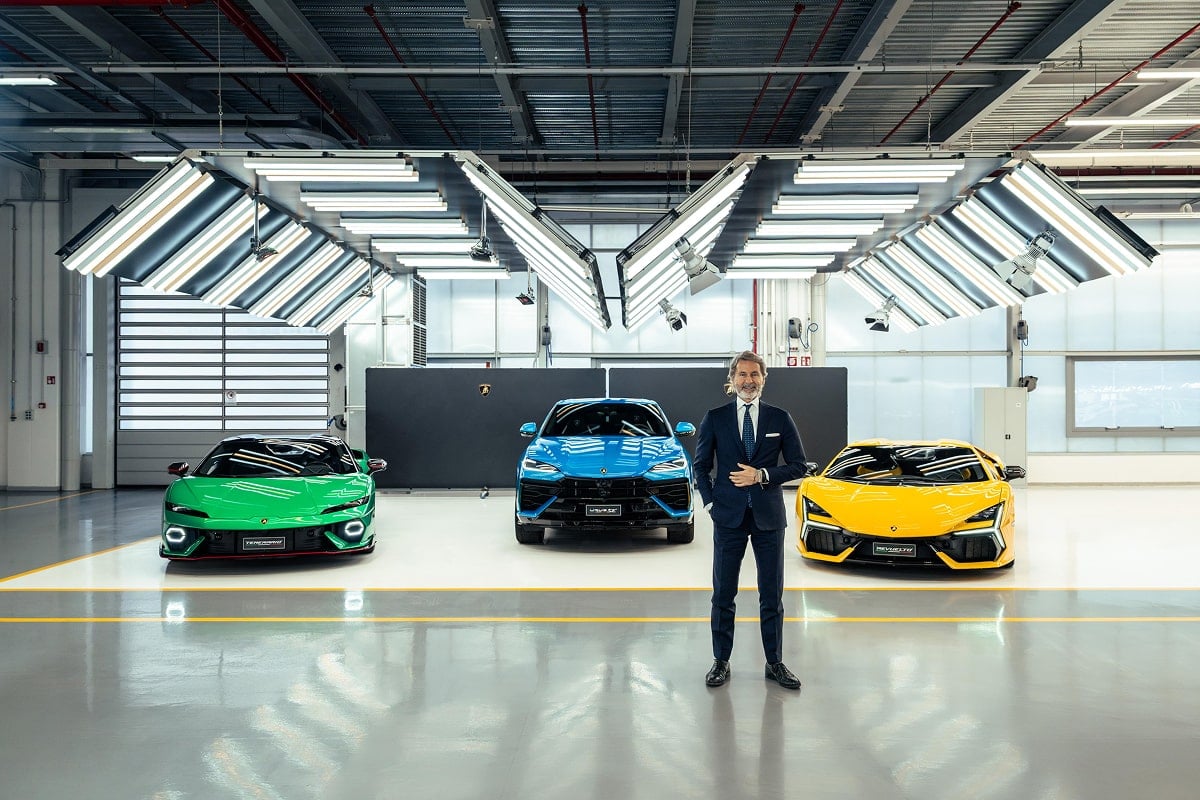
In just 18 months, Lamborghini radically transformed its lineup. Three new models were launched: first, the Revuelto, which replaces the aging Aventador, combining a naturally aspirated V12 with hybrid technology. Then, the Urus SE, the electrified version of its best-selling SUV. Finally, the all-new Temerario, the Huracán’s successor, with a radical design and an entirely new powertrain. This full refresh didn’t just attract longtime fans—it helped the brand reach a broader audience, drawn to hybrid tech without giving up driving excitement. The result: growing demand, full order books, and a stronger brand image.

Temerario, Urus SE and Revuelto - © Lamborghini
Temerario, Urus SE and Revuelto – © Lamborghini

A factory that never sleeps

To support this growth, Lamborghini has heavily invested in its production tools. In Sant’Agata Bolognese, the historic factory has doubled in size since the launch of the Urus. In 2024, investments continued to support the brand’s move upmarket and the increasing complexity of its new electrified models. In just two years, 1,000 new employees have joined the company (+30% workforce). These new hires show Lamborghini’s commitment to local production, focused on innovation, quality, and sustainability. It’s also a way for the brand to strengthen its industrial footprint in Italy, while preparing for its next phase of growth.

In Sant’Agata Bolognese, the historic factory has doubled in size since the launch of the Urus - © Lamborghini
In Sant’Agata Bolognese, the historic factory has doubled in size since the launch of the Urus – © Lamborghini

A clear focus on ultra-high-end positioning

What sets Lamborghini apart in 2024 is its ability to remain desirable in an increasingly competitive luxury market. Ferrari is also breaking records, but with an offering that’s sometimes difficult to access. As a result, some wealthy clients are turning to Lamborghini, which is going all-in on personalization. Today, each model can be customized down to the smallest detail, with a level of craftsmanship that borders on artistry thanks to the Ad Personam program. The goal is clear: to make each Lamborghini a unique, high-value object that retains its worth over time. At the same time, the brand is investing heavily in innovation—whether in materials, aerodynamics, or electrification. This ability to blend tradition with the future gives Lamborghini a strong and coherent vision of automotive luxury.

Today, each model can be customized down to the smallest detail, with a level of craftsmanship that borders on artistry thanks to the Ad Personam program - © Lamborghini
Today, each model can be customized down to the smallest detail, with a level of craftsmanship that borders on artistry thanks to the Ad Personam program – © Lamborghini

This article explores the reasons behind Lamborghini’s historic success in 2024. Thanks to a renewed lineup, major industrial investments, and a clear strategy focused on the ultra-luxury segment, the Italian brand reached record levels in sales, revenue, and profit. And everything points to this momentum continuing strong into the future.

Source & images: Lamborghini