Home Blog Page 24

30% of damage avoided: these simple solutions protect your car batteries from the freezing winter

Electric cars are becoming increasingly popular among drivers, and their presence on our roads continues to grow. However, when winter sets in and temperatures drop, several challenges arise.

Between reduced range, charging issues, and accelerated wear, winter can be a real test for these vehicles. But don’t worry, there are simple solutions to avoid unpleasant surprises.

Read more:

Lithium-ion batteries: The first victims of the cold

One of the biggest challenges for an electric car in winter is managing its battery. Low temperatures directly impact the performance of lithium-ion batteries. The result? A significant drop in range, with losses of up to 30% depending on conditions and the model. For drivers accustomed to precisely planned daily commutes, this decrease can become a real issue. To minimize these effects, it’s recommended to preheat the battery before hitting the road. This can be done while the car is still plugged into a charging station, ensuring an optimal energy level. Another tip: use heated seats instead of the overall heating system, as the latter consumes much more energy. These small habits can make a big difference on long winter drives.

A significant drop in range, with losses of up to 30% depending on conditions and the model © Tesla

Charging cables put to the test

Another common winter issue is related to charging cables, which can be affected by freezing conditions. If water seeps into the connector—perhaps running along the cable—it can freeze and block the use of the plug. While such incidents are rare, they can be avoided with a few simple precautions. The best approach is to form a loop with the cable during charging. This way, water naturally drains toward the ground instead of accumulating near the connector. This ensures optimal functionality even in freezing temperatures. Additionally, regular maintenance of connectors and cables, especially during the colder months, can prevent many headaches. And ideally, of course, storing your electric car and charging station in a closed garage or under a shelter is the best solution, but that’s not always possible.

With this gold Cadillac, America has never worn a livery this dazzling in motorsport competition

Accelerated wear and adjusted driving

Beyond batteries and cables, winter also tests other components of electric cars, including brakes and tires. Driving styles can exacerbate these issues, particularly with regenerative braking, which places extra demand on certain parts. Tires, too, experience faster wear, especially if the vehicle is not equipped with winter-specific models. To protect these components, it’s advisable to adopt smoother, more cautious driving in winter. By avoiding sudden braking and unnecessary accelerations, you not only reduce vehicle wear but also improve energy efficiency. Furthermore, installing winter tires, which are specially designed to provide better traction on cold, slippery roads, is a smart investment for enhanced safety.

Click here to learn Tesla’s best practices for cold weather conditions.

This article explores the challenges faced by electric cars in winter, from reduced range due to cold weather to charging and wear issues. With a few simple tips, such as preheating the battery, adjusting driving habits, and protecting cables, you can fully enjoy your vehicle even in extreme conditions.

With this gold Cadillac, America has never worn a livery this dazzling in motorsport competition

With their partnership for the 2025 FIA World Endurance Championship (WEC), Cadillac and JOTA seem ready to write a new chapter in motorsport history.

Their latest creation, the V-Series.R LMDh in the striking Hertz Racing Gold livery, promises to make waves both on the track and in the paddocks. But what can we really expect from this team in 2025?

Read more:

A partnership that impresses at first sight with its livery

The unveiling of the Cadillac V-Series.R livery took place in an iconic location: Cadillac City Paris, opposite the Opéra Garnier. This event was more than just a presentation; it reflected Cadillac’s deep commitment to innovation and performance. Through this collaboration, JOTA Sport officially steps up to factory team status—a first for the British outfit that has previously shined as a privateer. The Hertz Racing Gold livery, previously seen on JOTA’s Porsche 963s, embodies a perfect blend of aesthetics and efficiency. Its bold colors align with Cadillac’s pioneering spirit while adding a touch of modernity. This close partnership goes beyond appearances, combining the strengths of both brands to maximize on-track performance.

The Hertz Racing Gold livery, previously seen on JOTA’s Porsche 963s, embodies a perfect blend of aesthetics and efficiency.

An exceptional driver lineup

The driver lineups for cars #12 and #38 are eagerly awaited, and the confirmed names already offer promising glimpses. Former Formula 1 World Champion Jenson Button brings invaluable experience, alongside Will Stevens and Norman Nato, both seasoned WEC competitors with JOTA. On Cadillac’s side, Alex Lynn, Earl Bamber, and Sébastien Bourdais return to action. These highly skilled drivers bring not only their talent but also extensive experience gained from Cadillac’s North American and global programs. With such a blend of expertise, the Cadillac Hertz Team JOTA is set to be a serious contender in the Hypercar category.

The driver lineups for cars #12 and #38 are eagerly awaited, and the confirmed names already offer promising glimpses.

A precision preparation to race

The path to success demands rigorous preparation. Since last November, JOTA has conducted several test sessions, including at the Anneau du Rhin circuit in Alsace and the Paul Ricard track. These tests have allowed the team to accumulate invaluable mileage and fine-tune the V-Series.R cars. With over 2,000 kilometers completed at Paul Ricard, the teams have worked on the cars’ handling and balance, particularly during nighttime runs. A final test session is planned in Abu Dhabi before the season kicks off with the official Prologue and the first race in Qatar. This testing phase has helped drivers familiarize themselves with the prototypes’ unique characteristics, while providing the technical team with crucial data to optimize performance. Feedback from drivers, combined with technical observations, will play a decisive role in the final setups before the championship begins.

The United States completely reinvents batteries with a simple chemical component that is more efficient and much cheaper

This article delves into the collaboration between Cadillac and JOTA in the WEC, from the bold design of the livery to assembling a seasoned driver lineup. It highlights the intensive preparation efforts, technical testing, and shared ambition to excel in one of motorsport’s most prestigious and fiercely competitive championships.

Images: © Cadillac Hertz Team JOTA

The United States completely reinvents batteries with a simple chemical component that is more efficient and much cheaper

As the automotive industry focuses on energy transition, lithium-ion (Li-ion) batteries remain central to electric vehicles. However, these batteries are not without flaws: they rely on expensive materials like cobalt, and their performance can be limited.

Good news! Here enter a promising alternative: lithium-sulfur (Li-S) batteries. These batteries have the potential to revolutionize energy storage with significantly higher energy density and lower costs. But, like any innovation, they come with their own challenges.

éRead more:

A solution to Lithium-Ion Battery limitations

Lithium-ion batteries have dominated the electronics market for decades, but their production relies on expensive materials with a significant environmental impact. In comparison, lithium-sulfur batteries use abundant and simple materials: lithium for the anode and sulfur for the cathode, the two primary components of a standard battery. With an energy density up to three times higher than current batteries, they promise improved performance while reducing production costs. However, their main drawback is their limited lifespan. During charge and discharge cycles, sulfur ions migrate into the electrolyte, leading to significant and unavoidable loss of active material. This phenomenon, known as the “polysulfide shuttle effect,” reduces the stability and performance of the batteries over time. Practically speaking, these batteries age, wear out, and lose efficiency as time goes on—a significant issue in the automotive industry, where components are expensive, difficult to replace, and require skilled labor to handle.

Lithium-ion batteries have dominated the electronics market for decades.

A breakthrough with electrolyte additives

To tackle this issue, researchers at the Argonne National Laboratory in the United States have developed an innovative electrolyte additive. This additive, known as a Lewis acid, forms a protective film on the electrodes, preventing sulfur from dissolving into the electrolyte. This film not only stabilizes the electrodes but also improves lithium-ion conductivity within the cell. Thanks to this breakthrough, Li-S batteries could last longer and achieve more uniform chemical reactions. Using X-ray analysis, researchers confirmed that the new electrolyte significantly reduces polysulfide formation while promoting consistent reactions throughout the battery.

207 mph on a wet track: the owner of this Bugatti knows how to enjoy his track toy on a Formula 1 circuit, no matter the price

A promising future, but challenges remain

Despite these advancements, lithium-sulfur batteries are not yet ready to replace current models. The safety of lithium metal used in the anode remains a significant challenge due to its high reactivity and flammability risks. Researchers are actively working on solutions to stabilize this component and ensure the batteries’ safety under extreme conditions. With their potential for higher energy density and cost reductions, these batteries could play a critical role in electrifying transportation. Imagine electric cars with double the range or lightweight aircraft powered by these new technologies. However, further research is needed to refine electrolyte chemistry and ensure material durability before they can achieve widespread adoption. In any case, the effort is clearly worth it given the tremendous technical progress represented by lithium-sulfur batteries!

This article explores the advancements in lithium-sulfur batteries and their potential to revolutionize energy storage. With superior performance and reduced costs, they may represent the future of electric vehicles. However, technical challenges must still be addressed before they can be adopted on a large scale.

Source: Argonne National Laboratory

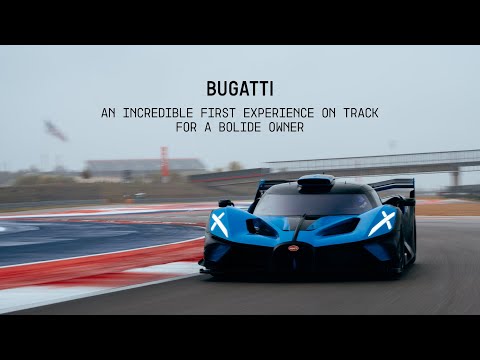
207 mph on a wet track: the owner of this Bugatti knows how to enjoy his track toy on a Formula 1 circuit, no matter the price

Bugatti Bolide owners are no strangers to this track-exclusive hypercar, a machine built to dominate with its 1,600 horsepower. But what does it really feel like to harness such power on a legendary Formula 1 circuit?

One eager owner didn’t wait until 2025 to answer that question. They brought their Bolide to the iconic Circuit of the Americas in Texas for an unforgettable day where cutting-edge technology met raw, unbridled thrills.

Read more:

A hypercar engineered to push limits

Designed exclusively for the track, the Bugatti Bolide is a mechanical masterpiece powered by a monstrous W16 engine delivering phenomenal performance. With aerodynamics inspired by LMH prototypes, this hypercar can reportedly complete a lap of the 24 Hours of Le Mans circuit in just 3 minutes and 8 seconds, according to Bugatti. But the Bolide isn’t just about speed; every element has been crafted for peak performance, from its ultra-light carbon chassis to suspension systems tailored for the most demanding track conditions. On this day in Texas, the owner explored the precision and sheer brute force of the Bolide across the 20 complex turns of the Circuit of the Americas. Despite a rain-soaked track, they managed to hit an impressive 207 mph, showcasing the incredible skill required to tame this machine.

A day guided by Bugatti experts

The experience begins long before the engine roars to life. Bugatti provides each owner with exclusive support to ensure they’re fully prepared to handle this track beast. From vehicle delivery to a detailed analysis of its components, every aspect is meticulously managed to ensure a safe and memorable experience. During this session at COTA, the owner completed two reconnaissance laps before a thorough performance check of the car, covering everything from tire condition to oil levels. This attention to detail is crucial for unlocking the Bolide’s full potential. Then came the main event: 12 laps to unleash the full force of this hypercar. Despite challenging weather conditions, the Bolide proved its prowess, handling wet surfaces and high-speed straights with ease. Every turn and straight was a testament to Bugatti’s engineering excellence and precision.

Despite challenging weather conditions, the Bolide proved its prowess © - Bugatti
Despite challenging weather conditions, the Bolide proved its prowess © – Bugatti

A tribute to Bugatti’s heritage

The Bolide isn’t just a technical marvel; it’s a homage to Bugatti’s storied history. Its two-tone design, blending the iconic “French Racing Blue” with exposed black carbon fiber, pays tribute to the legendary Type 35, one of the most successful race cars of all time. Inside, the combination of black Alcantara and polished aluminum reflects Bugatti’s trademark attention to detail. This isn’t just a car—it’s a living piece of history, connecting the brand’s glorious past with its bold future. With only 40 units produced, each Bolide is a one-of-a-kind creation, personalized to its owner’s desires.

From F1 driver to politician? Here are the 3 most likely options for Sergio Perez after being dropped by his team in 2025

This article delves into the exceptional experience of a Bugatti Bolide owner on the Circuit of the Americas. From jaw-dropping performance to cutting-edge technology and a heritage inspired by motorsport legends, the Bolide embodies Bugatti’s passion and excellence.

Source & images : Bugatti

Tesla’s next industrial milestone: New Semi factory takes shape in Nevada

Tesla is making strides in its industrial expansion with the construction of its new factory dedicated to the Tesla Semi in Nevada.

Read More:

First announced in January 2023, this ambitious project aims to accelerate the production of Tesla’s game-changing electric truck. As the factory’s main structure takes form, Tesla prepares to reshape the trucking industry with its vision of an all-electric future for freight transport.

The Tesla Semi: From vision to reality

Unveiled in 2017, the Tesla Semi embodies Tesla’s mission to revolutionize freight transport. Originally slated for a 2020 release, the project faced significant delays. The first deliveries finally took place in December 2022, with PepsiCo as a key customer.

In response to increasing demand and production challenges, Tesla announced a $3.6 billion investment in January 2023 to build a dedicated Semi factory adjacent to its existing Gigafactory Nevada. This strategic decision aims to boost production capacity and meet Tesla’s ambitious goals in the electric trucking sector.

Rapid construction progress

Construction of the Tesla Semi factory has progressed at an impressive pace. In December 2024, Dan Priestley, Tesla’s Semi Program Manager, shared images showcasing the completion of the steel frame structure. This milestone marks a significant step in the factory’s development, demonstrating Tesla’s commitment to beginning production by the end of 2025.

Concrete foundations for the stamping area have been poured, and earthworks for other sections of the site are advancing quickly. The swift progress underscores Tesla’s urgency to establish large-scale production capacity for the Semi.

Factory design and specifications

The Tesla Semi factory is designed to be at the forefront of automotive manufacturing technology. Spanning over 4 million square feet, the facility will feature cutting-edge production lines specifically tailored to the Semi’s unique dimensions and requirements. Advanced automation systems will enhance production efficiency.

The factory will also house dedicated zones for the manufacturing and assembly of batteries, electric motors, and Semi-specific propulsion systems. State-of-the-art testing equipment will be installed to ensure every vehicle meets Tesla’s quality and reliability standards. In line with Tesla’s commitment to sustainability, the factory will be powered largely by renewable energy.

Economic and environmental impact

The new Tesla Semi factory in Nevada is expected to have a significant economic impact on the region, creating approximately 3,000 direct jobs across engineering, production, and logistics. In addition to direct employment, the facility is projected to generate thousands of indirect jobs in the supply chain and related services.

On the environmental front, large-scale production of the Tesla Semi could substantially reduce CO2 emissions in the trucking industry. Each Semi on the road has the potential to replace multiple diesel trucks, significantly lowering the carbon footprint of freight transport.

Challenges ahead

Despite the excitement surrounding this project, Tesla faces several key challenges. One major issue is securing a stable supply chain for batteries and specialized components essential for Semi production. The company will need to ensure a steady supply of critical materials such as lithium and nickel.

Another challenge lies in building a highly skilled workforce capable of operating the advanced technologies used in Semi production. Additionally, the development of an adequate charging infrastructure for electric trucks remains a hurdle. The growing competition in the electric truck market, with traditional manufacturers and innovative startups entering the space, adds further pressure for Tesla to maintain its technological edge and market share.

A glimpse into the future

The Nevada Tesla Semi factory represents more than just an industrial expansion—it embodies Tesla’s vision for the future of freight transport. With a planned annual production capacity of 50,000 units by 2024, Tesla aims to transform the trucking industry. This factory could serve as a blueprint for similar facilities worldwide as Tesla expands its presence in the global electric truck market.

In the long term, the success of the Semi could act as a catalyst for broader electrification in the transportation industry, influencing government policies and investments in charging infrastructure. Additionally, the technological advancements made in Semi production could have positive ripple effects across Tesla’s entire lineup of electric vehicles, reinforcing its leadership in sustainable mobility.

By investing $3.6 billion in this new factory and rapidly advancing construction, Tesla signals its unwavering determination to lead the freight transport revolution. While challenges remain, the potential rewards—both economic and environmental—make the Tesla Semi project a key milestone in the future of transportation.

From F1 driver to politician? Here are the 3 most likely options for Sergio Perez after being dropped by his team in 2025

Sergio Pérez, one of the most popular drivers in Formula 1, finds himself at a decisive crossroads in his career following his early and rather complicated split with Red Bull Racing.

While his immediate future remains uncertain, speculation is rife about his next move. Formula E, WEC, IMSA, or even a venture into politics: the Mexican driver has a variety of options. But which one will allow him to continue shining, on or off the track?

Read more:

Pérez in Formula E: A realistic option?

During a recent appearance at the Mexico City E-Prix, Antonio Pérez, Sergio’s father, hinted that Formula E could be an interesting possibility. With an appealing schedule, races held on iconic urban circuits, and growing popularity, the all-electric championship could provide Pérez with a platform to continue engaging with his fans while exploring a different discipline. Formula E also has financial appeal: while salaries are lower than in Formula 1, they remain attractive. Moreover, the opportunity to race in front of a Mexican audience as a national ambassador would be a significant draw. However, the limited availability of seats in top teams and the less spectacular nature of electric cars might dampen his enthusiasm. That said, if Sergio Pérez wants to reinvent himself while staying in the spotlight, Formula E remains a credible alternative where he could deliver strong results.

Sports prototypes: A prestigious adventure to consider

A move to WEC or IMSA would be a logical option for Pérez, who could join other former Formula 1 drivers in these championships. These series, thriving thanks to the influx of prestigious manufacturers like Ferrari, Porsche, and Cadillac, offer a competitive platform with less pressure than F1. With his strong tire management skills and extensive experience in endurance racing, Pérez would be a valuable asset for any team aiming for victory at Le Mans. As a Mexican driver, winning this iconic race would allow him to follow in the footsteps of national legend Pedro Rodriguez. Joining a top team would enable Pérez to enhance his résumé while extending his career at a high level.

The ultimate frustration: Subaru limits its latest model to 500 units, and not a single one for America

A political career: Life after racing?

Sergio Pérez has never hidden his influence beyond the racetrack, particularly in Mexico, where he is a respected and admired figure. With a father who has held political office, the idea of Pérez transitioning to a public role isn’t far-fetched. His popularity could work in his favor if he chose to get involved in local or even national initiatives. Politics isn’t uncharted territory for former F1 drivers. Examples like Carlos Reutemann, who became a senator in Argentina, show that this career path is possible. Pérez could use his notoriety and charisma to advocate for important causes, particularly in education or environmental sustainability—issues that resonate strongly in Mexico.

This article explores the various paths available to Sergio Pérez after his exit from Formula 1 and Red Bull Racing. Whether he pursues Formula E, ventures into endurance racing, or considers a political career, the Mexican driver still has plenty of opportunities to make history, on or off the track.

Images: © Red Bull Content pool

The ultimate frustration: Subaru limits its latest model to 500 units, and not a single one for America

Subaru took advantage of its presence at the 2025 Tokyo Auto Salon to unveil the WRX STI S210, a limited edition that pushes the boundaries of the STI lineup.

Inspired by the brand’s exploits on legendary tracks like the Nürburgring, this car combines power, precision, and exclusive design. But what’s drawing so much attention to this model? With 296 horsepower under the hood, a finely-tuned chassis, and an aggressive aesthetic, Subaru aims to deliver a purely sporty driving experience. Limited to just 500 units exclusively for Japan, the S210 is already shaping up to be a future collector’s item. Let’s dive into what makes it so special.

Read more:

WRX STI S210: A track-inspired powertrain

Under the hood, the WRX STI S210 houses the renowned 2.4-liter turbocharged Boxer engine, but with tweaks that make all the difference. Thanks to a new intake system and redesigned exhaust, this special edition achieves 296 horsepower—25 more than the standard model. While torque remains unchanged at 376 Nm, it is now better utilized with optimized engine mapping. Subaru has also equipped the car with the Subaru Performance Transmission, a continuously variable transmission designed to deliver power to all four wheels with precision. The result? Sharper acceleration and smoother engine response, perfect for mastering both winding roads and the racetrack!

The WRX STI S210 houses the renowned 2.4-liter turbocharged Boxer engine - © Subaru
The WRX STI S210 houses the renowned 2.4-liter turbocharged Boxer engine – © Subaru

A chassis built for performance

Power is important, but it’s not everything. The S210 also boasts an exceptional chassis for outstanding handling. Subaru fitted this sports car with specially calibrated ZF electronic dampers, paired with coil springs and redesigned stabilizer bars. These enhancements provide greater control in corners, even at high speeds. Michelin 255/35R19 tires on BBS STI wheels ensure optimal grip, while six-piston Brembo brakes deliver precise stopping power. With these adjustments, the S210 promises a driving experience that’s as exhilarating as it is intuitive—a necessity given the diverse road conditions it’s designed to conquer.

Nappa leather Recaro seats with carbon shells - © Subaru
Nappa leather Recaro seats with carbon shells – © Subaru

A design that’s both sporty and aerodynamic

In terms of design, the WRX STI S210 commands attention with dynamic lines and details that highlight its sporty ambitions. The dry carbon rear wing, engineered to improve aerodynamics, gives the car a look that’s as functional as it is aggressive. Side skirts and a rear diffuser, also optimized, complement the design for better airflow management. Inside, Subaru has created a driver-focused environment. Nappa leather Recaro seats with carbon shells and electric adjustments provide perfect support. The black interior, accented with red details, evokes a racing spirit, while a numbered plaque reminds you of the exclusivity of this model, limited to just 500 units. Yes, you read that right: only 500 units, and bad news – exclusively for the Japanese market…

Mercedes and Sony team up to invent the future of in-car cinema and unveil RIDEVU, a one-of-a-kind technology

This article explores the exceptional features of the Subaru WRX STI S210, a model that combines power, precision, and exclusive design. With ultra-limited production and performance inspired by the track, this special edition stands out as a true gem for enthusiasts of Japanese sports cars.

Sources & images: © Subaru

Mercedes and Sony team up to invent the future of in-car cinema and unveil RIDEVU, a one-of-a-kind technology

Mercedes-Benz took the stage at CES 2025 in Las Vegas to unveil RIDEVU, a premium in-car entertainment system developed in collaboration with Sony Pictures, DTS, and IMAX. Launching in summer 2025, this innovation promises to revolutionize the driving experience.

While the idea of watching a movie in a car may seem futuristic, Mercedes has gone all out to deliver a solution that combines comfort, stunning visuals, and immersive sound. Here’s everything you need to know about this exciting new development.

Read more:

Technology tailored for every screen

It’s important to note that RIDEVU is, above all, a technology. Passengers can access the content directly from their personal devices, whether smartphones or tablets running on iOS or Android. The central displays in Mercedes vehicles equipped with the latest MBUX system provide access to a library of IMAX Enhanced® films, including popular titles like Spider-Man: No Way Home and Uncharted. For safety reasons, drivers can only access this content while the vehicle is stationary. However, front and rear passengers can enjoy their favorite movies anytime. A feature called “Screen Manager” allows up to six screens to sync simultaneously, enabling either a shared or individual viewing experience tailored to everyone’s preferences.

Mercedes-Benz unveils RIDEVU - © Mercedes
Mercedes-Benz unveils RIDEVU – © Mercedes

Cinema-quality sound and picture

To ensure an immersive experience, Mercedes-Benz partnered with IMAX and DTS Inc. to deliver top-notch audiovisual performance. Movies are presented with IMAX’s expanded aspect ratio and DTS:X sound, a technology that creates a 3D audio environment. Imagine hearing a plane fly overhead or feeling every explosion as if you were in a high-end cinema. Inside the vehicle, high-definition screens display vibrant colors and sharp contrasts. Mercedes designed these displays for maximum visual comfort, even during extended viewing sessions. In short, every movie becomes a unique experience, nearly rivaling a screening in a luxury theater.

Mercedes-Benz partnered with IMAX and DTS Inc. - © Mercedes
Mercedes-Benz partnered with IMAX and DTS Inc. – © Mercedes

Redefining luxury mobility

Integrating RIDEVU into Mercedes-Benz vehicles goes beyond simple entertainment. This innovation underscores the brand’s ambition to transform its vehicles into true living spaces. By collaborating with entertainment industry leaders, Mercedes ensures exclusive, personalized experiences that reinforce its position in the luxury market. Currently, the RIDEVU service is available in six countries, including the United States, Japan, and Germany. The automaker plans to expand to additional markets in the coming years, addressing growing demand for immersive entertainment experiences. According to Magnus Östberg, Chief Software Officer at Mercedes-Benz, this initiative represents a significant milestone in creating connected vehicles designed to meet the diverse needs of modern consumers.

Record for Lamborghini: sales surged in 2024, and this year could be even better

An experience for the future

As in-car technologies continue to evolve, services like RIDEVU could become a standard feature in high-end vehicles. The idea of transforming cars into interactive entertainment spaces reflects a profound shift in how we view mobility. Mercedes-Benz isn’t just building cars; the brand is crafting unique experiences that blend comfort, innovation, and enjoyment.

This article explores how Mercedes-Benz is redefining in-car entertainment with RIDEVU, an innovative solution that promises to transform journeys into unforgettable moments. Through strategic partnerships and immersive technology, this project highlights how luxury and innovation can seamlessly coexist in the automotive world.


Record for Lamborghini: sales surged in 2024, and this year could be even better

In the midst of its transition to full electrification, Lamborghini achieved a historic milestone in 2024 with record-breaking sales.

Between the launch of new models and full order books for years to come, the Italian brand shows it can combine innovation, passion, and heritage. This success, however, is largely driven by thriving SUV sales and supercars that continue to captivate with their massive engines, even in 2024.

Read more:

Figures that exceed all expectations in 2024

With 10,687 vehicles delivered in 2024, Lamborghini surpassed its already impressive 2023 performance. This 6% increase demonstrates that the brand remains a cornerstone of the luxury segment despite its evolving lineup. Sales were led by Europe, the Middle East, and Africa with 4,227 units (+6%), followed by the Americas (3,712 units, +7%) and Asia-Pacific (2,748 units, +3%). The Urus SUV, an undeniable bestseller, accounts for a significant portion of this success. Its latest plug-in hybrid version, the Urus SE, has seen immediate global demand, with new orders not being fulfilled until 2026. This strong interest highlights that even luxury buyers are increasingly gravitating toward electrified vehicles without compromising on performance.

The Urus SUV, an undeniable bestseller - © Lamborghini
The Urus SUV, an undeniable bestseller – © Lamborghini

A well-planned transition to hybrids Lamborghini models

Lamborghini’s revamped lineup is centered on a carefully managed transition to plug-in hybrid models. The Revuelto, equipped with a hybrid V12, is leading the charge. Its success has been so overwhelming that orders for this model are already booked through the end of 2026. And it’s easy to see why! The Revuelto is an incredibly well-executed model that succeeds the iconic Aventador. Meanwhile, the Huracan remains in production with special versions like the Sterrato and Tecnica before making way for the Temerario, a hybrid V8 coupe set to begin production. This strategy, called “Direzione Cor Tauri,” aims to make Lamborghini the first supercar manufacturer with an entirely plug-in hybrid lineup. It’s a bold evolution for a brand historically rooted in traditional combustion engines, but one that appears to meet the growing demand for more environmentally friendly vehicles without sacrificing exceptional performance.

The Revuelto plays a central role in the lineup - © Lamborghini
The Revuelto plays a central role in the lineup – © Lamborghini

What about tomorrow? A fully electric hypercar is still far off

While Lamborghini is working on its future electric model, the Lanzador, scheduled for 2029, fully electric supercars are not yet part of the plan. Stephan Winkelmann, the brand’s CEO, has confirmed that hybrid models will remain at the core of Lamborghini’s strategy for the coming years. He also noted that fully electric hypercars struggle to attract buyers, as customers still prefer combustion engines for their character and exclusivity. The Lanzador, a grand tourer with two doors and four seats, will represent a significant milestone as the brand’s first fully electric model. Until then, Lamborghini will continue to focus on its plug-in hybrids, which combine technological innovation with the brand’s unmistakable sporting DNA.

Porsche: The end of electric in the U.S.? The Taycan’s popularity drops in 2024 as more sporty models take the spotlight

This article explores Lamborghini’s record-breaking sales in 2024, the success of its newly unveiled plug-in hybrid models, and the Italian brand’s future outlook with the planned launch of its first fully electric vehicle in 2029.

Images: © Lamborghini

Porsche: The end of electric in the U.S.? The Taycan’s popularity drops in 2024 as more sporty models take the spotlight

In 2024, Porsche broke records in the United States, once again proving that its combustion engine models are still in high demand.

While SUVs remain the sales leaders, the growing popularity of the 718 and 911 reflects enthusiasts’ loyalty to the brand’s mechanical heritage. However, in a world increasingly focused on electric vehicles, the Porsche Taycan saw its numbers drop dramatically.

2024: A record year thanks to the 911 and 718

With 76,157 vehicles sold in the U.S., Porsche outperformed its 2023 figures by a modest but significant 1%. This success was driven primarily by sales of the Cayenne and the 911, along with an impressive rise in demand for the 718 lineup. The 718 saw a 26% increase, totaling 5,698 units sold, which placed the Boxster and Cayman ahead of the Panamera and Taycan sedans in terms of sales. The appeal of these models is largely attributed to the imminent transition to fully electric versions. Buyers, aware that the days of combustion engines are numbered, seem eager to own a Porsche in its traditional form. As for the iconic 911, it continued to shine with 14,128 units sold, a 21% increase compared to the previous year. Together, the 718 and 911 account for 26% of Porsche’s U.S. sales—an impressive share for sports cars in a market dominated by SUVs.

The 718 and 911 account for 26% of Porsche’s U.S. sales - © Porsche
The 718 and 911 account for 26% of Porsche’s U.S. sales – © Porsche

SUVs still dominate, but EVs struggle to gain ground

Unsurprisingly, SUVs remain Porsche’s sales backbone. The Macan, despite a slight dip with 25,180 units sold (-6.6%), remains the brand’s best-selling model. Meanwhile, the Cayenne saw nearly 10% growth, with 22,432 units sold, marking its best year ever. These numbers confirm that Americans value the performance and versatility of Porsche SUVs, even as the electric Macan has yet to make waves. However, the downside lies with the Taycan. With only 4,747 units sold—a 37% drop—Porsche’s first electric model has fallen short of expectations. Factors such as uncertainties around EV tax credits and increased competition in the electric segment may explain this decline. As a result, Porsche has decided to keep internal combustion versions of some models, like the Macan, available in North America, even though they are being phased out in Europe due to stricter emissions regulations.

SUVs remain Porsche’s sales backbone - © Porsche
SUVs remain Porsche’s sales backbone – © Porsche

The pre-owned market booms

In addition to new car sales, Porsche saw significant growth in the certified pre-owned market. With 43,249 vehicles sold through its Porsche Approved Certified Pre-Owned program, the brand recorded a 12% increase compared to 2023. This underscores not only the enduring appeal of Porsche models but also their lasting value, whether they are combustion, hybrid, or electric vehicles. In a context where internal combustion models are becoming increasingly rare, this trend is likely to grow, attracting enthusiasts looking to enjoy the traditional Porsche experience before electric becomes the norm.

$1 BILLION without selling a single car: the jackpot Tesla will hit in 2025 represents only 10% of its miraculous revenue over the past 6 years

This article explores the rising popularity of Porsche’s 718 and 911 in the U.S., the pivotal role SUVs play in sales, and the contrasting evolution of the electric vehicle market amid continued demand for combustion models and pre-owned vehicles.