Home Blog Page 6

From Zero to Hero: After more than 10 years in hell, this once-legendary Formula 1 team could make a major comeback

Carlos Sainz, now a Williams Racing driver, set an impressive lap time during pre-season testing in Bahrain, making Williams look stronger than it has in years.

While the British team is coming back from a difficult period, this standout performance immediately raised expectations. However, Carlos Sainz remains cautious, reminding everyone that miracles don’t happen overnight. Behind this apparent resurgence lies a massive effort from Williams Racing to rebuild and return to the front of the grid.

Read more:

Williams and Sainz top the pre-season charts

Williams wrapped up testing in Bahrain on a high note, with Sainz delivering a strong lap that caught the attention of the paddock. However, the Spaniard remains realistic: while the team is making progress, they are not yet on par with Red Bull, Ferrari, McLaren, or Mercedes. Pre-season testing results should always be taken with a grain of salt, as teams run with varying fuel loads and testing programs. Williams’ main goal for 2025 is not to immediately shake up the standings but to build a solid foundation for 2026 and beyond. With the team nearly doubling its workforce in the past two years and making heavy investments in infrastructure, Williams is focused on a steady climb rather than instant success.

Sainz remains realistic: while the team is making progress, they are not yet on par with Red Bull, Ferrari, McLaren, or Mercedes- © Williams Racing

Sainz: A true leader for Williams

Sainz’s move to Williams is more than just a driver transfer—it marks a turning point for the team, which is relying on his experience to help shape an ambitious long-term project. The Spaniard wasted no time getting involved, spending the winter in Grove, attending numerous meetings, and working closely with engineers to maximize the car’s potential. This leadership role suits him perfectly. At Ferrari, he proved he could go head-to-head with Charles Leclerc and adapt to a demanding car. At Williams, his main focus will be improving race pace, as the team struggled with excessive tire degradation last season. If he can help address this issue, Williams could become a more consistent top-10 contender, even if podiums remain out of reach for now.

Carlos Sainz’s move to Williams marks a turning point for the team - © Williams Racing
Carlos Sainz’s move to Williams marks a turning point for the team – © Williams Racing

James Vowles: The man behind Williams’ rebuild

Since joining Williams, James Vowles has been leading a deep transformation of the team. The former Mercedes strategist has introduced a modern vision, focusing on data-driven decision-making. He has eliminated outdated practices that were holding the team back and pushed for a complete restructuring, strengthening the technical department and securing a partnership with Atlassian to optimize car development. Williams’ target is clear: to break into the top five of the Constructors’ Championship by 2026. The team, which had 700 employees before Vowles arrived, has now grown to over 1,050. This behind-the-scenes work is starting to pay off, as shown by their strong testing performance. The big question now is whether it will translate into actual race results.

Since joining Williams, James Vowles has been leading a deep transformation of the team - © Williams Racing
Since joining Williams, James Vowles has been leading a deep transformation of the team – © Williams Racing

Can Williams return to the podium?

Pre-season testing has reignited hope among Williams fans. While Sainz remains cautious, the team finally seems to be heading in the right direction after years of struggles. With a solid driver pairing, an improving car, and ambitious leadership, Williams could be the surprise of the season! Hopefully, these lap times are a true reflection of their progress, and we’ll see the blue F1 car fighting for top-five finishes more often this year.

This article explores Williams’ transformation and Carlos Sainz’s key role in the team’s revival. Despite an impressive testing performance, the team remains realistic about its 2025 goals. With James Vowles at the helm and a structured plan for the future, Williams might finally reclaim a position worthy of its rich Formula 1 history.

Images: © Williams Racing

These 800 hp EV will soon equip the American police, and they won’t cost the taxpayers a single dollar thanks to this generous donor

A mysterious donor gifts a fleet of Tesla Cybertrucks to the Las Vegas police.

The streets of Las Vegas will soon see futuristic police patrols. The city’s police department has just received ten brand-new Tesla Cybertrucks—without spending a dime. An anonymous donor funded this electric fleet, which will be used for both routine patrols and by the SWAT unit. While these vehicles are already known for their unique design, their integration into law enforcement raises many questions. Why such a donation? And more importantly, is the Cybertruck really suited for this kind of mission?

Read more:

The Tesla Cybertruck is already built for action

Unlike the Cybertrucks made for the general public, the ones gifted to the Las Vegas police won’t remain in standard configuration. They will be modified to meet the specific needs of law enforcement, especially SWAT, which requires rugged vehicles capable of handling rough terrain. Tesla designed its vehicle to be adaptable for all situations. Among the expected modifications, there are talks of reinforced armor, all-terrain wheels, and an optimized interior for carrying tactical equipment. With its ultra-durable stainless steel body and supposedly bulletproof windows, the Cybertruck already seems to offer superior protection compared to traditional police vehicles. Its claimed range of over 500 miles also makes it a valuable asset for long missions.

Tesla designed the Cybertruck to be adaptable for all situations - © Tesla
Tesla designed the Cybertruck to be adaptable for all situations – © Tesla

A donation raising eyebrows

The announcement of this fleet donation quickly sparked speculation. Who is this mysterious donor capable of financing ten Cybertrucks? Theories abound. Some suggest a wealthy tech entrepreneur looking for a publicity stunt, while others suspect an indirect push from Tesla itself. Elon Musk, Tesla’s CEO, shared the news on his social media platform X, adding a simple sunglasses emoji—suggesting his approval of the initiative. This isn’t the first time he has tried to get his vehicles into law enforcement. The Irvine Police Department in California has already tested the Cybertruck, and other departments across the U.S. are beginning to consider it as an alternative.

Could the Cybertruck be the future of police vehicles?

The idea of police driving Cybertrucks may seem surprising, but it actually makes sense. With its impressive performance—lightning-fast acceleration, an estimated power of 800 hp, high towing capacity, and an intimidating presence that can block off any road—this electric pickup has strong arguments in its favor. Its tri-motor setup and all-wheel drive could make it an ideal choice for rapid-response operations, even on difficult terrain. However, challenges remain. The Cybertruck’s large size could be an issue in urban areas, its purchase price is relatively high, and its long-term maintenance costs are still unknown. Additionally, while its range looks great on paper, it remains to be seen how it performs in real conditions, carrying heavy equipment and enduring intensive use.

The idea of police driving Cybertrucks may seem surprising, but it actually makes sense.

This article explores the arrival of Tesla Cybertrucks in the Las Vegas police force, a mysterious donation that has sparked speculation. With custom modifications for SWAT units and questions surrounding the origin of the gift, these vehicles could mark a turning point in law enforcement’s shift toward electric pickups. Will Tesla manage to replace the traditional SUVs and sedans currently used by the police? Only real-world tests will tell.

He didn’t see it coming! A Chinese driver just wanted to test this feature on his Tesla, but nothing went as planned

Tesla FSD in China: A series of fines and a tough adaptation…

Tesla recently launched its Full Self-Driving (FSD) system in China, and the first tests have not gone unnoticed. A local automotive blogger racked up seven fines in a single night while using the technology on Beijing’s roads. The system made multiple errors, from occupying bike lanes to illegal lane changes. While Tesla relies on progressive learning through user data, these initial tests in China show that there is still a long way to go before achieving truly autonomous driving.

Read more:

A series of fines during a Tesla FSD test

A test conducted by blogger Chen Zhen highlights the limitations of FSD in China. Within just a few hours, his Tesla Model Y committed several visible infractions: confusing a bike lane with a traffic lane, crossing solid white lines, and taking erratic trajectories. One of these mistakes was even immediately sanctioned by the police, who happened to be at the wrong place at the wrong time—for the driver. The issue isn’t limited to a single isolated case. A comparative study conducted by a Chinese automotive media outlet tested Tesla’s FSD against two other advanced driver assistance systems from local automakers Li Auto and Aito. The results were not flattering for Elon Musk’s brand: the Model Y recorded 34 infractions and required 24 manual interventions by the driver, compared to just 14 infractions for the other models.

Within just a few hours, his Tesla Model Y committed several visible infractions - © Tesla
Within just a few hours, his Tesla Model Y committed several visible infractions – © Tesla

Tesla’s adaptation in China is more difficult than expected

Tesla has built part of its success on continuously improving its software through artificial intelligence and user-collected data. But the Chinese market presents unique challenges. Road markings, signage, and driving habits differ significantly from those in the U.S. or Europe. Chinese infrastructure is often more complex, with many lanes dedicated to bicycles and electric scooters—something FSD appears to struggle with. Another challenge is regulatory. China enforces strict controls over autonomous technologies, and Tesla has had to adapt its FSD to comply with local requirements. This may partly explain why the Chinese version appears less refined than the one tested in the U.S. Nevertheless, the California-based brand remains confident, relying on the accumulation of local data to gradually improve its system.

Tesla has had to adapt its FSD to comply with local requirements - © Tesla
Tesla has had to adapt its FSD to comply with local requirements – © Tesla

Can Tesla catch up?

Despite this rocky start, Tesla is far from giving up. Elon Musk’s company continues to roll out updates to refine its algorithm and hopes that increasing FSD usage in China will allow it to reach an acceptable performance level. However, local competitors like Nio and Xpeng are heavily investing in autonomous driving and pose serious competition for Tesla in this segment. The challenge is significant: adapting FSD to China’s unique driving conditions while maintaining a competitive edge against domestic brands. The U.S. experience has shown that the system improves over time, but the question remains whether Chinese drivers will be patient enough to tolerate its current limitations.

Elon Musk’s company continues to roll out updates to refine its algorithm and hopes that increasing FSD usage in China will allow it to reach an acceptable performance level - © Tesla
Elon Musk’s company continues to roll out updates to refine its algorithm and hopes that increasing FSD usage in China will allow it to reach an acceptable performance level – © Tesla

This article explores the rough start of Tesla’s Full Self-Driving system in China, where a simple test drive resulted in seven fines in one night. With navigation errors and adaptation challenges in the Chinese market, FSD still has a lot to prove. Local competition isn’t making things easy, and Tesla will need to quickly refine its software if it wants to establish itself in this crucial market.

Source: Shine / Images: © Tesla

The best Italian engine ever built? This risky gamble could have ruined their reputation, but it might just become Lamborghini’s next best-seller

Lamborghini had no choice but to create an engineering marvel for the engine of its Temerario.

Lamborghini, always at the forefront of automotive innovation, faces a massive challenge with the Temerario. Yes, it’s a powerhouse that redefines the rules, but it also carries the immense responsibility of replacing the legendary Huracán and its V10 engine. Blending modern technological advancements with raw performance, the Temerario marks a major turning point for the iconic brand.

Read more:

A brand-new Lamborghini engine

At the heart of this revolution lies an all-new 4.0-liter twin-turbo V8 engine, a technical marvel developed at Lamborghini’s headquarters in Sant’Agata Bolognese, capable of reaching 10,000 RPM—an almost unheard-of feat for a twin-turbo engine. This engineering masterpiece isn’t just powerful; it’s intelligent. Paired with a hybrid system featuring three electric motors, it delivers a total of 920 hp. Imagine launching from 0 to 100 km/h (0-62 mph) in just 2.7 seconds, with a top speed of 211 mph. But what truly sets the Temerario apart is its ability to provide explosive power while enhancing responsiveness at low revs, thanks to a strategically positioned electric motor that eliminates turbo lag.

Temerario's engine is capable of reaching 10,000 RPM—an almost unheard-of feat for a twin-turbo engine - © Lamborghini
Temerario’s engine is capable of reaching 10,000 RPM—an almost unheard-of feat for a twin-turbo engine – © Lamborghini

A race-inspired architecture

Lamborghini has placed the turbochargers inside the engine’s “V” layout, and it’s not just for aesthetics—it optimizes space and improves thermal management. This design, inspired by motorsport, not only enhances high-speed efficiency but also reduces rotating mass, thanks to titanium connecting rods and DLC (Diamond-Like Carbon) cam followers. In practical terms, these innovations give the Temerario a unique sound and an engaging mechanical character reminiscent of naturally aspirated engines while integrating the power and torque of a modern turbocharged motor. So far, the Temerario has everything it needs to surpass the Huracán.

Lamborghini has placed the turbochargers inside the Temerario's engine’s "V" layout - © Lamborghini
Lamborghini has placed the turbochargers inside the Temerario’s engine’s “V” layout – © Lamborghini

Surpassing the Huracán’s legacy

Replacing the Huracán was Lamborghini’s ultimate challenge. The legendary model, with its naturally aspirated V10, was known for its responsiveness and exceptional sound. The Temerario takes on this challenge head-on, combining the agility of a naturally aspirated engine with the brute force of turbocharging and the efficiency of hybrid systems. It doesn’t just replace the Huracán—it transcends it, marking the end of one era and the beginning of another, where hybrid performance and sustainability go hand in hand.

The legendary model, with its naturally aspirated V10, was known for its responsiveness and exceptional sound - © Lamborghini
The legendary model, with its naturally aspirated V10, was known for its responsiveness and exceptional sound – © Lamborghini

The future of Lamborghini

The Temerario isn’t on the market yet, but it’s already making a statement: the supercars of tomorrow will be hybrid, powerful, and more environmentally conscious. Lamborghini is positioning itself not just as a leader in high-performance automotive engineering but also as an innovator in sustainable technology. And the Temerario isn’t alone in promoting hybridization—the Revuelto, the Aventador’s successor, is powered by a naturally aspirated V12 with electric assistance. Thank you, Lamborghini!

The supercars of tomorrow will be hybrid, powerful, and more environmentally conscious - © Lamborghini
The supercars of tomorrow will be hybrid, powerful, and more environmentally conscious – © Lamborghini

This article explores Lamborghini’s transition to hybrid technology with the Temerario, a vehicle that blends tradition and innovation. With its twin-turbo hybrid V8, the Temerario is set to redefine what it means to be a supercar, delivering extraordinary performance without sacrificing efficiency or driving pleasure. Lamborghini once again proves its pioneering spirit, ready to embrace the future of automotive engineering with confidence and boldness.

Source & images: © Lamborghini

The rise of an electric giant? This renowned British supercar manufacturer holds THE recipe to revolutionize the electric car market

Gordon Murray Group (GMG) is embarking on a bold mission to reshape the electric vehicle landscape with an innovative platform designed to revolutionize lightweight construction and efficiency in future models.

If you’re familiar with Gordon Murray Automotive, this announcement might come as a surprise. The British manufacturer made a name for itself with V12-powered supercars, so why venture into the EV market? Simply because the potential for high-performance electric sports cars is real, and weight remains the biggest challenge. In fact, this initiative could mark the beginning of a new era for electric vehicles as a whole.

Read more:

A breakthrough in lightweight design

The project, named M-LightEn’, aims to develop a monocoque architecture that reduces vehicle structures by 25%. With the support of renowned partners such as Constellium and Brunel University London, GMG is working on ultra-strong aluminum extrusions made primarily from recycled materials. This initiative aligns with the goal of significantly reducing the carbon footprint by creating a manufacturing process that is less resource-intensive and more environmentally friendly. This new type of structure not only promises lower production costs but also a noticeable improvement in the overall performance of vehicles.

The project, named M-LightEn’, aims to develop a monocoque architecture that reduces vehicle structures by 25% - © Gordon Murray Automotive
The project, named M-LightEn’, aims to develop a monocoque architecture that reduces vehicle structures by 25% – © Gordon Murray Automotive

Advanced technologies and collaborations

The group is taking this a step further by collaborating with Carbon ThreeSixty to develop nearly waste-free carbon fiber components. The goal is clear: to push the boundaries of what current vehicle technologies allow by combining lightweight construction with exceptional durability. Artificial intelligence is also being used to refine these designs, optimizing vehicles in terms of weight and efficiency while maintaining safety and comfort. This integrated approach addresses the challenges of modern mobility while paving the way for future innovations in the automotive sector.

Towards sustainable production

This ambitious project is not just about technological advancements; it also introduces a flexible production model. GMG plans an initial low-volume commercialization phase, allowing for a controlled and gradual scale-up. This process ensures resource optimization while adapting to market feedback and industry developments, with the goal of reducing CO2 emissions by 33% over a vehicle’s lifecycle. By anticipating future market demands and adapting to increasingly strict environmental regulations, GMG is positioning itself as a leader in sustainable innovation.

The British manufacturer made a name for itself with V12-powered supercars - © Gordon Murray Automotive
The British manufacturer made a name for itself with V12-powered supercars – © Gordon Murray Automotive

The future of Gordon Murray

With the recent launch of Gordon Murray Special Vehicles, the group aims to expand its influence beyond its current models, exploring new directions for even more exclusive and innovative vehicles. This specialized division is set to push the boundaries of luxury automotive design, benefiting from the advancements of the M-LightEn’ project. This initiative aligns with a long-term vision that not only focuses on performance and efficiency improvements but also integrates cutting-edge sustainable solutions.

Gordon Murray: The engineer behind the legends

Gordon Murray is a British automotive engineer known for designing some of the most innovative F1 cars for Brabhamand McLaren. He also created the legendary McLaren F1, often considered the greatest supercar ever. His focus on lightweight design and aerodynamic efficiency continues to shape the industry, especially through Gordon Murray Automotive.

Gordon Murray himself and the T33 Spider - © Gordon Murray Automotive
Gordon Murray himself and the T33 Spider – © Gordon Murray Automotive

This article explores Gordon Murray Group’s commitment to a future where cars are not just transportation but symbols of sustainability and innovation. By drastically reducing weight and optimizing performance, GMG is positioning itself at the forefront of the automotive industry, ready to set new standards with vehicles that combine luxury, performance, and environmental responsibility.

Source & images: Gordon Murray Group

Last season for Hamilton? He just arrived at Ferrari but he’s already thinking about retirement—and he has a great reason

Lewis Hamilton: His dream luxury car for retirement is… a Ferrari!

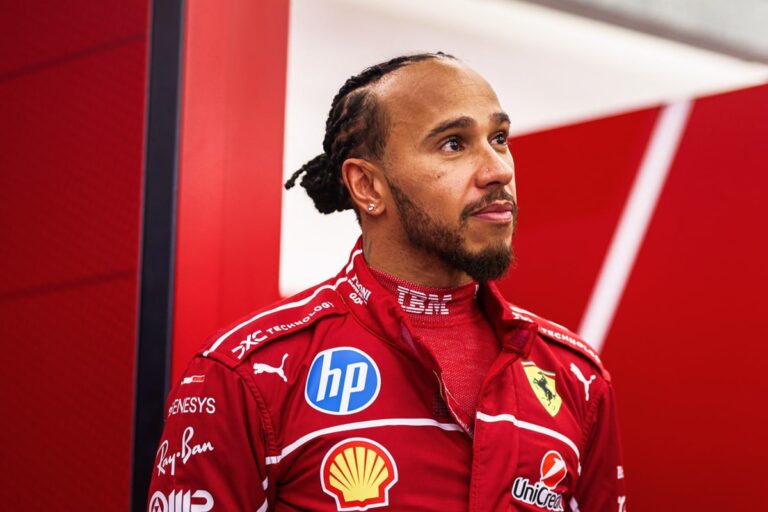
As he embarks on his journey with the legendary Scuderia Ferrari, Lewis Hamilton, an icon of Formula 1, shares his ultimate retirement fantasy—driving a Ferrari 250 GT California Spyder, a car that perfectly embodies his passion for speed, style, and automotive excellence. Beyond F1, Hamilton is a true supercar enthusiast, as seen with his LaFerrari and the purple Pagani Zonda he sold a few years ago.

Read more:

A fresh start in F1 with Scuderia Ferrari

After a dominant era with Mercedes, Hamilton made the difficult decision to join Ferrari, drawn by the Italian brand’s legendary status. This transfer, made possible by a release clause in his contract, marks the end of an era filled with championship titles, pole positions, and Grand Prix victories with the Brackley-based team. “It was one of the hardest decisions I’ve ever had to make,” Hamilton admitted. His new adventure with Ferrari offers a fresh challenge and a blank slate, while he remains grateful to Mercedes and Toto Wolff for their unwavering support.

After a dominant era with Mercedes, Hamilton made the difficult decision to join Ferrari - © Scuderia Ferrari
After a dominant era with Mercedes, Hamilton made the difficult decision to join Ferrari – © Scuderia Ferrari

The Ferrari 250 GT California Spyder: A true dream car

In an interview with TIME, Hamilton expressed his admiration for the Ferrari 250 GT California Spyder, a car that became iconic thanks to its appearance in the 1986 film Ferris Bueller’s Day Off. Designed by Sergio Scaglietti, this car blends flawless aesthetics with performance, thanks to its 280-horsepower V12 engine. Produced between 1957 and 1963, the Spyder embodies 1960s luxury, with only 106 units ever built. Today, its rarity makes it an extremely sought-after collector’s item, The proof is in the numbers: in 2015, a short-wheelbase model sold for over €16.2 million (nearly $17M).

In an interview with TIME, Lewis Hamilton expressed his admiration for the Ferrari 250 GT California Spyder - © Artcurial
In an interview with TIME, Lewis Hamilton expressed his admiration for the Ferrari 250 GT California Spyder – © Artcurial

Is Hamilton already thinking about retirement?

Hamilton envisions his perfect retirement: cruising down the Pacific Coast Highway, his bulldog Roscoe in the passenger seat, wearing a scarf and sunglasses. This picturesque image reflects Hamilton’s pure love for driving, a passion that extends beyond his professional career. To him, the Spyder is the ultimate retirement car, combining luxury, history, and driving pleasure. And who could argue with that? The California Spyder is easily one of the most beautiful cars ever made.

Ferrari 250 GT California Spyder from the Baillon collection sold in 2015 for €16.28 million - © Artcurial
Ferrari 250 GT California Spyder from the Baillon collection sold in 2015 for €16.28 million – © Artcurial

Don’t worry, it’s a distant plan

Despite speculation about his potential F1 retirement, Hamilton remains firm: he’s not stepping away anytime soon. “Retirement is nowhere on my radar,” he states. Determined and passionate, he even entertains the idea of racing until he’s 50. His desire to extend his career highlights his enduring love for competition and commitment to the sport. Having just joined the most prestigious team in Formula 1 history, Hamilton is more motivated than ever to continue Ferrari’s legendary legacy.

Hamilton is more motivated than ever to continue Ferrari’s legendary legacy - © Scuderia Ferrari
Hamilton is more motivated than ever to continue Ferrari’s legendary legacy – © Scuderia Ferrari

This article explores Lewis Hamilton’s journey, from his triumphs with Mercedes to his future with Ferrari, and his ultimate dream car for retirement. Through all his success and changes, one thing remains constant—his unwavering love for speed and beautiful cars, proving that for some, racing never truly ends.

Images: © Scuderia Ferrari / © Artcurial

Will Jack Daniel’s strike it rich in this field far removed from its original business: producing next-generation batteries for electric vehicles?

How China’s iconic Baijiu is sparking battery breakthroughs!

China is certainly making the most of everything! They have indeed found a way to reuse the distillation waste from baijiu, the traditional Chinese spirit, as a promising material to enhance the performance of sodium batteries. This innovation could achieve a dual environmental AND economic goal. One question burns on our lips: can American brands like Jack Daniel’s take inspiration from this to reap an unexpected financial windfall?

You can also read:

Uncovering a surprising application for distillation waste

Traditionally, after distilling baijiu, a significant amount of sediment, known as lees, is left behind. Instead of discarding this by-product, researchers in China have discovered its potential in enhancing the capabilities of sodium-ion batteries. This finding could significantly impact the future of energy storage solutions.

World first: A California startup is ushering in a new era of automobiles by being the first to commercialize a functional flying car

What is Baijiu?

Baijiu is a traditional Chinese spirit that is extremely popular, with massive annual production. In 2024, China produced approximately 4.15 billion liters of Baijiu, which represents a decrease from 2023. Among the major producers, Wuliangye Yibin produced about 160,000 tons of Baijiu in 2022. Kweichow Moutai, another iconic brand, produced about 80,000 tons of its flagship Moutai Baijiu in 2021. These companies dominate the Chinese market, where Baijiu remains the most consumed alcoholic beverag

Why sodium-ion batteries matter

Sodium-ion batteries (SIBs) are emerging as a viable alternative to the more common lithium-ion versions. They are not only cheaper but also safer, making them an excellent option for energy storage systems and electric vehicles that do not require high speeds.

The challenge with hard carbon anodes

In SIBs, hard carbon is typically used for the anode. This material is chosen for its ability to accommodate larger sodium ions compared to the graphene used in lithium-ion batteries. However, hard carbon anodes are not without their problems; they often show low charge efficiency initially, which can limit battery performance.

To improve this, a collaborative effort between the University of Electronic Science and Technology of China and Wuliangye, a renowned baijiu producer, was initiated. Wuliangye’s lees provided a unique source of biomass that was transformed into an innovative electrode material.

The process of transformation

Researchers first processed the baijiu lees through several steps—washing, drying, acid-leaching, and pre-carbonizing. Following this, the material was treated with sodium hydroxide to eliminate silica and then subjected to high-temperature activation. The result was silicon-doped hard carbon. This material was then refined through ultrasonic treatment, stirring, drying, and further carbonizing at high temperatures.

The silicon-doped hard carbon was used as an anode in a sodium-ion battery paired with sodium manganese oxide as the cathode. The battery exhibited excellent performance, achieving a high reversible capacity with impressive cycle stability. This demonstrated not only the potential for reuse of industrial by-products but also significant improvements in battery technology.

Implications for energy storage

The successful application of baijiu lees in battery production highlights a sustainable path for managing industrial waste while also enhancing energy storage technology, especially for Electric Vehicles (EV). This approach could lead to more cost-effective and environmentally friendly battery production, essential for modern energy needs.

Looking ahead, the focus will be on scaling up production and further refining the process to boost efficiency. The project holds independent patents, suggesting a robust foundation for commercial development. This innovative utilization of baijiu lees could pave the way for broader adoption of sodium-ion batteries, particularly in applications requiring frequent energy cycles.

This Japanese giant unveils an engine that is neither electric nor gasoline-powered and will be the most efficient ever launched in mass production with 59.8% efficiency

Can Jack Daniel’s and other American brands do the same thing?

Jack Daniel’s is one of the most famous distilleries in the United States, producing about 136 million liters of pure alcohol per year. The distillery uses six column stills to achieve this capacity, with some capable of distilling up to 850 liters of alcohol per minute. In terms of sales, Brown-Forman, the owner of Jack Daniel’s, recently lowered its annual growth forecasts due to weaker demand in the United States and Mexico. Net sales for the quarter ending October 31, 2023, increased by only 1% to reach $1.11 billion.

The reference study in this article is on the reuse of distillation waste from Baijiu, a spirit not produced in the United States, but it is very likely that the method can be adapted to other alcohols. One can find themselves dreaming of American brands such as Jack Daniel’s being able to boost their earnings in the manner of the Chinese.

Source: https://www.scmp.com/news/china/science/article/3300613/happy-power-how-chinas-most-famous-liquor-could-fuel-next-generation-energy-storage

Faster than a gas refill! This automaker is eliminating the biggest issue with electric cars by offering a never-before-seen charging time

This Volvo EV charges faster than a gas fill-up and goes farther than ever.

Electric vehicles are great, but range and charging times remain the biggest concerns holding back many buyers. Volvo has understood this issue and seems to have found a solution with its new ES90. Featuring the brand’s first-ever 800V technology, this sedan promises a record-breaking 435 miles of range and ultra-fast charging, adding 186 miles in just 10 minutes. That’s enough to make skeptics rethink switching to electric.

Read more:

Ultra-fast charging and extended range

One of the biggest challenges with EVs is avoiding long charging times. With the Volvo ES90, that problem could be a thing of the past. Thanks to its 800V architecture, it supports ultra-fast charging up to 350 kW. The result? A 10-minute charge can add up to 186 miles of range. As for total range, the ES90 is rated at 435 miles on a single charge under the European WLTP cycle, putting it among the best in the market. This impressive performance comes from a 106 kWh battery, optimized for maximum efficiency while keeping weight under control.

With the Volvo ES90, EV problem could be a thing of the past - © Volvo
With the Volvo ES90, EV problem could be a thing of the past – © Volvo

Cutting-edge battery technology

To achieve this level of performance, Volvo didn’t just increase battery capacity. The Swedish automaker also developed a new energy management system that optimizes charging and consumption in real-time. This innovation, combined with the 800V architecture, reduces charging times by 30% compared to previous models. Volvo has also partnered with Breathe Battery Technologies, a startup specializing in charge optimization. Their technology allows the battery to go from 10% to 80% charge in just 20 minutes, making the charging experience even closer to a traditional gas fill-up.

217.5 mph in the 70s! Hard to believe but this concept car was indeed built by the brand that created the world’s most beautiful cars

A strong commitment to sustainability

Beyond performance, the Volvo ES90 is designed with sustainability in mind. Its chassis and body incorporate 29% recycled aluminum and 18% recycled steel. Inside, Volvo uses eco-friendly materials, including 16% recycled plastics and FSC-certified wood panels. Another notable innovation is the “battery passport.” Using blockchain technology, this system tracks the origin of key materials such as lithium, cobalt, and nickel. This ensures full transparency about the car’s environmental impact and reassures buyers about the ethical sourcing of raw materials.

Inside, Volvo uses eco-friendly materials, including 16% recycled plastics and FSC-certified wood panels - © Volvo
Inside, Volvo uses eco-friendly materials, including 16% recycled plastics and FSC-certified wood panels – © Volvo

Volvo is building a future-ready EV

With the ES90, Volvo is not just introducing another high-performance EV; it’s laying the groundwork for a new generation of smarter, more sustainable vehicles. The model comes standard with an advanced thermal management system that extends battery life and optimizes performance in all seasons. The official unveiling is set for March 5, and there’s no doubt it will turn heads. With record-breaking range, ultra-fast charging, and a strong sustainability focus, the ES90 is shaping up to be a game-changer in the premium EV market.

This article explores the groundbreaking advancements of the new Volvo ES90, an electric sedan capable of covering 435 miles on a single charge and adding 186 miles of range in just 10 minutes. It highlights the car’s 800V architecture, its eco-friendly materials, and the improvements in battery management. Volvo seems determined to make the ES90 a benchmark for the future of electromobility.

Source & images: Volvo

F1 controversy: With this provocative gesture, Max Verstappen adds fuel to the fire at the worst moment of a crisis gripping Formula 1

Verstappen and his middle finger during F1 winter testing: A penalty barely avoided?

When Max Verstappen raised his middle finger toward the Williams garage during F1 winter testing in Bahrain, many thought it was another clash between the three-time world champion and the FIA. With new restrictions on driver conduct and his penalty points tally increasing, some wondered if this simple gesture could cost him a race suspension. But the reality behind the scene captured by cameras was entirely different.

Read more:

Verstappen’s middle finger to the Williams garage

During the morning session in Bahrain, Verstappen exited the pit lane and visibly raised his middle finger as he passed the Williams garage. A reaction to an overly curious photographer? A message to a rival? Speculation ran wild, and social media exploded with theories. Some commentators immediately assumed the Dutchman was reacting to an intrusion into the technical details of his new RB21, but the truth was far less dramatic. In reality, Verstappen was greeting a familiar face—Luke Browning, a Williams junior driver and a friend of the Red Bull star. What seemed like a provocation was nothing more than a playful exchange between acquaintances. Despite the buzz, the FIA quickly ruled: no incident, no investigation.

Unexpected leniency from the FIA

The FIA took a surprisingly lenient stance, despite its recent pledge to tighten restrictions on driver behavior, both on and off the track. Officially, since winter testing is not supervised by designated FIA stewards, no rule could be enforced against Verstappen’s gesture. This decision contrasts sharply with recent penalties for driver outbursts. One of the most striking examples remains WRC driver Adrien Fourmaux, who was fined €10,000 for using strong language in an interview. Even Verstappen himself had been reprimanded in 2024 for using a vulgar word in a press conference, which resulted in mandatory participation in an FIA event.

Max Verstappen Bahrein 2025 - © Red Bull Content pool
Max Verstappen Bahrein 2025 – © Red Bull Content pool

A controversial set of regulations

The FIA’s push to strictly regulate driver behavior has not been well received by everyone. The Grand Prix Drivers’ Association (GPDA) has openly opposed these new restrictions, and tensions between drivers and the governing body are palpable. The lukewarm reception for FIA President Mohammed Ben Sulayem at the season launch in London was a clear indicator of this growing rift. Mercedes team principal Toto Wolff tried to take a balanced stance, stating that drivers should maintain a certain level of etiquette while also acknowledging the need to distinguish between frustration-driven language and outright insults directed at officials or rivals. Max Verstappen, on the other hand, called for more common sense: “Sometimes, under the adrenaline, words just come out. We are adults, not robots.”

Alexander Albon Bahrein 2025 - © Williams
Alexander Albon Bahrein 2025 – © Williams

This article delves into the controversy surrounding Verstappen’s gesture in Bahrain and the reactions it sparked. It highlights the inconsistencies in the FIA’s rule enforcement and the growing frustration among drivers over what they see as excessive restrictions. It also raises the question of balancing discipline and spontaneity in a sport where adrenaline runs high.

From dull to explosive: This new rule will turn the most boring Formula 1 race into pure chaos

Images: © Red Bull Content pool / © Williams

273.4 mph and 1,800 hp: Here’s the most powerful car ever produced by a French automaker

With the new Tourbillon, Bugatti once again pushes the limits of automotive engineering, luxury… and physics

Unveiled in the historic setting of Molsheim, the Bugatti Tourbillon marks a major turning point for the brand. It carries the immense responsibility of succeeding the Chiron, which itself was the perfect successor to the legendary Bugatti Veyron. How do you push the boundaries of aerodynamics and technology even further? How do you improve upon a 1,500-hp hypercar capable of exceeding 268 mph? Let’s take a closer look at how this masterpiece redefines excellence and establishes new benchmarks in automotive engineering.

Read more:

Bugatti Tourbillon: Already a legend

The story of the Bugatti Tourbillon began long before its spectacular unveiling. Inspired by the ambition to surpass the achievements of the Chiron, the Tourbillon is the result of a project where every detail was meticulously crafted to optimize performance. The primary challenge was designing a car that seamlessly blends aesthetics and functionality at an unprecedented level. To achieve this, Bugatti engineers used advanced computational fluid dynamics (CFD) simulations to model every curve and line of the car. The result? A design that is not only visually stunning but also minimizes air resistance at extreme speeds.

To achieve this, Bugatti engineers used advanced computational fluid dynamics (CFD) simulations - © Bugatti
To achieve this, Bugatti engineers used advanced computational fluid dynamics (CFD) simulations – © Bugatti

Cutting-edge technology and innovation

At the heart of the Tourbillon lies an innovative hybrid system that combines a high-performance V16 internal combustion engine with an advanced electric unit. The result is an unprecedented, exceptional sound in the automotive world. Unlike conventional setups, Bugatti has developed a powertrain that maximizes output while maintaining remarkable energy efficiency. This cutting-edge system enables the Tourbillon to achieve a staggering combined power output of 1,800 hp, propelling the car to speeds that seem to defy the laws of automotive physics.

This cutting-edge system enables the Tourbillon to achieve a staggering combined power output of 1,800 hp - © Bugatti
This cutting-edge system enables the Tourbillon to achieve a staggering combined power output of 1,800 hp – © Bugatti

Aerodynamics in the service of performance

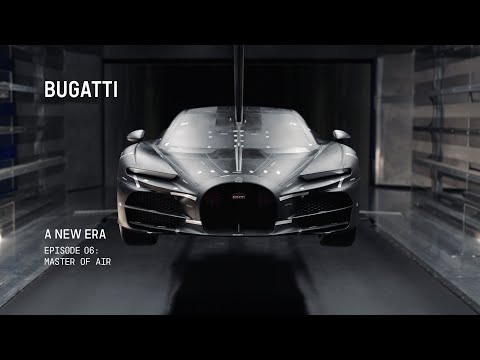
Aerodynamics play a crucial role in the Tourbillon’s design. Every element has been meticulously refined through extensive testing and wind tunnel experiments conducted in Italy. A highly detailed scale model underwent hundreds of hours of analysis, allowing engineers to fine-tune everything from air intakes to the rear diffuser. The goal? Ensuring that the car remains stable even at top speeds without relying on an active rear wing. Strategically placed sensors continuously monitor airflow behavior, enabling precise adjustments for optimal aerodynamic efficiency. The level of engineering here matches that of Formula 1—after all, it’s only fitting for a car capable of reaching 273.4 mph.

Aerodynamics play a crucial role in the Tourbillon’s design - © Bugatti
Aerodynamics play a crucial role in the Tourbillon’s design – © Bugatti

A true sports car, but also a pinnacle of luxury

Beyond its advanced technical features, the Bugatti Tourbillon is also a masterpiece of luxury. The interior strikes a perfect balance between modern comfort and refined aesthetics, using the highest-quality materials to create an unforgettable experience for its occupants. From its “skeletonized” dashboard, revealing its intricate mechanical workings like a high-end timepiece, to its custom-crafted seats, every detail of the interior is designed to enhance the exhilarating driving experience that the Bugatti Tourbillon promises.

This article delves into the fusion of tradition and innovation in the creation of the Bugatti Tourbillon. With its revolutionary design and powerful hybrid engine, the Tourbillon is not just another step forward in the evolution of hypercars—it’s a quantum leap, setting new standards for what a high-performance automobile should be. The Bugatti Tourbillon stands at the pinnacle of automotive engineering, merging luxury, innovation, and performance into a package that is truly greater than the sum of its parts.

Bugatti vs. Koenigsegg: The ultimate drag race between the world’s two fastest cars—and their 2,880 hp—was decided by mere inches

Source & images: Bugatti