Home Blog Page 67

Griezmann’s puzzling Euro 2024: France’s chameleon searching for impact

In the expansive fields of European soccer, few players have oscillated as dramatically in their roles as Antoine Griezmann during Euro 2024.

The French forward, renowned for his versatility, has found himself drifting across various positions on the field, a testament to both his adaptability and the tactical experiments of coach Didier Deschamps. This tournament, however, has amplified Griezmann’s challenges in securing a definitive and influential role within the team.

Read more:

A tactically ambiguous role

Throughout Euro 2024, Griezmann has been a tactical nomad for France, shifting from central roles to wider positions and even dabbling on the right flank. This continuous change, while showcasing his tactical flexibility, has somewhat diluted his impact on the game. The shift was most evident during the knockout stage against Belgium, where he was positioned as a right winger—a role that curtailed his natural influence in the game’s central areas.

At 41, Pepe proves age is just a number in Euro 2024

The evolving French strategy

The strategic shifts reflect a broader narrative under coach Didier Deschamps, who has been trying to find the optimal system to harness both individual and team strengths. This search has often led to Griezmann playing in less familiar positions, impacting his ability to influence matches consistently. Despite these challenges, he remains a crucial figure for Les Bleus, trusted by Deschamps for his experience and knack for adapting to diverse tactical demands.

Mixed performances and critical reception

Griezmann’s performances have drawn mixed reviews from fans and analysts alike. While some appreciate his willingness to take on varied roles, others criticize the lack of a permanent position that could allow him to excel. His efforts in adapting to each game scenario have not gone unnoticed, but the lack of a stable role has arguably hindered his ability to leave a mark comparable to previous tournaments.

Team dynamics and support

Despite the tactical shuffles, Griezmann’s commitment to the team’s ethos remains unshaken. His interactions with teammates, especially evident in his defensive contributions and less glamorous but vital off-the-ball movements, underscore his role as a team player. His ability to perform various tasks on the pitch has earned him the respect of his peers, who rely on his experience and understanding of the game.

Looking ahead

As France progresses in the tournament, the question of Griezmann’s best utilization remains a topic of debate. Whether he will continue to feature on the right or be moved back to a more central role could significantly influence France’s tactical setup and their chances of advancing further. The upcoming games will be crucial in determining if Deschamps will pivot towards stabilizing Griezmann’s role or continue to leverage his flexibility in various tactical frameworks.

Griezmann’s legacy and future

At 33, Griezmann is at a pivotal juncture in his international career. While he continues to be a key player for France, how he adapts to these tactical shifts will likely define his legacy and impact in the latter stages of his career. His journey in Euro 2024 is not just a testament to his adaptability but also a challenge to his ability to influence games at the highest level despite the tactical uncertainties.

French resilience: How France navigates Euro 2024 with grit over glamour

This exploration of Antoine Griezmann’s role at Euro 2024 delves into the complexities of tactical flexibility and its impact on individual performance. As France navigates the pressures of the tournament, Griezmann’s evolving role underscores the challenges and opportunities that come with being a versatile player in a highly competitive environment.

Tour de France 2024: Dylan Groenewegen edges Out Philipsen in thrilling Stage 6, Pogacar holds yellow

In an electrifying finish to Stage 6 of the Tour de France 2024, Dylan Groenewegen narrowly claimed victory over Jasper Philipsen, with the Dutch sprinter from Jayco-AlUla taking the spotlight in a dramatic photo finish.

Despite strong support from Mathieu van der Poel, Philipsen, the Belgian speedster from Alpecin-Deceuninck, couldn’t clinch the win, continuing his quest for a stage victory this year.

Read more:

Sprint to the finish

The stage was set for a sprinter’s showdown after a tense and tactical ride through the French countryside. Philipsen, who had been meticulously set up by Van der Poel, launched a powerful sprint 200 meters from the finish. However, Groenewegen, with a last-moment surge, managed to edge ahead, capturing the stage win by the narrowest of margins.

Tour de France: Did you konw there is a lucrative prize for the first to pass the Galibier ?

Windy Woes and tactical plays

The day was marked by aggressive racing, with several teams, including Visma | Lease a Bike, attempting to exploit the strong side winds to create breaks in the peloton. While these efforts did not result in significant time gaps among the general classification contenders, they did expose some vulnerabilities within Tadej Pogacar’s UAE-Emirates team, which found itself temporarily isolated in the crucial moments of the race.

Pogacar’s steady lead

Despite the day’s challenges and the high-speed antics of his rivals, Tadej Pogacar retained the yellow jersey. The Slovenian star displayed resilience and tactical acumen, navigating through the peloton’s splits and the nerve-wracking winds without losing ground to his main competitors.

The unsung hero

Behind the duel for the stage win, Biniam Girmay of Intermarché-Wanty secured a commendable third place. Continuing his impressive form from the beginning of the Tour, Girmay remained a key figure in the sprint finishes, showcasing his growing prowess in the race.

What’s next?

As the Tour progresses, all eyes will be on the upcoming stages, particularly the time trial, which is expected to be a critical test for Pogacar and his rivals. The dynamics within the peloton are likely to shift as teams reassess their strategies to tackle the defending champion’s lead.

A stage of high drama

Stage 6 will be remembered for its intense sprints, strategic wind plays, and the thrilling photo finish that saw Groenewegen snatch victory. As the riders look ahead, the pressure builds, not just to win stages but to unseat Pogacar from his position at the top of the leaderboard.

Eritrean cyclist Biniam Girmay made history in Turin by winning the third stage of the Tour de France

This dramatic stage not only highlighted the unpredictable nature of the Tour but also set the stage for more exciting and strategic racing in the days to come. The blend of individual brilliance and team tactics continues to make this edition of the Tour de France a fascinating spectacle for cycling fans around the world.

Tadej Pogacar’s heartwarming gesture to Mark Cavendish’s son post-victory

As Mark Cavendish etched his name deeper into Tour de France lore with his record-setting 35th stage win in Saint-Vulbas, it was Tadej Pogacar’s touching gift to Cavendish’s son that captured the hearts of fans.

The gesture underscored the camaraderie and respect that transcends competition among the peloton’s elite.

Read more:

A gift of gratitude

In the afterglow of Cavendish’s historic victory, a small, yet profound interaction took place. Accompanied by his mother, one of Cavendish’s sons approached the current yellow jersey holder, Pogacar. Captivated more by the Slovenian than his father’s victory, the young boy was treated to a memorable gift—Pogacar’s own yellow sunglasses. This simple act of kindness not only highlighted Pogacar’s sportsmanship but also left a lasting impression on the young fan.

Tour de France: Did you konw there is a lucrative prize for the first to pass the Galibier ?

A moment of joy

As Cavendish’s son donned the gifted sunglasses, the joy was palpable. His incredulity mirrored by the smiles of those around him, including his mother who light-heartedly remarked about her son’s admiration for Pogacar. This moment of youthful awe was a stark contrast to the fierce competitiveness often displayed on the roads.

Historical context

The victory was significant not just for Cavendish but for the sport, marking him as the sole record holder for stage wins—a milestone that brings with it immense pride and a sense of ultimate achievement. Cavendish’s achievement places him at the pinnacle of sprinting legends, a status further acknowledged by Pogacar’s congratulatory embrace post-race.

Mutual respect

The interactions between Cavendish and Pogacar highlighted a mutual respect that goes beyond the race track. Pogacar’s reverence for Cavendish’s career and his playful banter about not surpassing the British sprinter’s record illustrates a deep mutual respect. This camaraderie among competitors enriches the narrative of the Tour, adding layers of personal connection to the professional achievements.

Legacy and friendship

Reflecting on their evolving friendship, Pogacar shared insights into his admiration for Cavendish, whom he watched and idolized from a young age. This personal anecdote adds depth to their professional relationship, showcasing the blend of personal admiration and professional rivalry that defines their interactions.

Looking forward

As the Tour de France progresses, this gesture will remain a highlighted moment of sportsmanship and kindness. It underscores the values of respect and camaraderie that often get overshadowed by the competitive nature of professional cycling.

Eritrean cyclist Biniam Girmay made history in Turin by winning the third stage of the Tour de France

This touching episode not only brought a smile to a young fan’s face but also reminded everyone of the human side of professional sports. Pogacar’s gesture towards Mark Cavendish’s son following a record-breaking victory highlights the spirit of generosity and respect that champions often embody, making this Tour de France a memorable one for fans and participants alike.

Cody Gakpo soars as the Dutch dynamo: Steering the Netherlands into Euro 2024 quarterfinals

In a night reminiscent of the legendary performances by Marco van Basten, Cody Gakpo captivated the audience in Munich, demonstrating why he is fast becoming the pivotal figure in the Dutch lineup.

As the Netherlands sailed into the quarterfinals of Euro 2024 with a 2-1 victory over Romania, Gakpo’s dual roles as a scorer and creator were on full display, confirming his emergence as the team’s new attacking talisman.

Read more:

Rising to the occasion

In the critical knockout match, Gakpo didn’t just play; he dominated. Opening the scoring with a spectacular solo effort and then setting up Donyell Malen for the second goal, he showcased the skill and poise of a seasoned leader. His performance against Romania not only extended his tally to six goals in major tournaments but also marked his first in the knockout stages, hinting at his potential to become the Netherlands’ key player in clutch moments.

At 41, Pepe proves age is just a number in Euro 2024

Tactical brilliance

Gakpo’s influence on the field was unmistakable. Throughout the game, he relentlessly challenged the Romanian defense, blending speed with strategic movement to create opportunities. His ability to switch roles from scorer to playmaker seamlessly has become a significant asset for coach Ronald Koeman’s side.

Leadership emerges

Post-match, Gakpo’s reflections on the game highlighted his evolving role within the team. Celebrated by teammates and pundits alike, his leadership qualities are coming to the fore. With a blend of humility and confidence, he is quick to credit his team’s collective effort while also acknowledging the strategic improvements that have enhanced their gameplay.

A new Dutch icon

Gakpo’s ascent is timely, especially as veteran Memphis Depay struggles to make his mark in Germany. The young Liverpool forward is stepping up, filling the void, and inspiring the Oranje with his performances. His style and effectiveness in critical moments draw parallels with the Dutch greats of yesteryears, reinforcing his place not just in the team but as a potential icon in Dutch soccer.

From club to country

While his club season with Liverpool might have had its ups and downs, Gakpo seems to transform when donning the national jersey. His elevated play in international fixtures suggests that he thrives under the distinctive pressures and styles of international soccer, a trait that bodes well for the Netherlands as they progress further in the tournament.

Looking ahead

As the Netherlands prepare for their next challenge in the quarterfinals, all eyes will be on Gakpo to lead the charge. His next performances could very well define his career and potentially seal his status as a national hero, akin to the celebrated figures in Dutch soccer lore.

Yamal-Williams: Spain’s thrilling wings of delight at Euro 2024

In the vibrant arena of international soccer, Cody Gakpo’s emergence as the leading figure for the Netherlands at Euro 2024 is a narrative of talent, timeliness, and tactical acumen. His performances are not just about goals but about inspiring a team and a nation hungry for football glory. As the tournament progresses, Gakpo’s blend of skill, leadership, and determination will be pivotal in the Dutch quest for a title.

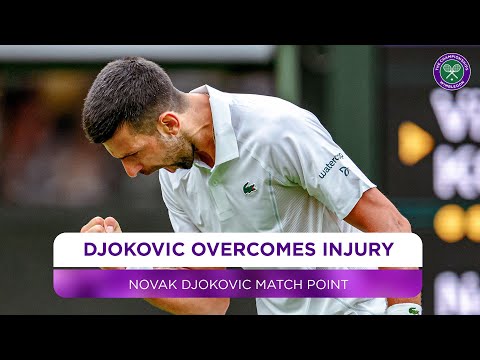
Only for Wimbledon: Djokovic’s heroic return after knee surgery

Novak Djokovic, renowned for his resilience and unmatched talent in tennis, made a dramatic comeback at Wimbledon, just three weeks after undergoing knee surgery.

This return was not just a routine appearance but a testament to his dedication to Wimbledon, a tournament he cherishes deeply.

Read more:

Djokovic and his comeback on Centre Court

In his first match since the surgery, Djokovic faced Vit Kopriva, dispatching him efficiently with scores of 6-1, 6-2, 6-2. The victory was significant not only for its ease but for the courage Djokovic demonstrated by stepping back onto the court so soon after his knee operation. During a post-match interview on Centre Court, he discussed the unique challenges of this year’s tournament preparation due to his knee condition. He expressed genuine satisfaction with his performance and his physical state during the game.

Controversial take: German tennis expert criticizes De Minaur vs. Zverev quarterfinals

The decision to play

Djokovic’s decision to participate in Wimbledon following such a recent surgery surprised many, given the risk it posed to his recovery. He acknowledged the risks involved, stating clearly that Wimbledon is the only event for which he would have taken such a gamble. “I think if it was for any other tournament I probably would not have risked it,” Djokovic confessed, highlighting his special bond with the grass courts of Wimbledon.

Focused on the game

Throughout the match, Djokovic maintained a laser focus on the game, deliberately steering his thoughts away from any concerns about his knee. This mental discipline allowed him to play at his best and manage the physical demands of a competitive match. His strategy was to engage fully with the present moment, a tactic that paid off with a win.

Gratitude toward his team and surgeon

Djokovic took a moment to extend his gratitude towards his medical team and his surgeon, whose expertise was crucial in his ability to compete at Wimbledon. He acknowledged the complexities of his situation and expressed appreciation for the successful surgery that enabled him to play at such a high level and minimize the risk of further injury.

Looking ahead

With this victory, Djokovic advanced to the second round, where he will face British wildcard Jacob Fearnley. As he continues his quest for an eighth Wimbledon title, Djokovic remains a formidable contender, demonstrating not just his skill but also his unwavering spirit and love for the game.

The significance of his return

Djokovic’s return to Wimbledon is not merely about defending a title or continuing a legacy; it’s about his passion for tennis and his reverence for the Wimbledon tradition. His willingness to risk his recovery for this tournament underscores his commitment and love for this prestigious event.

Empty stands and disrespectful fans mar tennis showdown at Roland-Garros

This article explores Novak Djokovic’s remarkable return to competitive tennis at Wimbledon following knee surgery, emphasizing his unique connection with the tournament and his determination to compete despite potential risks. Djokovic’s story is one of passion, resilience, and a profound commitment to the sport, serving as an inspiration to athletes and fans alike.

Unveiling the veil: The rigorous drug testing regime of the 2024 Tour de France

As the 2024 Tour de France pedals through picturesque landscapes, behind the scenes unfolds a stringent anti-doping regime, reputed to be one of the most thorough in the event’s storied history.

Managed by the International Testing Agency (ITA), the anti-doping measures this year are extensive and innovative, aiming to ensure the highest standards of fairness and integrity in the competition.

Read more:

The role of the ITA

Four years ago, cycling’s governing body, the UCI, handed over its anti-doping responsibilities to the ITA. This agency now orchestrates the anti-doping strategy for the Tour, employing a risk assessment model that adapts to new data and emerging doping methods. The ITA’s strategy is bolstered by advanced tools such as the Athlete Biological Passport’s endocrine module, which can detect traces of Human Growth Hormone (HGH), enhancing the ability to catch cheaters.

Eritrean cyclist Biniam Girmay made history in Turin by winning the third stage of the Tour de France

Frequency and methodology of testing

At the Tour de France, testing is relentless and rigorous. The ITA conducts tests continuously throughout the three-week event, targeting not just the stage winners and the bearer of the yellow jersey but also other riders based on a strategic plan that considers various risk factors. Additionally, the months leading up to the Tour are crucial, with approximately 400 out-of-competition tests conducted to maintain a level playing field from the start.

The extent of the operation

The operational scale of the ITA’s efforts is vast. Over 40 ITA staff and sample collection personnel are deployed, with a sophisticated setup initiated in Florence, Italy, before the race begins. These teams are not only well-versed in anti-doping practices but also have a deep understanding of cycling, which enhances the efficacy of the testing process.

Collaboration and support

To implement such a comprehensive program, the ITA collaborates with various organizations, including the French National Anti-Doping Organisation (AFLD) and several private and public entities. These collaborations are vital for logistical support and enhance the integrity and coverage of the testing process.

The costs involved

Running such an expansive anti-doping operation comes with significant costs. The ITA has a biennial budget of €10 million, allocated to various facets of anti-doping measures including intelligence, testing, scientific research, and the long-term storage and re-analysis of samples.

ITA’s commitment to fair play

Benjamin Cohen, the Director General of the ITA, reiterates the agency’s dedication to clean sport. He highlights the use of cutting-edge technology and international cooperation to ensure fair competition. The ITA’s strategy includes long-term measures like sample storage for re-analysis, deterring doping not only in the present but also in future competitions.

A new yellow jersey leader: Tadej Pogacar claims the top spot in a thrilling Tour de France stage

This article explores the sophisticated anti-doping operations at the 2024 Tour de France, spearheaded by the International Testing Agency. With a robust strategy employing advanced technologies and extensive collaborations, the ITA aims to uphold the spirit of fair competition, ensuring that the grueling test of endurance and skill on the roads of France remains untainted by doping.

Demiral’s double delight: Turkey marches past Austria into Euro 2024 quarterfinals

In an electrifying showdown in Leipzig, Turkey secured their place in the Euro 2024 quarterfinals with a hard-fought 2-1 victory over Austria.

This pivotal match not only showcased the resilience and tactical acumen of the Turkish team but also ended Austria’s journey in the tournament with a mix of drama and sheer willpower.

Read more:

Early strike sets the tone

The match ignited from the very start when Merih Demiral, seizing the chaos from a corner kick just 57 seconds into the game, scored the fastest goal ever in the knockout stages of the Euros. This early lead set a high tempo, with Turkey opting to tighten their defenses and allow Austria more possession, a strategy that initially seemed to invite pressure.

Yamal-Williams: Spain’s thrilling wings of delight at Euro 2024

Austria’s fruitless dominance

Despite enjoying more of the ball, Austria struggled to convert their control into clear-cut chances. The Austrian team, coached by Ralf Rangnick, labored to break down the solid Turkish defense. Even with the tactical prowess of Marcel Sabitzer delivering dangerous corners, the likes of Marko Arnautović and Christoph Baumgartner failed to capitalize, leaving the team trailing as they headed into the break.

Second half surge and Turkish resilience

Emerging more determined, Austria pressed hard in the second half. Arnautović and Konrad Laimer both had opportunities to level the score but were thwarted by Turkish goalkeeper Mert Günok’s excellent saves. However, Turkey’s strategy to leverage set-pieces paid dividends again when Demiral headed in his second goal from another meticulously executed corner by Arda Güler in the 59th minute.

Austria’s late push falls Short

Just when Turkey seemed to have the match firmly in hand, Austria found a lifeline through Michael Gregoritsch, who managed to pull one back in the 66th minute. This goal reinvigorated the Austrian side, leading to a frenetic final stretch where they desperately sought an equalizer. Despite several crosses and a heart-stopping save from Günok in the dying moments, Austria couldn’t find the breakthrough, ending their campaign with a mix of frustration and pride.

Implications for Turkey

With this victory, Turkey not only avenges their heavy pre-tournament defeat to Austria but also sets up an intriguing quarterfinal clash. The spotlight will undoubtedly be on Demiral as he prepares to face off against formidable opponents like Virgil van Dijk, promising a battle of tactical wit and physical prowess.

Looking forward

As Turkey advances, the focus now shifts to their preparation for the quarterfinals. Their ability to capitalize on set-pieces and display defensive solidity under pressure will be key factors as they face tougher opposition. This win not only boosts their confidence but also solidifies their status as dark horses capable of upsetting more favored teams in this tournament.

Germany outshines Denmark to secure a spot in the Euro 2024 quarterfinals

This article explores the dynamics of Turkey’s strategic victory over Austria in the Euro 2024, highlighting key players, pivotal moments, and the tactical approaches that led to Turkey securing a spot in the quarterfinals. With a focus on Merih Demiral’s crucial contributions and the overall team performance, this win is dissected to understand its significance in the broader context of the tournament.

Pogacar strikes gold: A thrilling ride to victory at the Tour de France 2024

0

In an electrifying display of athleticism and cunning, Tadej Pogacar has once again seized the yellow jersey at the Tour de France, vaulting himself to the forefront of the race on a challenging climb up the Galibier.

During the Tour’s fourth stage, the Slovenian cyclone left competitors in his wake, particularly his fiercest rival, Jonas Vingegaard, on one of cycling’s most legendary mountains.

Read more:

Masterstroke on the mountain “Le Galibier”

On a day that promised drama, Pogacar delivered an epic performance that will be remembered for years. As the climb to the Galibier loomed, his team, UAE Emirates, set a brutal pace that only the strongest could survive. Within sight of the summit, Pogacar launched a devastating attack, leaving Vingegaard scrambling to match the pace. This move not only showcased Pogacar’s raw power but also his strategic depth, knowing precisely when to strike.

A new yellow jersey leader: Tadej Pogacar claims the top spot in a thrilling Tour de France stage

Conquering the yellow jersey

Pogacar’s victory on this stage did more than just add another stage win to his palmarès—it marked the reclaiming of his rightful position as the leader of the pack. Surpassing Richard Carapaz, the previous jersey holder, Pogacar demonstrated that his capabilities are unmatched, particularly on the steep ascents that define the Galibier.

Vingegaard’s valiant effort

While Pogacar celebrated, Vingegaard faced the harsh reality of the day. Although anticipated to be the main contender against Pogacar, he found himself trailing by 37 seconds at the stage’s end. This gap, though slight, is telling in the grand scheme of the Tour, placing added pressure on him in stages to come.

UAE Emirates: A tactical triumph

The success of the day can be largely attributed to the impeccable strategy of Pogacar’s UAE team. They controlled the race tempo from the outset, neutralizing potential threats and setting up Pogacar for the final assault. Their dominance was so comprehensive that even potential breakaways, involving notable riders like Mathieu van der Poel, were kept firmly in check.

A defining victory

This stage win at Valloire transcends typical race victories; it’s a declarative statement of Pogacar’s intentions and his readiness to dominate this year’s Tour. With the toughest stages of the race still ahead, his performance serves as a stark warning to his rivals that he is not only in form but also fiercely intent on maintaining his lead.

The road ahead

Sporting the yellow jersey once more, Pogacar is now the marked man of the Tour, with every team recalibrating their strategies to tackle his supremacy. The dynamic within the peloton is set to shift dramatically as the race progresses, with all eyes keenly watching Pogacar’s every move as he aims for ultimate glory in Paris.

Romain Bardet captures first yellow jersey in thrilling Tour de France opener

This article explores the resurgence of Tadej Pogacar as the leader of the Tour de France 2024, detailing his strategic prowess on the climb of the Galibier, the implications for his main rivals, and the orchestrated efforts of his team which culminated in a significant stage win.

Tour de France: Did you konw there is a lucrative prize for the first to pass the Galibier ?

The iconic Galibier Pass is a highlight of the Tour de France 2024, presenting a demanding challenge as part of the race’s fourth stage on July 2nd.

This mountain stage, spanning 139.6 kilometers from Pinerolo to Valloire, features a 23-kilometer climb at an average gradient of 5.1%. The first cyclist to reach the summit of this Hors Catégorie climb not only gains significant recognition but also a substantial financial reward.

Read more:

The prize of conquering the Galibier

The Galibier is not just a test of endurance and climbing ability; it’s also a lucrative opportunity for the cyclists. The rider who crests the summit first will be awarded the “Souvenir Henri-Desgranges,” a tribute established in 1947 named after Henri Desgranges, the founder and first organizer of the Tour de France in 1903. This year, the prize for reaching the summit first is €5,000, a handsome sum that adds an extra layer of competition among the climbers.

Romain Bardet captures first yellow jersey in thrilling Tour de France opener

Historical and financial significance

The reward at the Galibier speaks to the historical and cultural importance of this mountain in the Tour de France. Named after a pivotal figure in the tour’s history, the “Souvenir Henri-Desgranges” is not only a financial incentive but also a mark of honor, celebrating the spirit and endurance required to lead the pack over one of the tour’s most challenging climbs.

Comparisons with other mountain stages

The financial incentives continue throughout the Tour with similar prizes for other monumental climbs. For instance, the first rider over the Col du Tourmalet during the 14th stage on July 13 will also receive €5,000 as part of the “Souvenir Jacques-Goddet.” This prize, established in 2001, honors another key figure in Tour history, Jacques Goddet, who directed the Tour de France from 1937 to 1988.

Why these prizes matter

The financial rewards for these mountain stages do more than compensate the riders for their physical exertions; they enrich the narrative of the Tour de France, linking current competitors with the legends of the past. Each prize carries a legacy, connecting the dots between the heroes of yesteryear and today’s cyclists pushing the limits of their endurance and skill.

The role of these prizes in modern cycling

In contemporary professional cycling, these prizes underscore the importance of strategy and resilience. They motivate competitors not just to perform well overall but to excel in specific segments of the race, adding a strategic element to team and individual tactics. Riders and teams plan extensively to target these stages for both prestige and the financial benefits they offer.

Barcelona set to kick off Tour de France 2026: A historic start from Spain

This article explores the significance of the “Souvenir Henri-Desgranges” at the Galibier Pass during the 2024 Tour de France. It highlights not only the challenge of the climb and its historical importance but also the substantial rewards that await the cyclists. These prizes celebrate the heritage of the Tour while motivating current generations of cyclists to excel in these epic mountain stages.

Eritrean cyclist Biniam Girmay made history in Turin by winning the third stage of the Tour de France

Tour de France 2024: Richard Carapaz seizes yellow as Biniam Girmay triumphs in Stage 3.

In a breathtaking display of speed and strategy, the third stage of the 2024 Tour de France culminated in Biniam Girmay sprinting to victory, while Richard Carapaz snatched the coveted yellow jersey, reshaping the race dynamics.

Read more:

A historic sprint finish

Eritrean cyclist Biniam Girmay made history in Turin by winning the third stage of the Tour de France, marking a momentous occasion as the first Eritrean to do so. The stage, fraught with tactical nuances and a nerve-wracking sprint, saw Girmay outpace renowned sprinters like Fernando Gaviria and Arnaud De Lie to the finish line.

Barcelona set to kick off Tour de France 2026: A historic start from Spain

The yellow jersey changes hands

While the day celebrated Girmay’s remarkable win, it was also pivotal for Richard Carapaz who ascended to the top of the general classification. The day’s racing did not significantly challenge the contenders, but strategic positioning and a high-paced finish shuffled the standings, placing Carapaz in yellow.

The stage’s challenges and triumphs

The longest day of the Tour thus far stretched over 230.8 kilometers from Plaisance to Turin, setting the stage for a grueling test of endurance and speed. While the majority of the stage lacked notable breakaways, the final kilometers were marked by intense sprints and a critical mass fall, dramatically influencing the race outcome.

Strategic movements among contenders

The general classification saw a tight contest with the top four riders separated by mere seconds before the stage. The dynamic changed post-stage, with Carapaz leveraging his sprinting prowess to climb atop the overall standings, signaling a strategic shift among the frontrunners.

The significance of Girmay’s victory

Girmay’s victory is not only a personal triumph but also a significant milestone for African cycling, echoing the achievements of previous African stage winners at the Tour. His win underlines the rising prominence of African cyclists on the world stage, adding a thrilling narrative to this year’s race.

Looking ahead

With the Alps looming, the riders face daunting challenges ahead. The dynamics within the peloton are likely to evolve, with climbers and all-rounders looking to make their mark. As the race progresses, the strategies and resilience of riders like Carapaz and Girmay will be pivotal in their quest for glory.

Four contenders, one mystery: Uncertainty shrouds the 2024 Tour de France

This article explores the thrilling developments of the third stage of the Tour de France 2024, where Biniam Girmay sprinted to a historic victory and Richard Carapaz captured the yellow jersey. The stage set a dramatic tone for the races ahead, with strategic plays altering the leaderboard and setting the stage for the mountainous challenges to come.