Home Blog Page 30

McLaren unveils a key component of its latest model, 3D-printed using Formula 1 technology adapted for the road

If you thought McLaren had already reached the peak with its previous models, wait until you discover the W1, their latest hypercar.

It’s the spiritual successor to the legendary McLaren F1 and P1, redefining standards by combining innovation, performance, and design. With help from Divergent Technologies, McLaren has pushed the boundaries of engineering to deliver a revolutionary front suspension. But what makes this partnership so special, and how does the W1 change the game?

Read more:

A revolutionary front suspension

The McLaren W1 is not just a car—it’s a rolling laboratory. Through a close collaboration with Divergent Technologies, a California-based company specializing in additive manufacturing, McLaren integrated 3D-printed suspension components directly into the carbon fiber chassis. The front suspension arms, for example, are not only functional: their complex design allows them to be both ultra-lightweight and extremely rigid. The result? Precise handling and unprecedented driving comfort. This kind of innovation, inspired by Formula 1, isn’t just a design exercise but a bold demonstration of what modern technology can offer. In fact, McLaren is no stranger to 3D printing, having already used it for parts of the exhaust systems on some of their recent supercars.

Mclaren is working with Divergent to supply a 3D-printed suspension for the new W1 - © Mclaren
McLaren is working with Divergent to supply a 3D-printed suspension for the new W1 – © McLaren

Sustainability at the heart of innovation

In addition to impressive performance, the McLaren W1 represents a new, more sustainable approach to hypercar manufacturing (and sports cars in general). Divergent’s production methods reduce waste while accelerating prototype development. For McLaren, it’s a double win: a final product that is more environmentally friendly and a modernized supply chain. At a time when major brands are often criticized for their environmental impact, this kind of initiative shows that performance and sustainability can go hand in hand. It also reflects a clear commitment to preparing for the future of the automobile industry with solutions that are both innovative and responsible.

McLaren W1 - © McLaren
McLaren W1 – © McLaren

McLaren and the art of pushing boundaries

Since its beginnings in 1963, McLaren has always aimed to push the limits of what’s possible. With the W1, the British brand proves it remains loyal to this ultra-sporty heritage. Every detail, from the aerodynamic design to the engine, reflects an obsession with excellence. This philosophy is also embodied in strategic partnerships like the one with Divergent, allowing McLaren to stay at the forefront of technology. For supercar enthusiasts, the W1 isn’t just another new car—it’s a statement, a vision of the future of luxury automobiles. A fitting way to celebrate their Constructors’ Championship victory in Formula 1 this year!

This “grandmother” at 34 years old hits the track for the second time this year, and it’s a double Formula 1 World Champion behind the wheel

This article explores how McLaren collaborated with Divergent Technologies to create a revolutionary suspension for the W1, a hypercar combining extreme performance with sustainability. It also highlights how this innovation fits into an eco-friendly strategy and reaffirms McLaren’s commitment to remaining a leader in the automotive world. This new model, a true technical feat, embodies the future of supercars in more ways than one.

Source : McLaren auto

This “grandmother” at 34 years old hits the track for the second time this year, and it’s a double Formula 1 World Champion behind the wheel

0

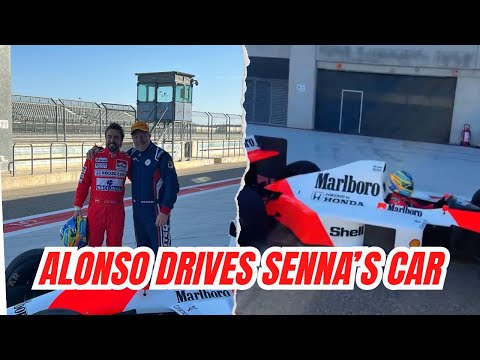
As Christmas approaches, Fernando Alonso, one of the most talented drivers in Formula 1 history, got behind the wheel of the McLaren-Honda MP4/5B, the very car that brought Ayrton Senna to glory in 1990.

On the Motorland Aragon circuit in Spain, Alonso recreated a pure moment of history under a bright sun. And if that wasn’t enough, his father, José Luis Alonso, was also present to share this unforgettable experience. But what lies behind this extraordinary day? Here’s the story.

Read more:

A unique reunion with a Formula 1 icon

Thanks to Zak Brown, president of McLaren and a renowned collector of historic cars, Alonso had the chance to relive Senna’s achievements. The MP4/5B, iconic with its red and white livery, was the centerpiece of a day that was far from ordinary. Brown, known for lending his prized cars to friends and colleagues, gave Alonso and his father a true leap back in time. But this wasn’t just an ordinary track day. Alonso and his father donned Senna’s original racing suits, making the tribute even more emotional. Social media posts from this intimate moment show a young Alonso in a red-and-white McLaren-inspired kart, juxtaposed with today’s Alonso, kneeling beside his father and the legendary race car. It was a full-circle moment for the Spaniard, who grew up idolizing the Brazilian driver.

The McLaren MP4/5B: An immortal F1 car

Let’s dive into the history of this legendary car. Designed in 1990, the MP4/5B is powered by a naturally aspirated 3.5-liter V10 Honda engine producing 690 horsepower. A true racing beast that made its mark in F1 history with six wins—all achieved by Senna—and twelve poles, showcasing its incredible dominance. It’s not just about performance: this car represents an era when drivers had to truly connect with their machines, with no electronic aids. For Alonso, taking the wheel of this masterpiece wasn’t just a privilege—it was a way to feel the unique bond Ayrton had with the car. It’s no coincidence that Alonso has considered Senna an inspiration since his early days, as he mentioned in a 2017 interview: “He made us dream of becoming drivers just by watching him.”

Alonso McLaren MP4:4B
Fernando Alonso driving the McLaren MP4/4B F1 car

A day of gratitude and legacy for Alonso

Beyond the technical achievement and symbolism, this day was also a way for Fernando Alonso to honor his father. José Luis supported him from his karting days, long before Alonso became a two-time world champion. On Instagram, Fernando shared a heartfelt message: “It’s impossible to thank my parents enough for everything they’ve given me.” As for Zak Brown, he also cherished this moment. He shared a commemorative photo with Alonso and the MP4/5B, emphasizing the importance of preserving and sharing these memories with new generations as well as with those who have shaped McLaren’s history.

Tesla has reason to worry as Hongqi just shipped its first 600 vehicles with massive ambitions

This article explores the extraordinary day when Fernando Alonso drove Ayrton Senna’s McLaren MP4/5B, reliving a significant chapter of Formula 1. Between tribute, nostalgia, and passion for racing, this moment symbolizes the timeless connection between Formula 1 legends and today’s generations.

Tesla has reason to worry as Hongqi just shipped its first 600 vehicles with massive ambitions

In November 2024, Chinese automaker Hongqi reached a major milestone by sending its first 600 electric cars, the EH7 and EHS7, to the European market.

With this bold move, the luxury brand is not only aiming to establish itself in a new region but also to prove that the Chinese industry can compete with global giants. It’s an ambitious strategy, full of challenges, that could redefine the standards of electric luxury cars.

Read more:

A technological push tailored for Europe

Hongqi has focused on two flagship models to make an impression: the EH7 electric sedan and the EHS7 electric SUV. These vehicles are not just for show. The EH7, for example, combines refined design with cutting-edge battery technology, complemented by smart features to appeal to the most demanding drivers. It’s a car designed for long distances while adhering to strict European environmental standards. As for the EHS7, it embodies versatility. This electric SUV boasts robust performance and a range that rivals current benchmarks. With features such as a strong transmission system and premium finishes, Hongqi is directly targeting European customers seeking vehicles that combine comfort, technology, and prestige.

Hongqi EHS7 - © Hongqi
Hongqi EHS7 – © Hongqi

A well-planned local strategy

To ensure a successful entry into the European market, Hongqi has left nothing to chance. The brand partnered with Samelet, a local automotive distributor, to roll out a sales and after-sales service network. Experience centers and technical hubs are planned across Europe by the end of 2024. This physical presence is crucial for building trust with European consumers, who place great value on service quality and proximity to infrastructure. Moreover, this strategy enhances the image of a serious and committed brand ready to adapt to local needs.

The U.S. justice system will finally take action to stop rule abuses that are ruining NASCAR: a strong message for other championships

The ambition of the giant Hongqi

Hongqi’s expansion into Europe is part of a globalization effort initiated several years ago. By launching high-end hybrid and electric models, the automaker has gradually drawn attention to its innovative capabilities. This shipment of 600 cars marks a real turning point: it’s no longer just about proving that Hongqi can produce quality vehicles, but also about capturing significant market share internationally. With this first step, Hongqi makes its ambitions clear: to become a key player in the luxury electric vehicle segment. The brand is already planning to expand its lineup to cover more European countries before targeting other continents. It’s a risky but potentially rewarding gamble if the brand can maintain a balance between competitive prices and high standards.

This article explores Hongqi’s ambitious strategy to conquer the European market with its luxury electric cars. Between technological innovation, local partnerships, and the drive to establish itself as a global player, the Chinese automaker is sparing no effort to win over a demanding clientele. Time will tell if this push marks the beginning of a new era for the Chinese automotive industry.

Source: Hongqi auto

The U.S. justice system will finally take action to stop rule abuses that are ruining NASCAR: a strong message for other championships

0

The NASCAR world faces a legal storm. Between court rulings and accusations of abuse of power, the ongoing dispute between Stewart-Haas Racing (SHR), Front Row Motorsports (FRM), and 23XI Racing against NASCAR management could reshape the sport’s rules.

This conflict revolves around the infamous “charters,” the licenses required to compete, and a controversial contract set for 2025. Let’s break down the facts and their implications for the future of NASCAR.

Read more:

Charters: The core of the dispute

To understand this case, it’s important to know that charters are essential in NASCAR. They are essentially licenses guaranteeing teams a spot on the grid and a share of the revenue generated by races. In 2024, Front Row Motorsports and 23XI sought to acquire charters from SHR to strengthen their positions. While FRM quickly formalized its purchase, 23XI hasn’t finalized its deal yet. The conflict escalated when NASCAR opposed the transfer of Stewart-Haas Racing’s charters to Front Row Motorsports, citing clauses in the 2025 contract. This contract requires teams to waive their right to file antitrust lawsuits against NASCAR—a clause that Judge Kenneth D. Bell criticized as potentially illegal. This is no small matter: it could challenge the way NASCAR has managed team rights for years.

Talladega Superspeedway - © NASCAR Media
Talladega Superspeedway – © NASCAR Media

A divisive clause

Judge Bell pointed out a major contradiction in NASCAR’s strategy. Essentially, if a team signs the 2025 contract, it forfeits the right to challenge NASCAR’s practices. But if it doesn’t sign, it can’t access charters. This “Catch-22,” as the judge described it, puts teams in a bind. Front Row Motorsports and 23XI challenged this clause in court, and so far, the rulings have been in their favor. The judge denied NASCAR’s request to block the transfer of charters. He argued that the clause in question is likely illegal and added that NASCAR would not suffer “irreparable harm” if the transfer proceeded. This decision could be a signal to other teams frustrated with the series’ monopolistic practices.

Ferrari’s first commercial failure? The legendary Italian carmaker is about to unveil a supercar that completely challenges its DNA

A historic trial looms

This legal drama is far from over. An antitrust trial is scheduled for December 2025, and it could redefine the relationship between NASCAR and its teams. For FRM and 23XI, this battle is crucial—not just for their own interests but for a fairer system overall. In a joint statement, the two teams called the decision a major victory for protecting teams, sponsors, and even fans. Their goal? To ensure that competition becomes more open and less dominated by a centralized organization dictating the rules. And finally, in a world where sports increasingly rhyme with business, can’t we fear seeing this type of conflict appear more frequently? Take Formula 1, for example: you’ve probably noticed the numerous controversies that have marred the year 2024… We simply hope these disagreements will be resolved quickly so we can refocus on what drives us above all: the passion for racing!

This article explores the legal battle between NASCAR and several teams over charters and the controversial clauses in the 2025 contract. Between court rulings and monopoly concerns, this conflict could change the game for teams and spectators alike. The question remains: will NASCAR adjust its practices, or will this trial mark a turning point in motorsport history?

Ferrari’s first commercial failure? The legendary Italian carmaker is about to unveil a supercar that completely challenges its DNA

Ferrari, the unstoppable master of performance prepares to launch its first fully electric model in 2025.

For decades, the Italian brand has captivated enthusiasts with roaring engines and uncompromising performance. But the arrival of a silent Ferrari challenges its very DNA. Balancing ambition and skepticism, this transition could mark a pivotal moment in its legendary history.

Read more:

Full electric: A strategic but risky gamble

For Ferrari, electrification is not an option—it’s a necessity. Environmental regulations are tightening, and the electric vehicle market is growing rapidly. Ferrari plans for 40% of its production to be electric by 2030. Yet, this shift raises many questions. How can Ferrari preserve its soul without its iconic roar? The challenge is even greater given that other luxury players like Maserati and Lamborghini are still navigating this segment. The case of the Maserati Folgore, struggling with slow sales, is a clear warning. Ferrari is taking a big risk: winning over loyal customers who value tradition and excellence while attracting new fans of sustainable mobility.

Maserati GranTurismo Folgore - © Maserati
Maserati GranTurismo Folgore – © Maserati

Innovation at the heart of the project

To succeed, Ferrari is pulling out all the stops. Its future electric model will be built in a brand-new 457,000-square-foot facility in Maranello. Batteries, electric motors, chassis—everything will be developed in-house to ensure a unique driving experience. The brand promises to retain its core values: power, lightness, and, above all, unparalleled driving sensations. Special attention has even been given to sound. That’s right—Ferrari doesn’t plan to leave its drivers in complete silence. Engineers are working on a distinctive sound signature to replace the legendary roar of its combustion engines. It’s a bold but necessary move to maintain the emotional connection with its drivers.

From Formula 1 winner to political leader: George Russel just wanted to race but now fights for the interests of his rivals

The challenges of a rapidly changing market

However, even with massive investment in research and development, Ferrari faces colossal obstacles. The luxury electric car market is still young and highly unpredictable. Some buyers may hesitate to give up the magic of traditional engines. Other brands, like Lamborghini, are taking their time entering this market, leaving Ferrari at the forefront to take the risks. If Ferrari fails to deliver a car that lives up to its reputation, the consequences could be severe. Not only would it stall its progress in electrification, but it could also tarnish its image of excellence. The Capital Markets Day planned for late 2025 will be critical—Ferrari will need to unveil its next strategic plans and, hopefully, reassure investors and fans about the success of this historic shift.

This article explores the massive stakes behind the launch of Ferrari’s first electric car. From environmental pressures to customer expectations and technological challenges, this model could mark a glorious new chapter or become a painful lesson for the brand. Either way, 2025 promises to be a crucial year for Ferrari and the future of high-end automobiles.

From Formula 1 winner to political leader: George Russel just wanted to race but now fights for the interests of his rivals

0

George Russell is not just a talent behind the wheel of his Mercedes. Since 2021, he has also held a key position within the Grand Prix Drivers’ Association (GPDA), an organization that represents Formula 1 drivers.

But he didn’t expect this role to become so… political. Between disputes with the FIA and tensions over safety, let’s dive into the challenges George Russell faces off the track.

Read more:

A responsibility inherited from his predecessors

The role of director within the GPDA wasn’t part of Russell’s initial plans. However, he took over in 2021 after Romain Grosjean’s departure from F1. When Sebastian Vettel retired at the end of 2022, Russell found himself the only active driver in the leadership, supported by Alexander Wurz, a former F1 driver, and Anastasia Fowle, a legal expert. While he took on this role to improve safety and sporting conditions, he quickly discovered the position was fraught with political considerations. One key moment of his tenure was the near-strike of the drivers after the missile attack near the Saudi Arabian Grand Prix in 2022. It was a turning point for Russell, who had to balance the drivers’ concerns with the diplomacy needed with the organizers and sports authorities.

Carlos Sainz Monaco 2024 - © Ferrari
Carlos Sainz Monaco 2024 – © Ferrari

Growing tensions with the FIA

Under Russell’s leadership, the GPDA didn’t hesitate to challenge the FIA and its president, Mohammed Ben Sulayem. An open letter published at the end of 2023 called on the organization to treat drivers as “adults,” after the president imposed restrictions on topics like swearing in public. What seemed like a trivial issue was actually part of a larger effort to prevent tensions between fans and officials, often fueled by impulsive comments. What surprised Russell was the complete lack of an official response to this letter. Instead, Ben Sulayem publicly stated that FIA management was a matter that didn’t concern the drivers. A statement that only widened the gap between the two sides. This friction reached its peak with a vote by the FIA’s general assembly, granting more direct power to the president. For Russell, these political battles seemed far removed from his original objectives.

More than 30% of our electric vehicles could run on coal according to a major discovery by American researchers

Uniting the drivers as the key to moving forward

Despite the complications, George Russell sees an opportunity in these challenges: uniting the drivers around common causes. His message is clear: what the drivers want is the best for F1. More transparency, more dialogue, and above all, close collaboration with the FIA. While he remains cautious on some issues, such as the recent changes to the FIA’s compliance system, he emphasizes one point: drivers don’t want to oppose the governing bodies but rather work alongside them to strengthen the sport. With this approach, Russell hopes to turn political struggles into an opportunity to move Formula 1 forward, while preserving its competitive and sporting essence.

This article explores George Russell’s responsibilities as GPDA director and the political challenges he faces. From driver safety to his tensions with the FIA, the Briton shows that his role goes far beyond the track, uniting drivers around a shared vision for F1’s future.

Images: Mercedes Archives – © Steve Etherington

More than 30% of our electric vehicles could run on coal according to a major discovery by American researchers

What if coal, often criticized for its CO2 emissions, became an unexpected ally in the energy transition?

In the United States, researchers have developed an innovative method to use coal as a key component in electric car batteries. Is this a promising breakthrough or just a misguided idea? In this article, we’ll examine the details and try to understand what this innovation could change.

Read more:

Why graphite is at the heart of the problem?

When we talk about electric batteries, lithium is often mentioned, but there’s another equally important element: graphite. This material is essential for making the anode, a central part of batteries that allows electrons to flow. The problem? It takes 20 to 30 times more graphite than lithium to build a battery, and nearly all the graphite available on the market comes from… China. This dependency raises significant concerns about supply and costs. This is where researchers from the Oak Ridge National Laboratory in the United States come in. Their idea? Replace natural graphite with processed coal. While it may sound surprising, it’s not far-fetched: coal and graphite share a carbon-rich composition. Using a novel purification process, these scientists have managed to remove impurities from coal, enabling it to perform the same functions as graphite in batteries.

More than 30% of our electric vehicles could run on coal, according to a major discovery by American researchers - © Andersen EV
More than 30% of our electric vehicles could run on coal, according to a major discovery by American researchers – © Andersen EV

A greener coal than it seems

This revolutionary process has several advantages. First, it reduces reliance on China by using a resource that is widely available and distributed globally: coal. But that’s not all. Producing synthetic graphite, which is common today, requires high temperatures and therefore significant amounts of energy, resulting in high CO2 emissions. By using purified coal, these emissions could be drastically reduced. Even better, the process developed by researchers can also be applied to coal waste, such as ash or mining residues. These waste materials, estimated at 100 million tons in the United States alone, could meet up to 30% of the graphite demand for EV batteries by 2050. This solution combines recycling, resource conservation, and a reduced carbon footprint.

Is Formula 1 on the brink of burnout? A team director raises concerns about overwork risks and suggests solutions inspired by other championships

A promising technology, but not for tomorrow

While this innovation brings a lot of hope, it’s important to remember that it will take time before it can be scaled up. Establishing a profitable and sustainable production chain will take years. In the meantime, this breakthrough could already ease pressure on graphite supply chains and reduce dependence on Chinese imports. It remains to be seen whether this process can adapt to other materials, such as biomass, as researchers suggest. For now, focusing on coal seems like a more realistic step. In a context where the automotive industry is searching for quick and effective solutions to democratize electric vehicles, this discovery could become a major asset.

This article explores how coal, often criticized for its emissions, could become a key component in electric batteries thanks to innovative technology. A solution that could reduce our dependence on Chinese graphite while recycling waste. Promising, but still far from being a reality for our cars.

Is Formula 1 on the brink of burnout? A team director raises concerns about overwork risks and suggests solutions inspired by other championships

0

Formula 1 has never been more popular, but its calendar is becoming a real headache. With 24 races and six sprints scheduled for 2024, the paddock is facing an intense pace.

Helmut Marko, Red Bull’s advisor, is sounding the alarm. The limits have been reached, he says, and the future of this relentless race model is in question. But what’s really wrong with this oversized calendar, and what solutions are being considered?

Read more:

An oversized calendar: All for the show, but at what cost?

Formula 1 has grown globally in recent years, thanks in part to initiatives like Netflix’s Drive to Survive. However, this expansion comes with consequences. With 24 races scheduled in 2024, plus six sprints, drivers, mechanics, and engineers are enduring an intense year. Long working hours and constant international travel are wearing down the teams. Despite attempts to group races by region to limit travel, the problem persists. Helmut Marko laments an imbalance: “This pace exhausts team members,” he explains. For mechanics, events like the Las Vegas Grand Prix, with late hours and endless workdays, are nearly unbearable. After 14 to 16 hours of working on the cars, preparations for the race often continue into hours when the body craves rest. These less-than-ideal working conditions could eventually impact teams’ overall performance and even their long-term competitiveness.

Carlos Sainz Monaco 2024 - © Ferrari
Carlos Sainz, Monaco GP 2024 – © Ferrari

A necessary reorganization: Marko proposes solutions

At 81 years old, Marko knows what he’s talking about, even if he’s no longer in the thick of operations. He suggests a possible reorganization of teams, with staff rotations to ease the workload. This system, already used in other disciplines like WEC or NASCAR, could provide some much-needed relief. However, F1’s budget cap complicates the implementation of such changes. How can human and financial balance be reconciled while maintaining a high-level spectacle? It’s a real puzzle for the FIA. Additionally, the current system, where almost every team member attends nearly all the races, could be rethought for a more flexible model. Teams could reduce employee stress and prevent burnout. However, this would require a thorough review of logistics and major budget adjustments.

Producing 7.4 million vehicles annually, this new Japanese group could become the world’s 3rd largest automaker and stand up to Chinese pressure

Global expansion and tradition: Finding the right balance

Formula 1 aims to attract new audiences with glamorous destinations like Miami or Las Vegas, but some purists lament the loss of the sport’s soul. “Races like Monza or Spa have a historic culture that must be preserved,” Marko insists. The balance between modernity and tradition has become a crucial issue. The current calendar, focused on modern and lucrative destinations, could eventually dilute the essence of F1, which has been built on iconic circuits and a unique atmosphere. Finding a compromise between expansion and respecting the sport’s historical values is essential for both fans and teams. If F1 wants to continue growing without exhausting its teams or disappointing its loyal fans, adjustments will need to be made, whether in the number of races or their geographical distribution.

This article explores the challenges of an ever-expanding F1 calendar, the solutions proposed by Helmut Marko to protect the teams, and the tensions between tradition and modernity in this evolving sport. The show is on, but at what cost?

Images: © Ferrari Media

Producing 7.4 million vehicles annually, this new Japanese group could become the world’s 3rd largest automaker and stand up to Chinese pressure

The automotive industry is undergoing a major transformation, and Japanese automakers Nissan and Honda might soon make history by merging.

As Chinese competition puts immense pressure on traditional players, a merger between Nissan and Honda could create the world’s third-largest automaker. But why this move, and more importantly, what could it mean for the industry?

Read more:

A merger to counter Chinese competition

If you’ve been casually following automotive news, you’ve probably noticed the meteoric rise of Chinese brands like BYD or Denza. With innovative technologies, improved quality in recent years, and highly competitive pricing, they are making a strong push into international markets. Nissan, financially struggling for several years, is looking for a way to avoid being overwhelmed. Enter Honda. Initial talks between Nissan and Honda focused on sharing electric vehicle technologies. But according to multiple sources, a full merger is now on the table. Together, with Mitsubishi—one of Nissan’s partners—they could produce 7.4 million vehicles annually, overtaking groups like Stellantis and closing in on giants like Toyota and Volkswagen. The goal? To create a Japanese “mega auto company” capable of standing up to new Chinese players.

Denza Z9 GT
Denza Z9 GT

Can Honda save Nissan?

First, let’s understand the power dynamics between Honda and Nissan. This is clearly not an equal partnership. On one hand, Honda is profitable and actively pursuing innovative projects, whether in electric vehicles, batteries, or even futuristic collaborations with Sony. On the other hand, Nissan is still dealing with the aftermath of the Carlos Ghosn scandal and years of poor financial results. Nissan could benefit from Honda’s financial stability and innovations. In return, Honda could gain access to new markets and cost savings by sharing factories or technologies. However, this marriage is far from simple: the merger could lead to plant closures and job cuts. On top of that, the two brands compete in key markets like the United States, which could create internal tensions.

Less than $200 per horsepower: this new Chevrolet humiliates Ferrari and Lamborghini with an absolutely unbeatable power-to-price ratio

Many challenges to overcome

A merger of this scale is, of course, not without complications. Nissan is still tied to Renault through cross-shareholdings, while Honda has partnerships across the board, including with General Motors, Sony, and other Japanese brands for exploring new technologies. How can these alliances be integrated without causing conflicts of interest? Moreover, skepticism persists. Investors seem divided: Nissan’s stock is rising on the prospect of a bailout, while Honda’s stock is dropping, showing that not everyone believes in the success of this deal. Yet, faced with the urgent need to reinvent themselves in an industry dominated by electric vehicles and connected software, this merger could be one of the last options for these two giants to stay competitive against the Chinese behemoths.

This article explores the potential merger between automakers Honda and Nissan, examining the reasons behind it, the advantages for each party, the possible impacts on the industry, and the challenges to overcome for such a partnership to succeed. If it materializes, this union could redefine the future of Japanese automotive in a world where competition is fiercer than ever.

Less than $200 per horsepower: this new Chevrolet humiliates Ferrari and Lamborghini with an absolutely unbeatable power-to-price ratio

With over 1,000 horsepower under the hood, the new 2025 Chevrolet Corvette ZR1 is ready to compete with the Ferrari SF90 and Lamborghini Revuelto.

And despite the rise of electric engines, Chevrolet remains loyal to its twin-turbo V8, a favorite both in the United States and Europe. So, how does this ZR1 stack up on paper? Spoiler: its performance might just change how you see supercars. Chevrolet proves that yes, it is possible to hit 1,000 horsepower with a V8 without electric assistance, and for that, we already owe them a big thank you.

Read more:

0 to 60 mph in just 2.3 seconds: Exceptional acceleration

For thrill-seekers, this Corvette doesn’t disappoint. The model equipped with the ZTK package, designed to maximize performance, goes from 0 to 60 mph in just 2.3 seconds. For comparison, that’s on par with some ultra-high-performance Teslas and even Ferraris like the SF90 Stradale. But there’s more: the ZR1 blasts through the quarter-mile in just 9.6 seconds. Can you imagine? A gas-powered car keeping up with the best electric supercars in this metric. To achieve such results, Chevrolet fine-tuned every detail. With a 5.5-liter twin-turbo V8 engine delivering 1,079 horsepower and 826 lb-ft of torque, this ZR1 offers a supercar-level experience without needing racing fuel or perfect track conditions.

Chevrolet Corvette ZR1 2025 © Chevrolet
Chevrolet presents the all-new 2025 Corvette ZR1 © Chevrolet

Not just about the numbers

You might think, “Okay, the numbers are impressive, but how does it handle on the road?” Good question. Chevrolet didn’t just create a car that’s fast in a straight line. The ZTK package includes carbon fiber aerodynamic elements to maximize downforce while maintaining a head-turning design. Ultra-sticky Michelin Pilot Sport Cup 2R tires complete the setup, making this Corvette as comfortable on the track as it is on the road. And then, there’s the driving pleasure. Unlike silent electric cars, this ZR1 roars with every acceleration, connecting you directly to the engine. Josh Holder, Chevrolet’s chief engineer, even stated that the ZR1 can reach a top speed of 233 mph—an impressive feat for a car in this price range.

Chevrolet Corvette ZR1 © Chevrolet
Its huge 5.5-litre twin-turbo V8 delivers over 1,000 horsepower © Chevrolet

Unbeatable performance for the price

The cherry on top? Chevrolet promises a price well below $200,000—a remarkable achievement considering its performance. Most supercars competing with the ZR1 cost significantly more, with some exceeding the $1 million mark. You’re getting a car that rivals Ferrari, Lamborghini, and other hypercars for a fraction of the price. By comparison, the Tesla Model S Plaid, while cheaper, doesn’t offer the same driving sensation or circuit-dominating capability. As for European models, few can match this balance of raw power and pure enjoyment.

Tesla’s first failure? Elon Musk halts Cybertruck production due to 3 major challenges

This article explores how the 2025 Chevrolet Corvette ZR1 stands out as one of the most impressive gas-powered supercars of the moment. With its breathtaking performance, cutting-edge technology, and competitive price, it redefines what to expect from an American sports car. If you’re looking for a machine that combines speed, style, and (relatively speaking) affordability, the ZR1 clearly deserves your attention.

Source & images: Chevrolet