Home Blog Page 31

Tesla’s first failure? Elon Musk halts Cybertruck production due to 3 major challenges

The Tesla Cybertruck, a futuristic pickup with a tank-like appearance, seemed poised to revolutionize the electric vehicle market. But today, Tesla announced a production halt—a major setback for a model that is still struggling to deliver on its promises.

Behind this three-day pause lies a more complex reality: production issues, declining demand, and controversies surrounding Tesla’s image. So, is the Cybertruck a commercial failure, or is it simply going through a period of adjustment?

Read more:

A stumbling start to the Cybertruck’s production

Introduced as a UFO in the automotive world, the Cybertruck created massive buzz at its launch. With its stainless steel body, so-called unbreakable windows (remember the live demo fail?), and its positioning as an electric pickup, it seemed to have everything to please. But industrial reality tells a different story: fewer than 40,000 units were produced in 2024, far short of Elon Musk’s earlier boast of two million reservations. And this production pause doesn’t help matters. Officially, it’s a three-day break for “adjustments.” Unofficially, it reflects difficulties in meeting demand. Negative feedback on the quality of the first deliveries—vehicles arriving dirty or poorly finished—hasn’t helped. On social media, criticism has poured in, cooling the initial enthusiasm of Tesla’s fans.

Tesla Cybertruck 50000 miles - © FramesnFuel
Tesla Cybertruck – © FramesnFuel

Customers losing interest in this special car

Another significant issue: demand seems to be plummeting. Why? First, Tesla’s image—and more specifically, Elon Musk’s—plays a role. In recent years, the billionaire has found himself at the center of political controversies, particularly with his ambiguous statements about Donald Trump. As a result, some customers no longer identify with the brand. Add to that the removal of subsidies for electric vehicle purchases, previously supported by Trump, and you have a recipe for sluggish sales. Moreover, despite aggressive discounts, potential buyers remain hesitant. In the United States—a pickup-loving nation—the Cybertruck struggles to compete with rivals like Rivian or Ford, which offer more established electric models. Worse still, the Cybertruck doesn’t meet European standards, limiting its potential market even further.

South Korea is creating a worldwide buzz around this discovery which promises a new form of 0-carbon energy: hydrogen from waste

A worrisome underperformance

But it’s not just the Cybertruck facing issues. Tesla, as a whole, has seen its sales figures decline in 2024—a first in a market where electric vehicles are booming. While competitors diversify their offerings and ramp up production, Tesla appears to be falling behind. This has investors worried. Tesla’s stock, which long rode a wave of irrational enthusiasm, could face a steep correction if sales don’t pick up. This explains the flood of discounts and promotional campaigns in recent months. However, Musk’s strategy of betting on his rivals’ weaknesses may not be enough to turn things around.

This article explores the potential commercial failure of Tesla’s Cybertruck, marked by chaotic production, declining demand, and a weakened brand image. As the electric vehicle market continues to grow, Tesla appears, for the first time, to be losing ground—highlighting the challenges of an industry in rapid transformation.

Image: © Tesla

South Korea is creating a worldwide buzz around this discovery which promises a new form of 0-carbon energy: hydrogen from waste

Green Hydrogen from Waste: Revolutionary ‘Zero-Gap’ Technology Sparks Clean Energy Production.

In a world urgently pivoting towards sustainability, a novel breakthrough from the Korea Institute of Energy Research (KIER) stands out, promising to transform waste into a valuable resource. The new ‘Zero-Gap’ technology could significantly enhance the production of green hydrogen from organic waste, addressing dual challenges: the escalating demand for clean energy and the effective management of waste.

Read more:

The mechanics of Bio-Electrochemical Cells (BECs)

BEC technology leverages microorganisms to transform organic waste into hydrogen fuel. As these organisms consume waste, they release electrons and hydrogen ions, which recombine to produce clean hydrogen gas. This process is not only more sustainable than traditional methods that rely heavily on fossil fuels but also produces far fewer carbon emissions, aligning well with global decarbonization objectives.

Limitations of traditional BECs

Despite its advantages, the scalability of BEC technology has been hampered by increased internal resistance and decreased efficiency as system size grows. The longer pathways required for electrochemical reactions in larger systems reduce the overall system efficiency, posing a substantial barrier to the technology’s commercial viability.

Introducing ‘Zero-Gap’ technology

To overcome these limitations, KIER has developed the innovative ‘Zero-Gap’ technology, which minimizes the distance between the cell’s electrodes and the separator. This optimization enhances electron transfer and reaction efficiency, significantly reducing power loss that is common in conventional processes.

Confirmed effectiveness and scalability

The new design not only improves performance but also maintains efficiency regardless of system size. Conventional systems often face performance drops due to pressure imbalances in larger setups, which create gaps between components. KIER’s design cleverly avoids these pitfalls, ensuring consistent performance across all scales. Extensive testing by the Korea Testing Laboratory (KTL) has validated the superior performance of this technology. It has demonstrated 1.2 times higher hydrogen productivity and 1.8 times greater electron production compared to traditional BEC processes. Crucially, these gains were maintained during pilot-scale experiments, marking a significant step towards commercial viability.

BEC technology leverages microorganisms to transform organic waste into hydrogen fuel. Source: KOREA INSTITUTE OF ENERGY RESEARCH

Future implications and global impact

This technological advancement could be a game-changer for countries looking to enhance sustainable waste management and clean energy production. The successful commercialization of this high-performance BEC could play a pivotal role in achieving carbon neutrality and fostering a hydrogen-based society.

Potential impact on hydrogen vehicles and sporting competitions

The surge in efficient hydrogen production could significantly boost the hydrogen vehicle market, an industry poised for expansion but currently limited by fuel production and infrastructure constraints. By increasing hydrogen availability and reducing costs, ‘Zero-Gap’ technology might accelerate the adoption of hydrogen-powered vehicles, including cars and buses. This enhancement in hydrogen fuel supply could also ripple through to motorsports, where hydrogen-powered racing could emerge as a new frontier, promoting sustainability in a traditionally fossil-fuel-dominated arena. As these vehicles gain traction, they could set new standards in automotive performance and environmental responsibility, reshaping both consumer markets and competitive sports landscapes.

This article explores how the ‘Zero-Gap’ technology from KIER could revolutionize the production of green hydrogen, offering a scalable, efficient solution to waste management and clean energy production. This innovation not only supports environmental sustainability but also contributes to the global transition towards a hydrogen economy.

Source: https://www.kier.re.kr/eng/

Game-changing study: EV batteries could last 40% longer than we thought

When it comes to electric cars, the battery is always the hot topic. How long will it last? Will it lose efficiency after a few years? A recent study conducted by Stanford University changes the game: electric car batteries could last up to 40% longer than previously thought.

And the key lies in our daily lives! Unlike lab tests, which simulate strict conditions, our everyday trips—filled with accelerations, braking, and pauses—actually appear to be much less stressful on the batteries.

Read more:

Lab tests aren’t as reliable as the reality

Traditionally, laboratories have relied on tests measuring charge and discharge cycles to estimate a battery’s lifespan. The concept is simple: every recharge slightly wears out the battery. But Stanford’s study shows that these methods miss a crucial point: real-life usage. Electric cars don’t experience constant charge cycles but instead face a mix of short trips, breaks, and accelerations. It’s precisely this varied usage that protects the batteries. Simona Onori, one of the lead researchers, explains that these pauses and variations in use help reduce cell degradation, contrary to what standard tests suggest. The researchers also compared personal electric cars to commercial vehicles like buses and delivery vans, which are used much more intensively. Unsurprisingly, the latter show faster wear. This proves one thing: the “normal” use of EVs—going from home to work and to the grocery store—is far from a worst-case scenario for batteries.

Electric car batteries could last up to 40% longer than previously thought - © Andersen EV
Electric car batteries could last up to 40% longer than previously thought – © Andersen EV

The real danger to our batteries

Another surprising finding from the study: a battery ages even when it’s not in use. In fact, “calendar aging” is more problematic than the number of charge cycles, especially for drivers who leave their cars unused for long periods. Alexis Geslin, another researcher involved in the study, confirms that EVs used daily age more slowly than those left idle for days or even weeks. For owners, this changes everything. No need to panic if you use your electric car regularly! The worst-case scenario is leaving it inactive in a parking lot. And for manufacturers, this information is crucial: they must now integrate this data into their battery management systems to better meet consumer expectations.

A $4 million gift: Discover this stunning Daytona SP3 tailor made by Ferrari for its F1 driver

What this could change for EV ?

The results of this study could have significant implications for the automotive industry. Today, battery lifespan is a key factor for buyers, who worry about the rapid depreciation of their electric vehicles. If manufacturers adopt this new data, it could change the game. First, they could optimize their battery management protocols, particularly through software updates. For instance, they could adjust systems to better protect batteries during long periods of inactivity. Second, these findings might encourage manufacturers to offer longer warranties, reassuring buyers about their investment. Finally, this could directly impact the resale value of used EVs, which often suffer from a poor reputation due to doubts about battery durability. Meanwhile, researchers aim to go further by studying the chemical and structural mechanisms behind battery aging. This deeper understanding could improve their longevity even more, making electric cars even more competitive against internal combustion models.

This article explores new insights into the lifespan of electric vehicle batteries. Contrary to common belief, daily use is much less taxing than expected, potentially transforming how manufacturers test and guarantee their products. By integrating this data, the future of electric cars looks brighter than ever.

Images: © Andersen EV

A $4 million gift: Discover this stunning Daytona SP3 tailor made by Ferrari for its F1 driver

0

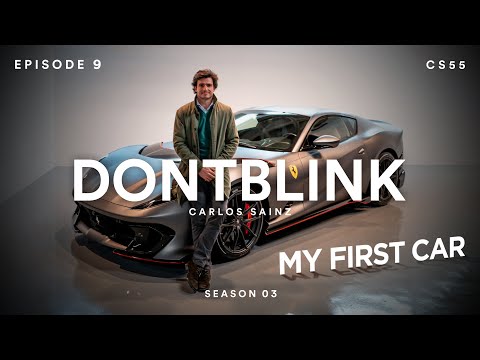
When a Formula 1 driver leaves Ferrari, they don’t leave empty-handed. Especially when their name is Carlos Sainz Jr. The Spanish driver, now heading to Williams in 2025, has just received an incredible gift: a Ferrari Daytona SP3.

This car is a one-of-a-kind piece estimated at $4 million. And it’s not just any Ferrari—it’s a true masterpiece from the brand’s “Icona series”, an ultra-exclusive range from the Prancing Horse.

Read more:

A tailor-made style for an exceptional driver

This Daytona SP3 is much more than a supercar. Its matte gray exterior, accented with red touches, perfectly reflects the elegance and power expected from a Ferrari. The “Tailor Made” customization goes even further: a red stripe runs across the hood and sides, and details like the number 55—Sainz’s signature—are subtly added to the side skirts. Inside, it’s a festival of carbon fiber and Alcantara, with red seats elegantly contrasting against the black dashboard. Another unique nod to the driver can be found on the air intakes and center console: the phrase “Smooth Operator,” Sainz’s well-known nickname among Formula 1 fans. Through its “Tailor Made” program, Ferrari has clearly poured its expertise into turning this car into a one-of-a-kind piece that embodies Sainz.

A race car adapted for the road

Under the hood, this Daytona SP3 hides a beast: a naturally aspirated 6.5-liter V12, directly derived from the Ferrari 812 Competizione. With 850 horsepower and a 7-speed dual-clutch gearbox, it can rocket from 0 to 60 mph in just 2.85 seconds. Its top speed reaches 211 mph, placing it among the fastest Ferraris ever made. This raw power isn’t just about numbers; it represents Ferrari’s DNA. After spending several years driving red machines on the track, Carlos Sainz can now take a bit of that sensation with him on the road. And even though his future now lies with Williams, this Daytona SP3 is a touching nod to his years under the Prancing Horse banner.

Forget Porsche—China is about to unveil a 911 killer with over 900 horsepower

Ferrari treats its Formula 1 drivers well

Earlier this year, fellow driver Charles Leclerc also received his own Daytona SP3. He opted for a matte white finish. Leclerc has received several exclusive Ferraris recently, including an SF90 XX Stradale with over 1,000 horsepower, an 812 Competizione Aperta, and the brand’s SUV, the Purosangue. As for Carlos Sainz, he had previously been gifted a V12-powered coupe: the 812 Competizione. It features the same matte gray paint as the SP3, along with red details like the number 55 embroidered on the floor mats. Fun fact: before this 812, Carlos Sainz admitted he had never owned any car other than a Volkswagen Golf!

This article explores the $4 million farewell gift Ferrari gave to Carlos Sainz: a Daytona SP3 with a unique style and breathtaking performance. From tailor-made customization to an outstanding engine, this supercar embodies the special bond between the Spanish driver and the legendary Italian team. A truly elegant gift for the talented “Smooth Operator.”

Image : LIKE A G on YouTube

Forget Porsche—China is about to unveil a 911 killer with over 900 horsepower

0

Car enthusiasts might have a new reason to get excited: BYD, the Chinese electric giant, is working on a direct rival to the Porsche 911.

This sporty coupe, still in the development phase, has been spotted in China, covered in BYD’s signature blue camouflage commonly used to hide cars not yet revealed to the public. But it’s not just its looks that are drawing attention; it’s also the ambition to conquer the European market. So, what do we know about this upcoming road beast?

Read more:

A bold and sporty design

The recently spotted prototype showcases a car with a decidedly sporty design. With a sloping roofline, a low beltline, and an angled front end, this model exudes performance and follows the hallmarks of sports car design. Even under its camouflage, the silhouette hints at the styling of BYD’s premium brand, Denza, which aims to attract a demanding audience. While some features, like the headlights or rear bumper, are still missing, the overall shape suggests a model that could rival the Porsche 911 and Taycan. Inside, early photos reveal a cabin seemingly focused on sportiness. Two sculpted front seats and a possible 2+2 configuration suggest a sporty layout, though rear passenger space appears limited due to the sloping roofline. Beyond aesthetics, however, it’s the onboard technology and performance that will make the real difference. Designed by Wolfgang Egger, a former Lamborghini designer, this car promises a blend of style and character.

Super 9 Concept
Super 9 Concept

A Denza legacy for Europe, but what about the U.S.?

This sports car’s positioning within BYD’s lineup is intriguing. It’s expected to join the Denza brand, once a joint venture with Mercedes-Benz but now fully owned by BYD. Denza is set to debut in Europe in 2025 with the Z9 GT, a high-end shooting brake. This sports coupe might follow, aiming to compete directly with European icons like the Porsche 911. This strategic move reflects BYD’s clear ambition to establish itself on the international stage. Europe, with its growing appetite for high-end electric vehicles, seems like a prime target. If BYD plays its cards right, this model could mark a turning point for how Chinese brands are perceived in the European market.

Denza Z9 GT
Denza Z9 GT

Performance that sets the tone

The production model’s technical specifications haven’t been revealed yet, but there are some hints. The concept version of this car, called the Fang Cheng Bao Super 9, featured a spectacular look with butterfly doors. It could share its powertrain with the Denza Z9, an already impressive SUV. If so, we’re talking about a tri-motor setup delivering a combined 710 kW, roughly 952 horsepower. This would put it in direct competition with the most prestigious sports cars. With such a powerful drivetrain, BYD isn’t hiding its ambitions: to offer a serious alternative to the segment’s benchmarks while relying on a fully electric powertrain. This would directly address the growing demand for a combination of performance and environmental sustainability.

The 8th largest automobile firm in the world is making a turn that will propel it to the forefront of the most innovative companies with a plant dedicated to hydrogen

This article explores the potential of BYD’s upcoming electric sports car, a bold rival to models like the Porsche 911. With a design crafted by a renowned expert, clear global ambitions, and promising performance, this car could shake up the high-end vehicle market. Stay tuned to follow the development of a model that’s bound to make headlines!

The 8th largest automobile firm in the world is making a turn that will propel it to the forefront of the most innovative companies with a plant dedicated to hydrogen

0

Honda’s Strategic Shift: Pioneering hydrogen fuel cells in a legacy auto plant.

Honda is gearing up to transform its traditional automotive production line into a hub for cutting-edge hydrogen fuel cell technology. The company plans to refurbish the now-dormant facilities in Mooka, Japan, signaling a significant pivot towards sustainable automotive solutions.

Read more :

Honda: Reviving Mooka with innovation

Honda’s Powertrain Unit Factory in Mooka, which ceased operations last October, is poised for a major overhaul. The automaker has disclosed plans to initiate the production of next-generation fuel cell systems by the 2027/2028 financial year. This strategic move utilizes existing infrastructure to minimize initial costs and accelerate development.

The United States will miss out on these 12 incredible Lotus models inspired by F1, as they will be reserved for the European market

Production goals and government support

Honda aims to produce 30,000 fuel cell units annually, relying on potential government subsidies. Japan’s progressive stance on hydrogen mobility, evidenced by its national policies, provides a supportive backdrop for this venture. The government’s commitment to fostering sustainable energy sources aligns perfectly with Honda’s project, ensuring a synergy that could propel the initiative forward.

A potential Merger on the horizon?

Amidst these technological advancements, there’s buzz about a possible merger between Honda and Nissan. Both companies have been pioneers in the automotive sector, with Nissan leading early electric vehicle introductions and Honda being a forerunner in hybrid technology. Recent discussions have focused on collaborating over software-defined electric vehicles, possibly integrating batteries and e-axles.

Honda’s hydrogen strategy

Honda’s vision extends beyond mere production; the company intends to make hydrogen technology a cornerstone of its business. It identifies four primary applications for its fuel cell systems: hydrogen-powered cars and commercial vehicles, stationary power sources, and construction equipment. Notably, Honda aims to capture a significant market share in the fuel cell truck segment, setting ambitious targets for 2030 and 2040.

The automotive and broader economic impact

This strategic initiative is not just a technological upgrade but a move that could revitalize local economies. By repurposing the Mooka site, Honda helps preserve jobs and fosters new skills in the workforce, positioning itself as a leader in the global shift towards sustainable mobility.

The broader picture: environmental and industry implications

Honda’s commitment to hydrogen fuel cells reflects a broader trend in the automotive industry towards sustainability. As governments worldwide push for lower emissions, companies like Honda are pivotal in transitioning the industry towards greener alternatives. This move also indicates potential shifts in global automotive supply chains and market dynamics.

All of America is hoping for the return of this iconic V8 engine, but Europe’s No.2 automaker wants to bury it for good

This article explores Honda’s strategic shift to hydrogen fuel cell production in Mooka, Japan. By retooling its former Powertrain Unit Factory for this next-gen technology, Honda not only aims to lead in hydrogen mobility but also supports Japan’s environmental goals. This initiative highlights the automotive industry’s evolving landscape, where traditional manufacturing sites are repurposed for innovative, sustainable technologies.

Source : Honda

America loses its only Formula 1 race winner: a brutal split with his team that could trigger an unprecedented chain reaction

0

It’s official: Sergio Pérez, after four seasons with Red Bull Racing, has decided to leave the team—and with it, Formula 1.

The announcement came as a surprise but was ultimately expected after a challenging 2024 season. Despite a contract running through 2026, behind-the-scenes discussions were necessary to finalize the split. Let’s take a closer look at the reasons behind this decision, the negotiations, and the future of the Mexican driver.

Read more:

Perez’ departure following a tough 2024 F1 season

The 2024 Formula 1 season was a real struggle for Sergio Pérez and Red Bull. Despite a promising start in 2021 and several victories along the way, the past two seasons (2023 and 2024) highlighted his difficulties in adapting to the F1 car, which cost Red Bull its Constructors’ Championship title. Dropping to eighth place in the drivers’ standings, Pérez was unable to deliver the level of performance Red Bull’s leadership expected from Max Verstappen’s teammate. Yet, the contract signed last June suggested a strong and extended collaboration until 2026. However, the reality of his performance, combined with pressure from the paddock and the media, accelerated the inevitable. In his farewell message shared on social media, Pérez sincerely thanked the team and his fans. On the other hand, Red Bull’s sporting director Christian Horner acknowledged Pérez’s significant contributions, particularly during the 2021 and 2022 championship-winning campaigns, while admitting that 2024 had been a challenging year for the Mexican driver.

The details behind the negotiations

Breaking a Formula 1 contract is never without consequences, especially when millions of dollars and multi-year commitments are involved. Sergio Pérez, guided by his experienced manager Julian Jakobi, had to play a strategic game to secure a favorable agreement. Red Bull, fully aware of its contractual obligations, had no choice but to negotiate. Both sides showed patience and firmness, which helped avoid a legal dispute. Red Bull Racing needed Pérez to agree to leave willingly. Intense discussions took place after the season finale in Abu Dhabi just a few days ago, where the two parties finally reached an agreement. Christian Horner stated that the decision had been carefully considered, with Pérez opting to take a “sabbatical” to refocus and explore his future while remaining tied to Red Bull through unspecified projects.

Amazon reveals its plan to bring AI into our cars, starting with a partnership with this iconic automaker

What’s next for Pérez and Red Bull?

For Sergio Pérez, this departure marks a pause in his F1 driving career after 14 consecutive seasons. With six Grand Prix victories and 39 podiums to his name, the Mexican driver leaves behind a respectable record. At 34 years old, he still has opportunities outside of Formula 1, whether in other motorsport categories or as a brand ambassador. The question remains whether he will consider a return in the future, as other drivers have done before him. As for Red Bull, the vacant seat alongside Verstappen has sparked speculation. Liam Lawson, a promising driver and stand-in during the 2024 season, appears to be the favorite for the role. His promotion could open the door for young talents like Isack Hadjar in FIA F2, reinforcing Red Bull’s strategy of focusing on its junior driver academy. With competition from teams like Mercedes and Ferrari, the 2025 season already promises to be highly intriguing for Red Bull.

This article explores the official announcement of Sergio Pérez’s departure from Red Bull Racing, the reasons behind the decision, and the outlook for both the driver and the team. A chapter closes for Pérez, but the next one may still hold some surprises.

Image: © Getty Images – Red Bull Content pool

Amazon reveals its plan to bring AI into our cars, starting with a partnership with this iconic automaker

Lotus, a legendary name in the world of sports cars, is rewriting its story by teaming up with Amazon Web Services (AWS). Its goal? To become a leading player in luxury and smart mobility by 2028, thanks to its strategic Vision80 plan.

But beyond the announcements, what’s really behind this partnership? With cutting-edge technology and bold promises, Lotus is redefining the future of the automobile.

Read more:

Autonomous driving, reinvented by Lotus

Lotus is taking a giant leap forward with ROBO Soul, an autonomous driving technology designed to make drivers’ lives easier. Imagine a car that handles parking for you or makes highway driving smoother. Behind this innovation lies a powerful artificial intelligence system that analyzes traffic, maps, and even your driving behavior in real time. But Lotus isn’t stopping there. Its ROBO Galaxy platform, dedicated to autonomous fleets, aims to bring this technology to a global scale. In short, the British brand is offering a more intuitive and, most importantly, safer driving experience, where avoiding obstacles becomes second nature. This advancement could transform how we view driving, making our journeys more serene. Let’s be honest, Lotus has taken a sharp turn from the lightweight, sporty cars like the Evora and Elise that once defined its legacy.

AWS logo
Amazon Web Services (AWS) logo

Connectivity that simplifies everyday life

Lotus is also betting big on smarter, connected cars. With Lotus Connect, the user experience reaches an entirely new level. Monitoring your car’s condition, receiving maintenance alerts, or locating a stolen vehicle has never been easier. And for gadget enthusiasts, the Lotus digital key—accessible via an iPhone or Apple Watch—might just make traditional keys a thing of the past. This isn’t just tech for the sake of it; it’s technology designed to be useful. Need assistance? The car automatically calls for help in case of an issue. All of this has been rolled out at lightning speed, thanks to AWS, proving that Lotus isn’t afraid to take risks to reinvent the relationship between driver and car—much like German automakers, such as Mercedes-Benz, did years ago with the Mercedes Me app.

Wrecked or like new? This Tesla Cybertruck with 50,000 miles says a lot about Elon Musk’s brand quality

Customer experience at the heart of innovation

With the collaboration between Amazon and Lotus, buying a car is now a unique experience with immersive 3D renderings. Want to see how your vehicle would look with custom colors or finishes? It’s possible. Lotus is also teaming up with artists and luxury brands to offer exclusive designs. The idea is clear: to deliver a car that feels personal to each customer. And this isn’t just marketing talk. By collecting data on buyers’ preferences, Lotus can suggest options tailored to your tastes. Buying a car becomes a bespoke experience, blending luxury and technological innovation.

This article explores how Lotus, with AWS’s support, is redefining luxury automobiles through groundbreaking innovations. From autonomous driving to smart connectivity and advanced customization, the brand is positioning itself as a key player in the future of mobility. With such bold ambitions, Lotus offers a glimpse into what tomorrow’s cars could be: intuitive, connected, and entirely unique.

Source: Amazon Press Release

Wrecked or like new? This Tesla Cybertruck with 50,000 miles says a lot about Elon Musk’s brand quality

The Tesla Cybertruck, with its futuristic design and bold promises, sparks both admiration and skepticism. But in terms of reliability, how does it hold up after intensive use?

One owner pushed their electric pickup to its limits, clocking over 50,000 miles in just a few months, including a trip to the Arctic Ocean. The result: an experience that highlights the real-world performance, costs, and minor flaws of this controversial model. Here’s everything you need to know before considering this electric giant.

Read more:

Range almost unchanged after thousands of miles

When delivered in March 2024, this dual-motor Cybertruck boasted an impressive range of 317 miles. Today, after covering 50,000 miles, that range has dropped slightly to 309 miles. This minor decrease is mainly due to energy-draining add-ons, like a rooftop tent and off-road tires that affect the aerodynamics of this behemoth. Additionally, energy efficiency has slightly decreased, especially under extreme conditions such as snowy roads and rugged trails. Despite this, the performance remains solid, showing that the vehicle can handle long-term mileage in tough conditions without losing reliability.

Charging costs beat gasoline pickups

In terms of cost, the Cybertruck proves to be a competitive alternative to gas-powered pickups. With 25,628 kWh consumed, charging exclusively at home would have cost about $3,000, while relying mostly on Tesla Superchargers raises the bill to $8,200. By comparison, a gas-powered Ford F-150 would have burned around 2,500 gallons of fuel, costing approximately $6,500 at the current US average gas price. While savings are more noticeable in countries with high fuel prices, they remain modest in the US, where electricity rates are often higher. However, while driving an electric vehicle can indeed be more economical, the gas station network remains far superior to that of electric chargers. Driving a gas-powered pickup is therefore more expensive, but undeniably more convenient.

A Japanese giant worth $180 billion and selling 8 million vehicles is about to emerge

Minor flaws and technical surprises

In terms of reliability, the Cybertruck experienced a few repairs but nothing major. The motorized tonneau cover required several service visits to fix alignment issues. A faulty accelerator pedal, subject to a recall earlier this year, was replaced quickly. Interestingly, Tesla requested an inspection and replacement of the rear motor—not due to a failure, but to study wear on what is likely one of the highest-mileage vehicles of its kind. This proactive approach demonstrates Tesla’s commitment to anticipating potential issues in vehicles already on the road, offering reassurance about the truck’s overall durability. Tesla’s eagerness to gather feedback mirrors the continuous improvement culture seen in leading tech companies like Apple or Google.

This article dives into the real-world experience of the Tesla Cybertruck after 50,000 miles, revealing strong performance, substantial savings on charging costs, and a few minor technical adjustments. While this electric pickup remains an expensive investment upfront, it proves capable of meeting long-term expectations, even in extreme conditions. Cybertruck: tech gadget or true adventure vehicle? The choice is yours.

Image: © FramesnFuel

A Japanese giant worth $180 billion and selling 8 million vehicles is about to emerge

The titans unite? Honda and Nissan may forge world’s next auto giant.

In a move that could reshape the global automotive landscape, insiders suggest that Honda and Nissan, two titans of the Japanese auto industry, might be on the brink of forming a partnership that would rank them as the third-largest car manufacturer worldwide. This potential merger could extend their collaboration well beyond their current projects on electric vehicle technology.

Read more:

A new Japanese alliance and a giant on the horizon: Honda + Nissan

Honda and Nissan are reportedly considering options that could dramatically alter their operational structures, potentially leading to a merger or the establishment of a joint holding company. This news originates from sources close to the matter, with further details first disclosed by a prominent Japanese business publication. Despite official statements maintaining that no formal merger has been declared, both companies acknowledge ongoing discussions about future collaborations.

Hongqi can finally rival Rolls-Royce and Mercedes with its brand-new ultra-luxury sedan

Exploring the synergies

The possibility of a merger comes on the heels of a March announcement in which Honda and Nissan disclosed their intent to explore cooperative ventures. These discussions have primarily focused on innovations in software-defined electric vehicles, where both companies see significant strategic benefits. With complementary strengths, Honda and Nissan aim to leverage each other’s capabilities to enhance their competitive edge in a rapidly evolving market.

Should Honda and Nissan proceed with a merger, they could form a formidable auto group poised among global leaders.

Market position analysis

Should Honda and Nissan proceed with a merger, they could form a formidable auto group poised among global leaders. In the first half of 2024, Honda and Nissan (along with Mitsubishi) sold approximately 4 million vehicles worldwide, placing them just behind Toyota’s 5.2 million units. Honda’s rank as the fifth most valuable automotive brand with a valuation of $26.7 billion, and Nissan’s ninth position, illustrates their significant market presence. The combined forces of Honda and Nissan could potentially elevate them to the third or fourth largest auto manufacturer globally, enhancing their competition with giants like Toyota, Volkswagen, and newer players like Tesla and Chinese manufacturers.

Metric Honda (2023) Nissan (2023) Combined Total
Global Rank by Sales 7th 8th 3rd
Annual Vehicle Sales ~4.2M ~3.8M ~8M
Main Competitors Toyota, VW GM, Hyundai-Kia Toyota, VW


Current challenges and strategic moves

Both companies face unique challenges that a merger could help mitigate. Nissan, for example, has recently been compelled to revise its profit forecasts downward and initiate a severe cost-cutting measure due to underperforming markets, notably in China. These actions include reducing global production capacities by 20% and cutting approximately 9,000 jobs. Honda, meanwhile, grapples with keeping pace in technological investments and has experienced a decline in its market share in China, alongside a troubled partnership with GM on a self-driving car project.

The future path

Honda’s top executive, Shinji Aoyama, mentioned that several strategic options are under consideration, including a merger, a capital tie-up, or the formation of a holding company. A definitive decision on the future direction of Honda and Nissan’s partnership could be announced before the year’s end, setting the stage for a significant shift in the automotive industry’s dynamics.

More powerful than an F1 car, Aston Martin unveils the first rear-engine supercar in its history: the Valhalla

This article explores the potential merger between Honda and Nissan, an initiative that could transform them into the world’s third-largest automaker by unit sales. As both companies navigate significant industry challenges, their combined strengths could herald a new era of dominance in both electric and conventional automotive markets. With strategic decisions expected soon, the automotive world watches eagerly to see if these Japanese giants will indeed unite.

Source : https://www.reuters.com/markets/deals/japans-honda-nissan-talks-merger-amid-ev-competition-nikkei-reports-2024-12-17/