Home Blog Page 25

$1 BILLION without selling a single car: the jackpot Tesla will hit in 2025 represents only 10% of its miraculous revenue over the past 6 years

Tesla may have just hit the jackpot. With the imminent arrival of new European CO2 emission rules, automakers are scrambling to avoid hefty fines.

As a savvy strategist, Tesla could capitalize on the situation by acting as a “savior” for certain brands, leveraging its expertise in electric vehicles. This lucrative opportunity could bring significant profits to the American company.

Read more:

Strict CO2 quotas: A headache for European automakers

Starting in 2025, the European Union is imposing stricter limits on the average CO2 emissions of new vehicles. The threshold drops from 116 g/km in 2024 to 94 g/km, with steep penalties for non-compliance: €95 (nearly $97) per gram of excess emissions per vehicle sold. For automakers lagging in electrifying their fleets, the costs could climb into the billions. Faced with this challenge, one solution is clear: pooling their emissions with Tesla, a 100% electric brand. By joining Tesla’s “pool”, manufacturers like Stellantis, Toyota, Ford, or Mazda aim to offset their excess emissions. This strategy balances average emissions using the strong performance of electric vehicles. However, Tesla’s services come at a price. According to UBS analysts, these partnerships could generate over $1 billion in revenue for the company.

Tesla to generate $1 billion from monetization of European CO2 quotas - © Tesla
Tesla to generate $1 billion from monetization of European CO2 quotas – © Tesla

A well-established business for Tesla

Tesla is no stranger to monetizing CO2 quotas. Since 2019, this activity has brought the company massive revenues, growing from $2.25 billion to over $10 billion across its operations. The American automaker has found an innovative way to turn its technological lead into a significant profit stream. Tesla’s “pool” remains open for new members until February 5. Interested automakers must submit their emissions data so Tesla can assess the risk of missing targets. Meanwhile, other brands like Volvo—a household name in Europe—or Mercedes are also leveraging their electric vehicle sales to generate similar revenues. For instance, Volvo expects to bring in $305 million thanks to its popular EX30 model.

From last to world champions in just one year? Only these 3 people have what it takes to turn around one of the worst F1 teams—and they already have a plan

A strategic shake-up for automakers

The EU’s stringent rules could force some automakers to overhaul their strategies entirely. Volkswagen and Renault, among the most exposed to fines, may be compelled to accelerate the transition to low-cost electric models. However, this approach carries risks. Selling EVs at discounted prices could lower vehicle residual values, further weakening an already strained market. This situation raises questions about the effectiveness of European policies. Rather than encouraging a gradual transition, these measures risk disrupting the market abruptly, with unpredictable consequences. Some observers argue that this approach lacks realism and puts additional strain on a European auto industry already struggling against Asian and American competition. For Tesla, however, this is a windfall—a financial boon that could offset declining sales and other challenges the company faces.

This article explores Tesla’s potential gains from its emission pooling strategy amid the EU’s CO2 quota requirements. It also examines the strategic challenges automakers face to remain competitive in a rapidly changing market.

Images: © Tesla

From last to world champions in just one year? Only these 3 people have what it takes to turn around one of the worst F1 teams—and they already have a plan

The 2024 Formula 1 season was a true uphill battle for Alpine F1 Team. After a difficult start, the French team seems to have found a second wind thanks to major changes, both on the technical and managerial fronts.

With the arrival of aerodynamics expert David Sanchez and the appointment of Oliver Oakes as team principal, Alpine F1 Team has gained a fresh dynamic. Here’s a look back at a precisely orchestrated revival that came at just the right time.

Read more:

A disastrous start to Alpine’s 2024 season

At the start of the 2024 Formula 1 season, Alpine found itself in dire straits. The A524 car struggled with significant excess weight and an inefficient aerodynamic design, preventing it from competing effectively with its rivals. According to David Sanchez, who returned to Enstone in May after successful stints at Ferrari and McLaren, the team was “at a dead end” in terms of development. That underscores the level of crisis the team was facing. However, Sanchez implemented a radical shift upon his arrival. A new floor design, introduced at the Miami Grand Prix, brought the car down to the minimum regulatory weight. This, combined with aerodynamic tweaks, delivered noticeable results: 14 top-10 finishes and even a double podium in Brazil. With 54 points scored after the summer break, Alpine managed to secure sixth place in the Constructors’ Championship.

Oliver Oakes, team principal - © BWT Alpine F1 Team
Oliver Oakes, team principal – © BWT Alpine F1 Team

A revamped management with a powerful trio

Management restructuring also played a crucial role. Oliver Oakes, appointed team principal in July 2024 at just 36 years old, became the youngest to hold this position in F1. Alongside him, legendary Alpine leader Flavio Briatore, who spearheaded Fernando Alonso’s championship-winning era in the 2000s, returned as an advisor. Together with Alpine CEO Luca de Meo, they form a trio focused on cohesion and a unified vision to rejuvenate the team. Oakes emphasizes the strength of this collaboration: “We work as a trio, each bringing our expertise. Flavio contributes immense experience, Luca provides strategic vision, and I execute on the ground.” Inspired by Red Bull’s successful management model of Christian Horner and Helmut Marko, Alpine finally seems to have found a structure capable of competing with the best teams.

It’s 50% cheaper and delivers 845 hp: this “donut” is set to make electric mobility accessible to everyone and power the future of the automobile

Ambitious goals for the future

While the progress made in 2024 is encouraging, Alpine F1 Team doesn’t plan to stop there. Oakes and Sanchez share a common ambition: to elevate the team from the midfield to serious title contention in the coming years. “We have the resources, infrastructure, and talent to aim higher,” Sanchez states. With recent additions like David Greenwood as race director and the undeniable talent of Pierre Gasly—who has already proven capable of delivering big points with an average car—Alpine continues to build a strong foundation. The goal is clear: to develop a competitive car for the 2025 Formula 1 season while maintaining the stability gained in 2024. Pre-season testing will offer the first glimpse of the team’s ability to sustain its momentum.

This article delves into Alpine F1 Team’s progress in 2024, marked by significant technical advancements, a management overhaul, and renewed ambition. Under the strategic leadership of Oliver Oakes and the technical expertise of David Sanchez, the French team appears poised to become a major force in Formula 1 once again.

It’s 50% cheaper and delivers 845 hp: this “donut” is set to make electric mobility accessible to everyone and power the future of the automobile

A groundbreaking announcement has come directly from CES 2025 in Las Vegas, one that could revolutionize the electric vehicle industry.

American company Donut Lab has unveiled a donut-shaped electric motor and a revolutionary technology platform that promises to simplify and accelerate automotive development. Let’s take a closer look at what this innovation could bring to the cars of tomorrow.

Read more:

A donut-shaped motor with impressive performance

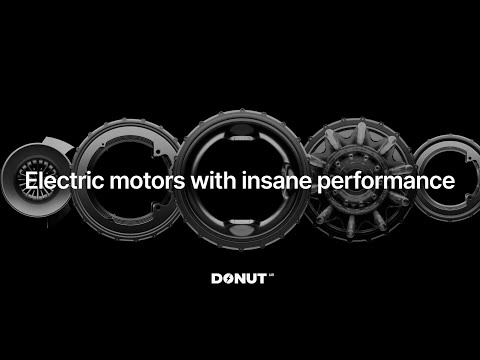
The donut-shaped electric motor revealed by Donut Lab pushes the boundaries of traditional engineering. Integrated directly into the wheels, this motor weighs only 88 lbs—three times less than a conventional motor—while delivering an impressive 845 horsepower and 4,300 Nm of torque. This configuration could enable automakers to design lighter, more energy-efficient vehicles. However, placing the motor inside the wheels adds weight to the unsprung mass, potentially affecting the vehicle’s dynamic behavior. Donut Lab argues that the benefits, such as improved handling due to specially adapted suspension systems, outweigh this drawback. Additionally, the motor contains 120 fewer parts than a conventional motor, making it 50% cheaper to produce—a significant advantage for reducing the cost of electric vehicles.

Donut Lab unveils 5 next-generation engines for 5 application domains - © Donut Lab
Donut Lab unveils 5 next-generation engines for 5 application domains – © Donut Lab

A game-changing technology platform

Alongside its innovative motor, Donut Lab introduced its modular technology platform called the Donut Platform. This system integrates components like an electric motor, a battery, and an onboard computer. It’s designed to operate without manual intervention, making the electric vehicle development process faster and more seamless. The platform also features a groundbreaking software layer powered by artificial intelligence. Donut Lab claims this technology can accelerate automotive software development tenfold. It also includes a no-code environment that allows designers to create vehicle logic using graphical interfaces, reducing errors and enhancing system safety. A strategic partnership with Qt, a company specializing in human-machine interface (HMI) development, complements this innovation. Through Qt Accelerate, the platform can automatically generate customized interfaces for each vehicle without manual coding. This system could transform how drivers interact with their cars.

What does this mean for the automotive industry?

The innovations presented by Donut Lab have the potential to disrupt the automotive industry. By making motors more affordable and speeding up vehicle development, the company could democratize electric vehicles and make production more accessible for emerging automakers. The space saved by these compact motors could be used to integrate larger batteries, improving EV range. Automakers could also design more aerodynamic models, further optimizing energy efficiency. Prototypes are already being evaluated by industry giants like Hyundai, which is even exploring the integration of suspension elements into the wheels. If these technologies deliver on their promises, they could quickly find their way into the market.

American Record: This $400,000 Ford becomes the first US Supercar to shatter the 7-minute mark on the world’s toughest track

This article explores Donut Lab’s innovations, from its donut-shaped electric motor to its revolutionary technology platform. By reducing costs, optimizing development, and opening up new design possibilities, these advancements could redefine the future of electric vehicles.

Source & images: Donut Lab

American Record: This $400,000 Ford becomes the first US Supercar to shatter the 7-minute mark on the world’s toughest track

Ford makes a bold statement with the Mustang GTD Spirit of America, a special edition of its most extreme model, celebrating both raw power and American values.

With a striking design, incredible performance, and a nod to the brand’s heritage, this model is sure to leave a lasting impression. Here’s everything you need to know about this highly exclusive edition.

Read more:

A design that celebrates America

The first thing that catches the eye is the livery of this Mustang GTD. Featuring a Performance White body accented with red and blue stripes, it pays homage to the iconic Mustang tribar logo and the colors worn by Craig Breedlove, the record-breaking speed legend of the 1960s. Every detail of the GTD Spirit of America is designed to reflect this legacy, including the red “Mustang” lettering beneath the rear wing. In terms of materials, Ford makes extensive use of exposed carbon fiber to enhance aerodynamics, particularly on the front splitter, diffuser, and massive rear wing. This abundant use of carbon fiber also helps reduce the car’s overall weight. The combination of elegance and performance gives this Mustang a look that is both aggressive and refined, guaranteed to turn heads whether on the track or the streets.

Featuring a Performance White body accented with red details - © Ford
Featuring a Performance White body accented with red details – © Ford

An interior focused on exclusivity

Inside, Ford has gone for a premium finish. The leather seats, with Dinamica inserts and Victory Blue contrast stitching, strike a perfect balance between luxury and sportiness. Every detail, from the 3D-printed titanium paddle shifters to the Black Onyx trim, reflects meticulous attention to personalization. This model also comes equipped with the GTD Performance package, which includes specific elements to optimize driving dynamics. While this special edition retains the DNA of a Mustang, its interior and advanced features deliver a truly unique experience. But exclusivity comes at a price: with a cost expected to exceed $400,000, the Spirit of America is aimed at collectors willing to invest in a one-of-a-kind piece worthy of the most prestigious collections.

Inside, Ford has gone for a premium finish - © Ford
Inside, Ford has gone for a premium finish – © Ford

Performance that stays impressive

Under the hood, nothing changes—and that’s a good thing. The Mustang GTD Spirit of America is powered by a supercharged 5.2-liter V8 delivering 815 horsepower and 900 Nm of torque. This beast is built to deliver extraordinary performance, featuring a semi-active suspension and carbon-ceramic brakes for exceptional handling—far exceeding the entry-level Ford GT model. Indeed, it’s no coincidence that Ford highlights its Nürburgring record: this Mustang is the first American car to complete a lap in under seven minutes. To put this in perspective, the 2017 Ford GT clocked a time of 7 minutes and 28 seconds. The difference is massive! With such performance, the Mustang GTD Spirit of America stands among the fastest cars on the planet while honoring the brand’s heritage and innovative spirit. Well done, Ford.

Tesla vs. Xiaomi: a response with high scandal potential following the official unveiling of the new 2025 Model Y Juniper

This article explores Ford’s bold move with the Mustang GTD Spirit of America, a special edition that combines patriotic design, luxurious interiors, and jaw-dropping performance. Blending heritage with modernity, this model redefines the limits of the legendary American muscle car.

Source & images: Ford

Tesla vs. Xiaomi: a response with high scandal potential following the official unveiling of the new 2025 Model Y Juniper

The 2025 Tesla Model Y Juniper has finally been unveiled, but for now, the first units will hit the roads in China.

This highly anticipated facelift introduces significant changes both inside and out, enhancing the appeal of this iconic Tesla SUV in an ultra-competitive market. Unfortunately, priority has been given to the Chinese market, with production based directly in Shanghai, accompanied by a rather surprising response from Lei Jun, the founder of Xiaomi.

Read more:

A redesigned exterior tailored for the Chinese market

With this update, Tesla aligns its design with the specific expectations of Chinese consumers, who are big fans of futuristic aesthetics. At the front, a full-width LED light bar integrates seamlessly with the main headlights. This modern lighting signature gives the Model Y a fresh look and aligns it more closely with aesthetic trends set by competitors like the Xpeng G7 and other models globally. At the rear, a similar LED bar adds visual consistency to the design and draws inspiration from the Cybertruck‘s signature elements. While the vehicle’s side profile remains largely unchanged, new 19- and 20-inch wheel options add an extra touch of elegance. This facelift makes the Model Y not only more sophisticated but also better suited to meet the demands of a market where innovation is key to winning over consumers.

At the rear, a LED bar adds visual consistency to the design - © Tesla
At the rear, a LED bar adds visual consistency to the design – © Tesla

A modernized interior for enhanced comfort and technology

The interior of the Model Y Juniper borrows directly from the improvements introduced in the Model 3 Highland. Gone are traditional stalks, as Tesla now integrates controls directly into the touchscreen and offers a simplified steering wheel. Rear passengers also enjoy an 8-inch display to enhance their travel experience, while LED ambient lighting, even on the door panels, creates a futuristic vibe. The second row now features power-folding seats, adding to the vehicle’s practicality, and upgraded materials enhance the perceived quality. Tesla also promises improved cabin soundproofing thanks to acoustic glazing and aerodynamic tweaks. Overall, the Model Y‘s cabin feels more refined, catering to families and premium EV enthusiasts alike.

The interior of the Model Y Juniper borrows directly from the Model 3 Highland - © Tesla
The interior of the Model Y Juniper borrows directly from the Model 3 Highland – © Tesla

Improved performance and fierce competition

On the technical front, the 2025 Model Y Juniper delivers impressive numbers. With a range of 310 to 375 miles depending on the variant, Tesla maintains its edge over many international competitors. However, Chinese rivals like BYD and Xiaomi, armed with high-performance battery technologies, keep Tesla on its toes. Fun fact: Lei Jun, the Xiaomi’s founder reportedly responded to Tesla’s announcement with a simple “Ok” on social media. A cheeky jab that clearly shows he has absolutely no fear of the American brand. The rear-wheel-drive version of the Model Y Juniper features a 62.5 kWh battery offering a range of 367 miles (CLTC cycle), while the Long Range version boasts up to 445 miles thanks to a 78.4 kWh battery. These figures underscore Tesla’s commitment to dominating the compact electric SUV segment. However, we’ll have to wait for European and U.S. certifications to see if these performance numbers remain consistent across markets. In any case, we can’t wait to see it on our roads!

Lamborghini launches its own Netflix for Smart TVs and here’s the good news: you don’t need to own a $500,000 Revuelto to dive into this ultra-sporty universe

This article delves into the updates of the 2025 Tesla Model Y Juniper, from its modernized design to its enhanced performance. It also highlights the strategic importance of the Chinese market for Tesla, a fiercely competitive arena where innovation drives brands to excel or risk being left behind.

Images: © Tesla

Lamborghini launches its own Netflix for Smart TVs and here’s the good news: you don’t need to own a $500,000 Revuelto to dive into this ultra-sporty universe

One of the most iconic Italian brands has just announced a surprising new development: Lamborghini TV, an app designed specifically for Smart TVs.

Created to deliver immersive and rich content, it promises to turn your living room into a true temple of automotive luxury. From legendary models to exclusive races and a bold lifestyle, this new platform is set to become a must-have for fans of the raging bull.

Read more:

A variety of content for total immersion

Lamborghini TV offers an impressive range of content. You can explore every detail of the brand’s latest mechanical masterpieces through high-definition videos or follow the thrilling races of the Super Trofeo series. Tech enthusiasts will appreciate in-depth technical analyses, while lifestyle fans can get a behind-the-scenes look at Lamborghini’s exclusive events. The app also includes podcasts, interviews with iconic figures like Lamborghini CEO Stephan Winkelmann, and historical features on legendary models such as the Countach and Miura. Whether you’re there to marvel at an Aventador or learn about the new twin-turbo V8 engine powering the Temerario, Lamborghini TV has something to pique every fan’s interest.

Lamborghini unveils its brand-new streaming app for Smart TVs - © Lamborghini
Lamborghini unveils its brand-new streaming app for Smart TVs – © Lamborghini

A Smart TV-ready app

To enjoy Lamborghini TV, you’ll need a Smart TV compatible with one of the following platforms:

  • Android TV (version 8.0 Oreo or later)
  • Tizen (Samsung, 2018 models and newer)
  • WebOS (LG, 2018 models and newer).

Installation is simple. Download the app from your TV’s app store, and once installed, it integrates seamlessly into your screen’s interface. A detail fans will love: the Lamborghini logo will proudly adorn your home screen. During our tests on an LG TV equipped with WebOS, the experience was smooth and immersive. Watching a Revuelto in action on a 4K screen is a visual delight, and technical or historical videos take on an entirely new dimension on a large display.

F1 driver’s new car: A stunning $400,000 Ferrari with 200 hp less than his race car

Lamborghini extends its universe

While some of the content on Lamborghini TV may feel familiar—it’s also available on the brand’s YouTube channel—the app’s true advantage lies in its format tailored for big screens. Watching a Huracán or Aventador in 3D rendering on a 70-inch TV is a completely different experience than viewing it on a smartphone. For Lamborghini, this initiative is more than just content delivery; it’s part of a strategy to expand the brand experience. With Lamborghini TV, the automaker invites fans to dive even deeper into its world, whether they’re tech enthusiasts or racing aficionados. Lamborghini has recently launched forward-looking models, such as the Revuelto with its micro-hybridized V12, and this new multimedia initiative clearly demonstrates its commitment to pushing boundaries and embracing the future!

This article explores how Lamborghini TV offers enthusiasts a full immersion into the world of supercars through rich, accessible content on Smart TVs. It highlights the app’s features and its impact on the brand’s image.

Source: Lamborghini

With a 4-foot screen behind the steering wheel, BMW completely reinvents dashboards to elevate the driving experience with Panoramic Vision

BMW has just unveiled its new Panoramic iDrive system at CES 2025.

This ultra-modern cockpit, designed for its Neue Klasse range of electric vehicles, promises to revolutionize how drivers interact with their cars. With advanced technologies like a panoramic head-up display and a redesigned operating system, the German automaker is clearly aiming to redefine the future of mobility.

Read more:

A groundbreaking head-up display

The centerpiece of this new cockpit is undoubtedly the BMW Panoramic Vision, a head-up display spanning the entire width of the windshield. Unlike traditional systems, this technology projects information onto a dedicated black strip, making essential data visible not only to the driver but also to passengers. Speed, navigation, and safety alerts are displayed intuitively and clearly. Additionally, a 3D head-up display is available as an option. This device adds an interactive layer, showing extra information about automated driving and critical alerts. BMW is betting on these innovations to minimize driving distractions while ensuring a fully immersive driving experience.

BMW unveils the Panoramic Vision at CES 2025 - © BMW
BMW unveils the Panoramic Vision at CES 2025 – © BMW

A cutting-edge operating system

BMW highlights the innovative nature of its display system: the new Operating System X is central to this revolution. Developed in-house on an Android Open Source Project (AOSP) platform, this system offers advanced customization and enhanced compatibility with over-the-air updates. With this platform, drivers can configure displays to suit their preferences, whether for driving modes or displayed widgets. Another standout feature is the integration of natural language voice commands. Imagine asking your car to find a charging station near a restaurant—and it delivers. This capability was showcased to CES 2025 visitors, who got to experience it firsthand.

BMW Operating System X - © BMW
BMW Operating System X – © BMW

Comfort and practicality at your fingertips

BMW has also reimagined the steering wheel’s ergonomics with an approach called “shy-tech.” Multifunction buttons illuminate only when activated, helping drivers locate controls easily. Precise haptic feedback ensures intuitive operation without taking eyes off the road. Driving aids are grouped on the left side of the steering wheel, while multimedia and customization controls are on the right, simplifying use for new users. To enhance sensory experiences further, BMW introduces a new sound signature, HypersonX. Developed by the brand’s internal studio, this innovation offers a unique acoustic immersion with 43 sound signals tailored to different driving modes.

BMW unveils the Panoramic Vision at CES 2025 - © BMW
BMW unveils the Panoramic Vision at CES 2025 – © BMW

BMW reinvents itself for a new era

With Panoramic iDrive and BMW Operating System X, the Bavarian brand has a clear vision: to position itself as a leader in the increasingly competitive electric vehicle sector. These innovations are part of the Neue Klasse platform, which will underpin six electric models, including the upcoming iX3 and 3 Series. But BMW’s focus goes beyond technology. The Neue Klasse also promises significant advancements in range and charging capabilities. While these promises are exciting, their implementation in real-world scenarios remains to be seen.

End of Ferrari Red? For its 75th year in F1, the Scuderia is reportedly working on a unique design far from the usual Rosso Corsa

This article explores the announcement of BMW’s Panoramic iDrive at CES 2025, the revolutionary technology behind its head-up displays, and the impact of these innovations on the Neue Klasse lineup and the electric vehicle market.

Source: BMW

End of Ferrari Red? For its 75th year in F1, the Scuderia is reportedly working on a unique design far from the usual Rosso Corsa

0

For the 2025 Formula 1 season, Scuderia Ferrari is reportedly taking a bold step forward. With the arrival of Lewis Hamilton alongside Charles Leclerc, the Italian team aims to make an impression on all fronts, including a striking new dark red livery set to turn heads.

This decision reflects Ferrari’s desire to usher in a new era, reclaim the crown, and remind the world that the Prancing Horse remains a timeless icon as it marks its 75th year in Formula 1.

Read more:

A new red livery for a legendary duo

Red livery is the essence of Ferrari—this is no secret. But the Scuderia has always experimented with shades to celebrate its history and ambitions. In 2025, the cars will feature a darker hue than in previous seasons—a deep red reminiscent of the brand’s iconic liveries, like the SF1000 unveiled at Mugello for its 1000th Grand Prix. According to some sources, this new shade could debut at the launch ceremony in London. The pairing of this new color with the drivers is equally compelling. Leclerc, remaining steadfast in his position, will now share the garage with seven-time world champion Lewis Hamilton. This union of generations sparks high expectations, particularly regarding on-track performance. After finishing second in the Constructors’ Championship in 2024, Ferrari hopes this formidable duo will help the team regain its former glory. Leclerc’s fiery spirit and Hamilton’s wealth of experience create a powerful combination that could prove decisive against McLaren and Red Bull.

SF 1000 Special livery at the 2020 Tuscan Grand Prix - © Eustace Bagge
SF 1000 Special livery at the 2020 Tuscan Grand Prix – © Eustace Bagge

When will Ferrari’s new livery be revealed?

For the first time, Ferrari will showcase its new colors during a collective event with other F1 teams at the O2 Arena in London. This move highlights the sport’s increasing openness to a broader audience. However, fans will need to wait a little longer to see the SF-25 in action, as Ferrari plans its traditional shakedown at Fiorano after the event. This moment will be pivotal, not only for testing the car but also for evaluating the strategic compatibility between Hamilton and Leclerc. A harmonious teammate relationship could be the key to their success. This color change isn’t just about aesthetics. It also symbolizes Ferrari’s commitment to a technical resurgence. The team appears determined to address the shortcomings of previous seasons, particularly issues related to car weight. With technical adjustments and a more aggressive approach, the Scuderia hopes to capitalize on its recent progress and leverage the talents of two of the grid’s most gifted drivers.

F1 driver’s new car: A stunning $400,000 Ferrari with 200 hp less than his race car

Renewed ambition in Formula 1

Ferrari has worked hard to solve the weight problems that have plagued its cars since the regulatory changes in 2022. With the FIA adjusting minimum weight limits, the team can now focus on performance improvements without the restrictions of past years. The dark red livery could also represent a psychological shift—a bold visual statement that Ferrari is ready for battle. Hamilton, with his unmatched experience and record-breaking achievements, is a cornerstone of this strategy, while Leclerc represents the team’s future. Together, they shoulder the immense responsibility of restoring Ferrari to the pinnacle of success, both in performance and prestige. So, what do you think—could 2025 be the breakthrough year for the Italian team?

This article explores Ferrari’s transformation for 2025, from its new dark red livery to the potential impact of the Leclerc-Hamilton duo, as well as the technical and strategic ambitions of this legendary team.

Image: © Ferrari media

F1 driver’s new car: A stunning $400,000 Ferrari with 200 hp less than his race car

0

Esteban Ocon, freshly signed with Haas in F1, seems ready to leave Alpine behind—and not just on the track. Free from his commitments with the Renault Group, the French driver has treated himself to a brand-new Ferrari 296 GTB!

He recently took delivery of the mid-engine model at Charles Pozzi, a Ferrari dealership in Paris. This shift marks a new chapter in his career, blending sporting ambition with personal indulgence.

Read more:

A Ferrari 296 GTB: A symbol of a new era

To celebrate this new chapter, Esteban Ocon has chosen to cruise in style with a Ferrari 296 GTB, a hybrid supercar that’s as powerful as it is elegant and estimated at over $400,000. Boasting 830 horsepower from a V6 engine paired with an electric motor, this Maranello masterpiece sprints to 60 mph in 2.9 seconds and reaches a top speed of 205 mph. For the design, Ocon appears to have opted for a metallic red paint called “Rosso Fiorano,” a tribute to Ferrari’s home circuit. Delivered at Charles Pozzi Paris, the car immediately caused a stir on social media. The chosen model, the 296 GTB, is also equipped with the Assetto Fiorano package, which enhances track performance with carbon fiber components and an optimized exhaust system. Simply put, it’s a configuration that reflects Ocon’s unwavering love for performance, both in F1 and on the road. And given France’s strict speed limits, it’s safe to assume this 296 GTB will see some action on the track!

His Ferrari 296 GTB is equipped with the Assetto Fiorano package - Charles Pozzi Paris
His Ferrari 296 GTB is equipped with the Assetto Fiorano package – Charles Pozzi Paris

Haas F1 Team: A new challenge for Esteban Ocon

After several up-and-down seasons with Alpine, Ocon is making the bold move to Haas, an independent team that made strides in 2024, finishing seventh in the Constructors’ Championship. Alongside promising rookie Oliver Bearman, the Frenchman hopes to play a pivotal role in the team’s growth. With a Ferrari engine powering the car and a positive trajectory, Haas could surprise in 2025—and Ocon is determined to establish himself as the leader the team needs. Transitioning from a works team like Alpine to a more agile structure like Haas won’t be without challenges. But with solid experience and unwavering ambition, Ocon seems ready to reinvent himself. French fans are hopeful this new chapter will inject fresh energy into his career.

Esteban Ocon unveil his brand new Ferrari 296 GTB - Charles Pozzi Paris
Esteban Ocon unveil his brand new Ferrari 296 GTB – Charles Pozzi Paris

From Alpine to Ferrari: A statement move

Beyond personal enjoyment, this purchase also signals a step up in Esteban Ocon’s image. After years tied to Renault and Alpine, he’s chosen an iconic Italian sports car that embodies prestige and performance. This decision is even more strategic given Haas’s close partnership with Ferrari, which supplies the team’s power units. Driving a Ferrari is a nod of respect to his new employers while also distancing himself from his Alpine past.

They are not “just simple engineers” but undisputed masters who have cracked the code to winning in Formula 1, and their departure from Red Bull will change everything

This article explores Esteban Ocon’s transition to Haas F1 Team, his acquisition of the Ferrari 296 GTB as a symbol of this new chapter, and the sporting challenges that await him in 2025.

Images: © Charles Pozzi Paris

They are not “just simple engineers” but undisputed masters who have cracked the code to winning in Formula 1, and their departure from Red Bull will change everything

Red Bull Racing is entering a new era with significant changes to its technical and managerial team.

With the departure of two iconic figures, Adrian Newey and Jonathan Wheatley, many are questioning whether the Milton Keynes-based team can maintain its competitiveness in Formula 1. However, Christian Horner, the team principal, remains confident: he believes these exits signify not a decline but a natural evolution for the team.

Read more:

Adrian Newey and Jonathan Wheatley: The end of an era of dominance in F1

Adrian Newey, the mastermind behind so many of Red Bull’s successes, announced his departure during the 2024 Miami Grand Prix. While he worked on Red Bull’s RB17 hypercar project, he was no longer directly involved in F1 projects when he transitioned to Aston Martin. Meanwhile, Jonathan Wheatley, a strategic cornerstone since the team’s early days, took on a new challenge as the sporting director for Audi’s F1 team. These two figures, synonymous with the Vettel titles from 2010 to 2013 and Verstappen’s dominance from 2021 to 2024, leave behind a significant gap. Yet, Horner insists Red Bull is well-prepared. “These departures, while significant, don’t mean a complete rebuild,” said Horner. “It’s an evolution, not an overhaul. It’s part of a plan that has been in place for quite some time.” His remarks reflect confidence in the team’s structure and its deep pool of talent.

Christian Horner & Gianpiero Lambiase - © Red Bull Content pool
Christian Horner & Gianpiero Lambiase – © Red Bull Content pool

A strategic internal reshuffle

To address these departures, Red Bull has promoted several key team members:

  • Gianpiero Lambiase, Verstappen’s race engineer, now heads race operations while continuing to work with the Dutch driver.
  • Stephen Knowles, a former strategy engineer, has been appointed as the FIA liaison, ensuring regulatory compliance.
  • Richard Wolverson has been promoted to head of race operations.

These promotions highlight Red Bull’s commitment to agility and fostering internal talent. Horner emphasized how these changes provide opportunities for team members to shine: “If an organization remains stagnant, it fails to move forward. These changes allow many experienced members of our team to step into the spotlight,” said Horner.

Only 12 min to charge to 100%: Korean researchers have finally found a solution to eliminate ALL the drawbacks of current batteries

Targeting the 2026 F1 season: An ambitious challenge

Rather than being distracted by recent changes, Red Bull Racing is already focused on its ultimate goal: adapting to the new technical regulations and introducing its own power unit in 2026. Horner described this project as the team’s most ambitious undertaking yet. This long-term vision allows Red Bull to mitigate the immediate impacts of Newey and Wheatley’s departures while preparing for a future that could redefine its position in the Formula 1 paddock. With rivals like McLaren and Ferrari surpassing Red Bull in the 2024 Constructors’ Championship, expectations for 2025 are high. Nevertheless, with a reorganized team and a solid plan, the Milton Keynes squad appears determined to reclaim its former glory.

This article explores the recent changes at Red Bull Racing, the impact of Adrian Newey and Jonathan Wheatley’s departures, and the team’s bold strategy to remain competitive as they prepare for the challenges of 2026.

Images: © Red Bull Content pool