Home Blog Page 8

Only in the US! This automaker will pay you if your car gets stolen—but only under certain conditions

Ford will pay you $2,500 if your F-Series is stolen, and here’s how it works.

The idea is simple: in addition to an enhanced protection system, Ford promises to reimburse you up to $2,500 if your vehicle is stolen. A unique initiative in the United States that could change the game against thieves.

Read more:

Increasingly frequent thefts in the United States

Car thefts have never been so common, and Ford has decided to tackle the problem head-on. Many models are affected, despite ongoing improvements in tracking systems, including the F-Series pickups. To protect its customers, the American brand has launched a new security program called the Ford Security Package.

Car thefts have never been so common, and Ford has decided to tackle the problem head-on.

Enhanced security on the F-Series

To reduce the risk of theft, Ford has integrated several new features into its F-Series models, notably the F-150 and Super Duty. Now, all eligible vehicles receive free access to the Ford Security Package for one year. This program includes advanced monitoring with alerts sent directly to your smartphone via the FordPass app, so you’ll be notified in real time if someone tries to force entry or move your pickup without authorization. One of the most interesting additions is the Start Inhibit function. With this technology, you can remotely disable your vehicle’s ignition, preventing anyone from tampering with it even if they have a valid key. It’s an effective solution against key cloning or quick thefts in parking lots.

Ford has integrated several new features into its F-Series models, notably the F-150 and Super Duty.

Financial support in case of theft

Ford isn’t just improving the security of its vehicles. The brand also offers a reimbursement of up to $2,500 if your F-Series is stolen and damaged, or if it isn’t recovered. This amount is intended to cover the insurance deductible, which is often high for this type of vehicle. To qualify, you simply need to be enrolled in the Ford Security Package and meet certain conditions, such as reporting the theft to the police and activating the monitoring via FordPass. This program is currently available in 40 U.S. states and Washington, D.C., but not yet in Canada. Ford has also stated that other models in its lineup might benefit from this service in the future—a very promising service that could inspire many other manufacturers, like Chevrolet or even Tesla, why not, since they’re always on the lookout for new innovative services to implement for their customers, both in the U.S. and beyond.

Ford also offers a reimbursement of up to $2,500 if your F-Series is stolen and damaged.

A subscription after the first year

While this security package is offered free for the first year, it becomes a paid service afterward. The rate is set at $7.99 per month, a modest amount compared to the costs associated with vehicle theft. For F-Series owners, this represents extra insurance and welcome peace of mind, especially considering that these pickups are regularly among the most stolen vehicles in the United States.

This article explores Ford’s new security program for F-Series owners. By combining advanced protection and financial assistance in the event of theft, the American brand aims to offer its customers unprecedented peace of mind. With a monthly subscription after the first year, this service could very well become a standard in the automotive industry.

Images: © Ford

A 17-year-old scandal resurfaces and threatens to shake up the 2008 F1 World Championship title

0

The case seemed buried for years, but Felipe Massa isn’t letting it go.

Former Brazilian F1 driver Felipe Massa has launched a legal battle to challenge the results of the 2008 Formula 1 championship. The controversy centers around the infamous “Crashgate” incident at the Singapore Grand Prix—an event that, according to Massa, unfairly influenced the outcome of the title race. After several failed attempts to settle the matter amicably, the case is now in the hands of the High Court in London. A decision could have historic repercussions.

Read more:

A race that changed everything

The 2008 Singapore Grand Prix will always be remembered, but for all the wrong reasons. On that day, Renault orchestrated a deliberate crash: Nelson Piquet Jr. intentionally drove into the wall, triggering a safety car deployment. This move strategically benefited his teammate, Fernando Alonso, who had just pitted before the incident and went on to win the race. For Massa, that race was a nightmare. Leading before the crash, he lost all chances of victory after a disastrous pit stop, where he drove off with the fuel hose still attached to his car. This incident cost him crucial points and had a major impact on the championship fight. At the time, the FIA did not overturn the race results, only punishing Renault a year later without affecting the final standings.

F1 Scuderia Ferrari - © Mike Bird
F1 Scuderia Ferrari – © Mike Bird

Why Massa is still fighting today?

The case resurfaced in 2023 when Bernie Ecclestone revealed that he and other key F1 officials were aware of the manipulation as early as 2008 but chose not to act immediately to avoid a scandal. For Massa, this revelation changed everything. He argues that had the matter been properly addressed at the time, the Singapore Grand Prix could have been annulled—potentially making him the rightful 2008 champion instead of Lewis Hamilton. Based on this, he has filed a lawsuit against the FIA and FOM (Formula One Management), seeking official recognition and financial compensation. While he no longer demands that the title be retroactively awarded to him—a nearly impossible request at this stage—he is determined to obtain justice for what he sees as a major violation of the sport’s integrity.

A trial that could leave a mark

The High Court in London has scheduled an initial hearing from October 28 to 31, with representatives from the FIA, FOM, and even Bernie Ecclestone expected to attend. This case is unprecedented in F1 history—never before has a driver attempted to overturn a championship result more than 15 years after the fact. The outcome could have far-reaching consequences beyond Massa’s case. If the court rules in his favor, it could challenge how past scandals were handled and open the door for further disputes over historical results. As F1 strives to modernize its image and reinforce its authority, this case presents a significant credibility test for the sport.

This article explores Felipe Massa’s legal battle to challenge the results of the 2008 F1 championship. It revisits the “Crashgate” scandal, its impact on the season, and the stakes of the ongoing lawsuit. If the case succeeds, it could reshape how Formula 1 handles controversies and influence the sport’s history.

Image: © Tim Wang

Are Tesla owners the worst drivers? That’s what this statistical study suggests

The numbers don’t lie… A recent study ranked car brands by driver behavior, and the results might surprise you

A recent American study has ranked car brands based on the driving behavior of their owners, and the results are bound to surprise more than a few people. Some brands, known for their advanced technology, are at the top of the list for being involved in the most driving incidents. But should we blame the cars themselves or the drivers behind the wheel? Keep in mind, this data is based on American roads…

Read more:

Tesla, Ram, and Subaru lead in traffic violations

According to data collected by an insurance analytics company, Tesla, Ram, and Subaru owners are the most likely to be involved in accidents or traffic infractions. On average, for every 1,000 drivers, Tesla reports 36.94 incidents—a sharp increase compared to last year. Ram and Subaru closely follow with similarly concerning numbers. This immediately raises the question: why these brands in particular?

In Tesla’s case, part of the explanation could lie in the overconfidence some drivers place in its assisted driving system. While Autopilot is designed to assist drivers, it is not fully autonomous. Yet, some users tend to rely too heavily on it, which can lead to dangerous situations. For Ram, a brand known for its large pickups, the risk factor might be more related to driver behavior. These trucks are often associated with aggressive driving or off-road use, naturally increasing the likelihood of incidents.

Model 3 Performance - © Tesla
Model 3 Performance – © Tesla

German brands aren’t spared either

Looking at European manufacturers, Audi, Volkswagen, and BMW drivers also rank high on the list of “problematic” motorists. Audi comes in fourth place with an incident rate of 32.23 per 1,000 drivers, followed by Volkswagen (31.56) and BMW (30.43). German vehicles are often associated with high performance and dynamic driving. It’s no surprise, then, to see them featured in this study, as their owners tend to take full advantage of their cars’ capabilities. Additionally, these brands are particularly popular among younger drivers, who statistically have a higher chance of being involved in traffic violations. However, Mercedes and Porsche fare much better. Despite their strong market presence, Mercedes has a much lower incident rate, while Porsche doesn’t even appear in the ranking—likely because there are fewer of them on the roads.

Mercedes AMG C63 S E Performance

Is it really about the brand or the driver?

Studies like this always have limitations. Can we really say that a car brand encourages bad driving? Not necessarily. It’s more likely that certain types of drivers are drawn to specific brands, which could skew the results. For example, Tesla’s powerful electric cars often attract tech-savvy performance enthusiasts, which might explain a certain lack of caution behind the wheel. On the other hand, some brands show significantly lower incident rates. In the U.S., Cadillac, Pontiac, and Mercury owners seem to drive more cautiously, with accident numbers far lower than those at the top of the ranking. This could be because these vehicles are often driven by older motorists or those with a more relaxed driving style that isn’t performance-focused.

Model 3 Performance - © Tesla
Model 3 Performance – © Tesla

This article explores how a recent American study highlights differences in driver behavior based on car brands. Tesla, Ram, and Subaru have some of the highest accident rates, while brands like Cadillac and Pontiac appear to have more cautious drivers. Rather than a simple issue of branding, the study raises questions about driving styles and how in-car technology influences driver behavior.

Source: Lendingtree

Image: © Tesla / © Mercedes-Benz

217.5 mph in the 70s! Hard to believe but this concept car was indeed built by the brand that created the world’s most beautiful cars

Ferrari has always pushed the boundaries of automotive design, but in 1970, the brand took a bold gamble that remains one of the most fascinating concepts in its history.

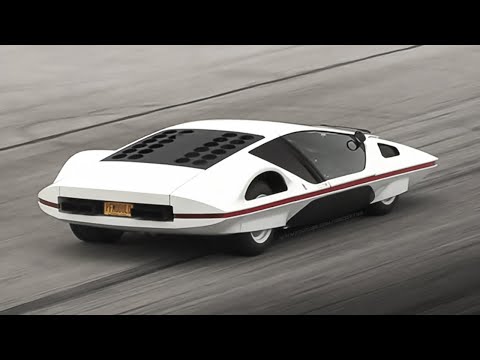
Hard to believe just by looking at it, but this car is actually built on a Ferrari 512 S race car. Transformed by Pininfarina into a vehicle straight out of a sci-fi movie, it caused a sensation at the Geneva Motor Show. With its radical shape, unique entry system, and a V12 engine hidden beneath a spaceship-like body, the Ferrari Modulo is a rolling UFO. But what makes it even more incredible is that this concept was never supposed to drive—until a passionate collector decided to bring it to life.

Read more:

A design from another world

When Pininfarina got hold of a Ferrari 512 S, the goal was to create a car that embodied the vision of the future. Paolo Martin, the designer behind the project, imagined a vehicle unlike anything seen before: a real concept car. Standing just 35.43 inches tall—5 inch lower than the already low-slung Ford GT40—it appears to hover over the road. Instead of conventional doors, the cockpit opens via a sliding canopy that moves forward, a design directly inspired by aviation. Interestingly, this concept has only recently been revived in the automotive world with KTM’s X-Bow GT-XR. The rear wheels are partially covered to enhance aerodynamics, and the back features 24 circular openings symbolizing the engine’s 12 cylinders. An aluminum chassis and a fiberglass body add to its futuristic appeal, while the minimalist interior keeps all controls clustered around the steering wheel, reflecting the boldest concept designs of the 1970s.

Ferrari Modulo Concept car

Who is Pininfarina?

Pininfarina is one of the most prestigious automotive design studios in the world. Founded in 1930 by Battista “Pinin” Farina in Italy, it has built a reputation for designing some of the most iconic cars in history. Closely linked to Ferrari, Pininfarina is responsible for masterpieces like the Ferrari 250 GT Lusso, the Ferrari F40, and the Ferrari Enzo. Hard to believe, then, that behind the completely eccentric design of the Modulo lies the work of the world’s most famous designer!

Ferrari Modulo Concept car

Performance worthy of the best supercars

Don’t let its extravagant design fool you—beneath the sculpted body designed for aerodynamics, the Ferrari Modulo hides a truly performance-focused machine. Its 5.0-liter V12, producing 550 horsepower, allowed it to reach 350 km/h (217 mph), an extraordinary feat for its time. Weighing just 900 kg (1,984 lbs), it could accelerate from 0 to 60 mph in just 3.1 seconds—figures that remain impressive even today. Unlike other Ferraris of the era, it was never meant for the track or mass production. It was, above all, a technological manifesto—a showcase of Pininfarina and Ferrari’s design and engineering prowess. Despite its potential, it remained a prototype, displayed at exhibitions and museums, never meant to hit the road.

Ferrari Modulo Concept car

An unexpected revival

After spending decades on display, the Ferrari Modulo found a new owner in 2014: James Glickenhaus, entrepreneur and renowned collector of rare cars. His ambitious goal? To restore this unique concept and make it fully drivable. The project was far from simple. The Modulo had never been designed to function on the road, and its engine had never actually run in this configuration. Glickenhaus and his team had to rebuild the entire mechanical system to make it fully operational. After years of meticulous work, the Ferrari Modulo finally hit the road for the first time in its history. Today, this one-of-a-kind vehicle is finally able to drive and continues to mesmerize enthusiasts at special events. It represents an era when boldness and creativity could give birth to automotive UFOs. It’s almost unbelievable that Ferrari—the brand behind some of the most beautiful cars in history—was responsible for this machine.

This article explores the fascinating story of the Ferrari Modulo, a concept car with radical design and astonishing performance. Created in 1970 by Pininfarina, it remained a prototype until its recent restoration by James Glickenhaus. With its futuristic look and V12 engine, it stands as one of Ferrari’s most daring projects—a testament to visionary ideas that never go out of style.

France will never produce a more beautiful vehicle than this classic car that makes American collectors dream, ready to spend over $300,000 to own it

The Citroën DS: a timeless icon in the classic car world.

The Citroën DS, affectionately known as “La Déesse” or “The Goddess,” has been a beacon of automotive innovation and style since its unveiling at the 1955 Paris Motor Show. This revolutionary vehicle not only captivated the hearts of car enthusiasts but also redefined the boundaries of design and engineering in the automotive world. In this article, we will delve into the history of the DS, explore the reasons behind its enduring success, and examine why it remains one of the most sought-after classic cars today.

Read more:

A revolutionary design for a French luxury icon

The Citroën DS was the brainchild of Italian sculptor and industrial designer Flaminio Bertoni and French aeronautical engineer André Lefèbvre. Its futuristic design, characterized by sleek lines and an aerodynamic profile, was unlike anything seen before. The DS was not just a car; it was a work of art that seemed to have “fallen from the sky,” as described by French philosopher Roland Barthes. This avant-garde aesthetic, combined with its innovative technology, made the DS an instant icon.

Technological innovations

Beyond its stunning appearance, the DS was a technological marvel. It was the first mass-produced car to feature hydropneumatic suspension, which provided an unparalleled ride quality and handling. Additionally, it introduced disc brakes to the mass market, significantly improving safety. These innovations set new standards in the automotive industry and cemented the DS’s reputation as a technical masterpiece.

Market success and legacy

Despite its high price, which made it more expensive than many of its contemporaries, the DS generated immense interest. In the first day of the Paris Motor Show, Citroën received over 12,000 orders, a record that stood for decades. The DS became a symbol of French ingenuity and innovation, reflecting the nation’s post-war resurgence and its ambitions in the technological race of the Cold War era.

To make the DS more accessible, Citroën introduced the ID19, a less expensive variant that retained many of the DS’s features but with reduced horsepower and without the hydraulic brakes and steering. However, it was the DS that captured the hearts of enthusiasts and collectors.

The DS in the classic car market

Today, the Citroën DS is highly prized among classic car collectors. Its value has consistently risen over the years, with rare models like the DS 21 Décapotable fetching significant sums at auctions. In 2025, a beautifully restored 1970 DS 21 Décapotable sold for €140,300 ($147,230) but it’s far from another model dating from 1973, sold at auction in 2009 for almost 350,000 euros ($367,811), a world record, highlighting the enduring appeal of this model. The rarity and condition of these vehicles contribute to their high value, making them true treasures for collectors.

1958 model 4-cylinder 1.9 L, 75 hp.

Remaining units in 2025

Estimating the exact number of Citroën DS models remaining in 2025 is challenging, as many have been restored, modified, or are stored in private collections. However, it is known that Citroën produced over 1.45 million DS units during its production run from 1955 to 1975. Given the popularity of the DS among collectors and restorers, a significant portion of these vehicles have been preserved and maintained.

Why the DS remains so cherished

The Citroën DS’s enduring success can be attributed to several factors. Its revolutionary design and technological innovations have made it a timeless classic, appreciated for both its aesthetic appeal and its historical significance. Additionally, the DS’s performance and comfort, thanks to its advanced suspension and braking systems, continue to impress even by modern standards.

For collectors, the DS represents a piece of automotive history that is both beautiful and functional. Its rarity, especially in pristine condition, adds to its allure. Whether it’s the sleek lines of the sedan or the elegance of the Décapotable, each variant of the DS offers a unique experience that captivates enthusiasts worldwide.

Why it’s still a dream car ?

The Citroën DS is more than just a car; it is a cultural icon that embodies the spirit of innovation and style. Its impact on the automotive world has been profound, influencing generations of car designers and engineers. As a classic car, the DS continues to captivate collectors and enthusiasts, its value and appeal only growing with time. Whether you’re a seasoned collector or simply an admirer of automotive history, the Citroën DS is a true treasure that never fails to inspire.

We’re finally here! What should we expect from the 2025 F1 winter tests?

0

The F1 cars are ready to roar on the asphalt in Bahrain for the first tests of the 2025 Formula 1 season.

Three intense days during which the teams will test their new F1 cars before the big start in Melbourne in mid-March. But while these tests help fine-tune the final details, they don’t always give a realistic view of the upcoming hierarchy. James Vowles, head of Williams, doesn’t expect anyone to come out of Bahrain with any certainties. With new regulations, young recruits, and hidden surprises, what can really be drawn from these tests?

Read more:

What are F1 preseason tests?

F1 preseason tests are sessions held before the official season begins. They allow teams and drivers to trial their new cars, fine-tune setups, and gather important data on performance, aerodynamics, and tire behavior. Although the lap times don’t always reflect race conditions, these tests are essential for identifying issues and preparing for the challenges of the upcoming season.

Haas F1 2025 - © Haas F1 Team
Haas F1 2025 – © Haas F1 Team

 F1 2025: Tests under high pressure

The winter tests are a key event for the teams, but their limited duration complicates matters. Each team has three days to put its new car to the test, with only one driver on track at a time. This means that each driver has only a day and a half to get their bearings before the first race. This is especially critical for newcomers like Kimi Antonelli, Isack Hadjar, and Gabriel Bortoleto, who will be making their official laps in an F1. Mercedes, Racing Bulls, and Sauber will send them out on track so they can accumulate as many kilometers as possible before diving into full-blown competition.

The A525 makes its track debut with Pierre Gasly and Jack Doohan at the wheel in Bahrain - © BWT Alpine F1 Team
The A525 makes its track debut with Pierre Gasly and Jack Doohan at the wheel in Bahrain – © BWT Alpine F1 Team

Hamilton in Red, the main attraction

All eyes will be on Lewis Hamilton, who will make his first official appearance behind the wheel of the Ferrari SF-25 alongside Charles Leclerc. The seven-time world champion is starting a new chapter in his career, and these tests are his only chance to adapt before the Australian Grand Prix. After a challenging season with Mercedes, he is determined to show he can still fight for the title, especially in the most decorated team in F1 history: Scuderia Ferrari. But he isn’t the only one changing teams. Nico Hülkenberg is returning to Sauber after more than ten years, while Carlos Sainz is coming back to Williams after his stint with Ferrari. Not to mention Liam Lawson, who is replacing Sergio Perez at Red Bull Racing. We know that being Max Verstappen’s teammate is one of the toughest roles to fill, so will he be up to the task after only a few races? These tests will be their first opportunity to discover their new environment and understand their car before the serious competition begins.

Lewis Hamilton & Charles Leclerc - © Scuderia Ferrari
Lewis Hamilton & Charles Leclerc – © Scuderia Ferrari

Can we really analyze the performance?

The lap times from the winter tests should always be taken with a grain of salt. Teams are testing different configurations, playing with fuel levels, and sometimes concealing their true potential. A car that is fast in testing will not necessarily be competitive in a race, and vice versa. Pirelli will also take advantage of these tests to run its entire 2025 tire range, including the new ultra-soft C6 compound. However, not everyone has opted for the same compounds: Ferrari and Williams will test the softest tires, while Aston Martin and Haas plan to use rain tires in case Bahrain’s unpredictable weather comes into play.

This article explores the stakes of the F1 winter tests and their impact on the 2025 Formula 1 season. With new faces, transfers, and performance analyses, these tests are a crucial step—but not always a revealing one. We’ll have to wait for Melbourne to see the true hierarchy settle on the grid.

Featured image: © BWT Alpine F1 Team

It’s the most powerful Porsche ever produced, and it even has a boost mode—but you wouldn’t even notice it if you came across one

Porsche has created its most powerful wich also is the fastest electric monster, and its performance is mind-blowing.

The Taycan Turbo GT is the most powerful Porsche ever produced—a technological beast that shatters everything we knew about electric car performance. Thanks to impressive technical advances, this model even outclasses the Taycan Turbo S, already renowned as a benchmark in electric sportiness. With over 1,100 horsepower in Overboost mode and accelerations that defy belief, Porsche proves once again that it’s possible to combine the DNA of a race car with electric power.

Read more:

The Taycan Turbo GT: The most powerful Porsche?

The engineers in Stuttgart completely overhauled the energy management of this Taycan Turbo GT. Thanks to a new inverter capable of delivering up to 900 amps, the rear motor benefits from an energy flow never before seen in the lineup. The result? A stunning power boost that propels this model to the top of the hierarchy of Porsche electrics with over 1,100 horsepower. This technology, inspired by the brand’s expertise in Formula E, maximizes both the efficiency and responsiveness of the motor, while ensuring consistent performance even after multiple laps.

No other Porsche can match such power—not the 911 GT2 RS with its 700 hp, not the Cayenne Turbo S with its 680 hp, not even the hypercar 918 Spyder with its 887 hp…

Taycan Turbo GT - © Porsche
Taycan Turbo GT – © Porsche

A reworked engine to explode performance

But that’s not all. To handle this surge of energy, the transmission has been strengthened. The two-gear transmission has been optimized to manage the enormous available torque and ensure acceleration that is as brutal as it is controlled. In numbers, this translates to a 0-60 mph time of just 2.2 seconds and a top speed of 190 mph—performance that places this Taycan Turbo GT on par with the best internal combustion supercars.

Taycan Turbo GT - © Porsche
Taycan Turbo GT – © Porsche

Sharpened aerodynamics to gain speed

Porsche didn’t stop at boosting the engine; they also ensured the car remains stable at high speeds. This is where the aerodynamic improvements come in: a new front shield, a redesigned diffuser, and an active rear spoiler. These elements increase downforce while reducing drag, offering better balance and impeccable handling even at full load. For those looking to go even further, Porsche offers a Weissach pack that removes the rear seats and further reduces weight. With this configuration, the weight is reduced by 154.3 lbs, which helps optimize every tenth of a second on track. It’s no coincidence that this model has already broken records on legendary circuits like the Nürburgring and Laguna Seca.

It’s no coincidence that this model has already broken records on legendary circuits - © Porsche
It’s no coincidence that this model has already broken records on legendary circuits – © Porsche

Technology inherited from racing

If the Taycan Turbo GT impresses so much, it’s also because it features innovations directly derived from motorsports. Attack Mode, for example, is a function taken from Formula E that temporarily increases power for 10 seconds to maximize straight-line acceleration. This technology, normally reserved for electric race single-seaters, now appears on a production model—proof that Porsche isn’t afraid to push the limits. Inside, the car remains true to the brand’s standards with a premium finish and a driver-focused environment. The digital instrumentation displays all the essential information on energy management and performance, while the bucket seats offer optimal support to withstand the G-forces generated during aggressive acceleration and braking.

Taycan Turbo GT Power Infography - © Porsche
Taycan Turbo GT Power Infography – © Porsche

This article explores the revolutionary features of the Taycan Turbo GT, which make it the most powerful Porsche ever produced. With over 1,100 horsepower, Formula E-inspired technologies, and optimized aerodynamics, this model redefines the standards of electric sports cars. Porsche once again proves that performance and electrification can go hand in hand, pushing the limits of what was thought possible for a production electric car.

Source & images: Porsche

Jason Statham approves of this off-road beast, worthy of the greatest action movies—the most powerful ever built by the manufacturer

An action star, a powerful 4×4, and a buzz-worthy cliché: Jason Statham has just posted a photo of himself, impassive, leaning against the Land Rover Defender OCTA.

In the caption, a few simple but effective words: “Twin Turbo V8 635HP!” Needless to say, that was enough to ignite social media, especially when you know the man’s pedigree. After driving many beasts like a McLaren 720S in Fast & Furious: Hobbs & Shaw, the Brit seems to have found his new toy… and not just any toy.

Read more:

Check out the Instagram post

A boosted Defender that suits Statham perfectly

Behind this rugged, bodybuilder look lies a machine built to tackle all kinds of terrain without sacrificing performance. Under the hood, Land Rover has installed a 4.4-liter twin-turbo V8 that produces 635 horsepower and up to 800 Nm of torque in launch control mode. The result? A 0-60 km/h time of 4 seconds, as fast as a finely tuned German sports car. Add to that a 6D Dynamics suspension that adapts the vehicle’s behavior in real time, and you have an SUV ready to conquer both winding roads and rough tracks.

The designers didn’t hold back. The Defender OCTA is wider, taller, and more aggressive with its widened wheel arches and redesigned fenders. It can ford water up to 1 meter (3.28 ft) deep and comes with 33-inch all-terrain tires for even more off-road efficiency. In short, a machine built to dominate both highways and rugged trails—exactly what Jason Statham needs.

Defender OCTA - © Land Rover
Defender OCTA – © Land Rover

https://www.instagram.com/jasonstatham/p/DGWGaNGtl_D/?img_index=1

The Defender OCTA is made for off-roading

This extreme version of the new Defender is so radical that it even served as the base for the competition model! Recently, Land Rover announced that Defender is entering the Dakar Rally and the FIA World Rally-Raid Championship. Barely modified Defender models will even be used to transport equipment and people during the races—a true testament to the robustness and reliability of this exceptional SUV.

Check out the Instagram post

Luxury and technology in a powerhouse

Although its rugged look suggests it was built to face the extreme, its interior reminds you that this is indeed a luxury SUV. Inside, you’ll find semi-aniline leather or lightweight Ultrafabrics® trim, ultra-comfortable sport seats, and even an immersive Body and Soul audio system designed to make you feel the music like in a concert hall. It’s one of the few vehicles where sound isn’t just heard, but felt through carefully engineered vibrations.

When it comes to driving, everything is designed to maximize the experience, whether on the road or off-road. A new OCTA mode optimizes traction on the toughest terrains, while the ClearSight GroundView system gives the impression of seeing through the hood to better anticipate obstacles. Not to mention Brembo brakes with 400 mm discs, the most powerful ever fitted on a Defender, to keep this beast under control in any situation.

Defender OCTA - © Land Rover
Defender OCTA – © Land Rover

A model as exclusive as it is desirable

Starting at $152,000, the Defender OCTA isn’t just a boosted version of Land Rover’s iconic 4×4. It represents the pinnacle of luxury and performance in the range, with a first “Edition One” that’s even more exclusive, priced at over $167,800. For this special version, buyers get an exclusive Faroe Green color and fragmented carbon fiber finishes. With its imposing look, extraordinary performance, and an aura of an indestructible SUV, the Defender OCTA has everything to captivate. And if even Jason Statham has embraced it, there must be a good reason. The question remains whether he will use it for his next stunts or simply to cruise the British countryside in style.

Defender OCTA - © Land Rover
Defender OCTA – © Land Rover

This article explores the presentation of the Defender OCTA, an ultra-high-performance SUV equipped with a twin-turbo V8, its design built for the extreme, and the enthusiasm it generates, especially among personalities like Jason Statham. A powerhouse that doesn’t go unnoticed and redefines the standards of luxury off-roading.

Images: © Land Rover / © Jason Statham on Instagram

Alert! Tesla is facing an unprecedented wave of thefts, but thankfully these two solutions—already set up—will put an end to the nightmare

Tesla has found a radical solution to stop the theft of charging cables, and it’s pretty ingenious.

Copper theft is a scourge that affects not only construction sites or railways. Electric vehicle charging stations have become prime targets for thieves, and Tesla, which owns one of the largest fast-charging networks in the world, is taking the hit. Faced with a rising number of attacks on its Superchargers, Elon Musk’s brand is testing a new anti-theft strategy that might well discourage even the boldest criminals.

Read more:

The charging cable: A prime target for thieves

Charging cables attract criminals largely because of the copper they contain. This metal, used in all electrical infrastructures, has seen its price skyrocket in recent years, making its theft increasingly profitable. Tesla Superchargers, with their thick, copper-rich cables, are thus a veritable goldmine for thieves. Moreover, every cable cut not only incurs the cost of replacement but also takes a charging station out of service, penalizing users. Unlike acts of vandalism, which are often free, copper theft follows an economic logic. But Tesla isn’t about to sit back and do nothing—they have implemented a solution that could make these thefts much less profitable.

Supercharger - © Tesla
Supercharger – © Tesla

Engraving and marking: Making the copper unsellable

Tesla’s first line of defense is to engrave the inside of the cables with a permanent marking indicating that they belong to the company “property of Tesla Motors”. The idea is simple: metal resellers will immediately recognize that these cables come from theft and refuse to buy them. This technique won’t stop thieves from cutting the cables, but it will significantly reduce their market value, making the operation much less attractive.

This method is already commonly used for other high-value items, such as bicycles or certain electronic components. While it may not completely eliminate the problem, it could, over time, deter many criminals by limiting their resale options.

Engraving and marking - © Tesla
Engraving and marking – © Not a Tesla App

A blue trap for thieves

Another innovation Tesla is testing is a bit more radical and is inspired by the protection techniques used by cash transporters. Named DyeDefender, this device relies on a special coating that surrounds the cables. In the event of an attempted cut, an indelible blue dye is released, visibly staining the thief and making it very difficult to remove. The intended effect is twofold: it not only makes it harder for them to sell their loot, but it also makes them immediately identifiable.

This technology works on the same principle as the inks used in high-security banknotes. Once marked by DyeDefender, a thief could be recognized for several days, rendering any attempt at anonymity useless. Tesla is experimenting with this solution in areas where cable theft is most frequent. If it proves effective, we might see this protection deployed across the entire Supercharger network.

WallConnector - © Tesla
WallConnector – © Tesla

A long war

Tesla isn’t the only manufacturer facing the problem of copper theft, but the brand seems determined to fight it with innovative solutions. Between cable engraving to prevent resale and the use of a detectable dye, the company hopes to make these criminal acts much less attractive to thieves. It remains to be seen whether these measures will be sufficient in the long term. But one thing is for sure: Superchargers are no longer as easy a target as they once were. And if other manufacturers adopt similar solutions, cable theft could very well become a thing of the past.

This article explores how Tesla is implementing unprecedented solutions to combat the theft of charging cables, combining anti-resale engraving with a dye marking system. The goal is to make these thefts less profitable and protect its Supercharger network from disruptions caused by these criminal acts.

Images: © Tesla

Source: Not a Tesla App

Porsche is facing a huge problem in China that could easily extend to the U.S. with the arrival of Xiaomi’s new model

The Chinese market is shaking Porsche.

Once indispensable to premium buyers, the German brand now suffers from the rise of local manufacturers who are better equipped, more affordable, and more in tune with consumer expectations. The result: a 28% drop in sales in 2024, and a Taycan struggling against the new wave of Chinese electric vehicles. This situation raises a broader question: could Porsche face the same fate in the United States and in Europe?

Read more:

A spectacular decline in the Chinese market

For years, Porsche thrived in China, benefiting from a market hungry for European luxury cars. But in 2024, the drop was brutal. The Taycan, once the brand’s flagship in the electric segment, saw its sales plunge by nearly 50%. The problem? Local competition. Xiaomi, once a smartphone giant, has entered the automotive market with the SU7 Ultra, an electric sedan that directly rivals the Taycan… but at less than half the price. This model, sold for the equivalent of $112,000, offers up to 1,527 horsepower and even beat the Taycan Turbo GT on the track. While Porsche sold 21,000 Taycans worldwide, Xiaomi sold 100,000 SU7s in China alone.

Taycan Turbo GT - © Porsche
Taycan Turbo GT – © Porsche

Chinese buyers have changed their mindset.

Where a Porsche once symbolized prestige, local brands now offer models that are just as high-performing, loaded with advanced technology, and much more accessible. The allure of the Porsche badge is no longer enough.

A technological lag that weighs heavilyIf Porsche is losing ground, it’s not just because of pricing. Chinese consumers want ultra-connected cars, packed with advanced driver assistance systems and fully integrated into their digital ecosystem. Despite its performance, the Taycan falls short in these areas. There is no advanced autonomous driving, its multimedia interface is considered outdated, and its smartphone integration remains too limited. Meanwhile, the Xiaomi SU7 offers:

  • A 56-inch head-up display with augmented reality.
  • An instant transfer system from smartphone to multimedia screen.
  • Advanced autonomous driving thanks to LiDAR.

For Chinese brands, innovation comes first. The consumers are young, connected, and favor technology over the prestige of a badge. Porsche, like other Western brands, has underestimated this transition.

Xiaomi SU7 - © Xiaomi
Xiaomi SU7 – © Xiaomi

Could Porsche be threatened in the west?

For now, Porsche remains a benchmark in the United States and Europe. Its image is strong, its history in motorsports (GT, WEC) resonates with enthusiasts, and its sporty DNA continues to attract buyers. But for how long? We have already seen the market accept Tesla and Rivian as serious competitors. Why wouldn’t Chinese brands follow the same path? Ford’s CEO, Jim Farley, recently admitted he was so impressed by the Xiaomi SU7 that he no longer wanted to return it after trying it out. If tomorrow a Chinese model offers performance similar to a Taycan or an electric Macan, with more technology and at half the price, Porsche risks losing some of its non-enthusiast buyers, especially those looking for a high-end electric vehicle without a strong brand attachment.

The market is evolving quickly. In China, electric cars will overtake combustion models by 2025—about 10 years ahead of the West. The rise of China is inevitable, and European manufacturers must adapt to avoid a catastrophic scenario.

SU7 Ultra - © Xiaomi
SU7 Ultra – © Xiaomi

This article explores the decline in Porsche sales in China in the face of local competition, the technological lag of the brand relative to Chinese consumer expectations, and the risks of a similar situation in the West if Porsche does not react quickly.

Images : © Porsche / © Xiaomi