Home Blog Page 4

This American uses $6.7M worth of hypercars to deliver Jimmy John’s but things take a dramatic turn!

Sandwich delivery in a Bugatti: Record set with a Chiron Super Sport!

In a completely crazy YouTube video, Steve Hamilton and his team at The Hamilton Collection took on a challenge as absurd as it was spectacular: delivering Jimmy John’s sandwiches faster than traditional delivery drivers. To make it even more extreme, they pulled out three multimillion-dollar hypercars from their garage: a Bugatti Chiron Super Sport, a McLaren 765LT Spider, and a Rimac Nevera. While the concept sounds fun, the video shows that delivering food in a supercar isn’t as easy as it seems—especially when the roads aren’t exactly made for these machines!

Read more:

McLaren, Bugatti & Rimac just for sandwiches delivery

The three cars used for this unique delivery are among the most extreme in the world. The Bugatti Chiron Super Sport, with 1,600 hp, costs around $4 million and can reach 273.5 mph, making it the fastest car in the world. The McLaren 765LT Spider, more agile and track-focused, delivers 765 hp from its twin-turbo V8 and costs about $500,000. Finally, the Rimac Nevera, a groundbreaking electric hypercar with 1,914 hp, exceeds $2.2 million and smashes 0 to 100 km/h (0 to 62 mph) in just 1.85 seconds. A $6.7 million trio—just a bit over the top for delivering sandwiches!

The Bugatti Chiron Super Sport, with 1,600 hp, costs around $4 million and can reach 273.5 mph, making it the fastest car in the world - © The Hamilton Collection
The Bugatti Chiron Super Sport, with 1,600 hp, costs around $4 million and can reach 273.5 mph, making it the fastest car in the world – © The Hamilton Collection

Prepping the hypercars for delivery

Before hitting the road, the team had to equip the Bugatti and McLaren with the iconic delivery sign on the roof. Problem? The Chiron’s body is made of carbon fiber, meaning magnetic signs wouldn’t stick. After multiple failed attempts (and a lot of frustration), a roll of tape did the trick… sort of. With the cars now “delivery ready,” they set off for the first order, drawing a crowd in the parking lot. After all, it’s not every day you see a Chiron or a 765LT doing fast-food deliveries.

The Chiron’s body is made of carbon fiber, meaning magnetic signs wouldn’t stick - © The Hamilton Collection
The Chiron’s body is made of carbon fiber, meaning magnetic signs wouldn’t stick – © The Hamilton Collection

A chaotic ride and a few close calls

The deliveries started off at insane speeds, thanks to the ridiculous acceleration of the hypercars. But not everything went smoothly. On the way to the second house, Steve Hamilton nearly lost control of the Bugatti due to cold temperatures and a bit too much throttle. As if that wasn’t enough, the Chiron doesn’t have a built-in GPS, so he had to use his phone for navigation. Meanwhile, the McLaren’s delivery sign didn’t survive the trip. After a few high-speed pulls, it flew off and landed in the middle of the road. Luckily, the team retrieved it and the 765LT was back in business.

The McLaren’s delivery sign didn’t survive the trip - © The Hamilton Collection
The McLaren’s delivery sign didn’t survive the trip – © The Hamilton Collection

Bugatti vs. curb: A painful match

One major issue? Parking a Chiron Super Sport isn’t easy. When attempting to pull into a driveway, the ultra-low front bumper scraped the ground. While expected, it’s still painful knowing that a Bugatti’s front lip costs around $20,000 to replace. To avoid more damage, they switched to the Rimac Nevera for the final deliveries. The 1,914-horsepower electric hypercar proved to be insanely quick and efficient, setting a new delivery speed record with an order completed in just two minutes. At one point, they even arrived before the customer got home!

At one point, they even arrived before the customer got home! - © The Hamilton Collection
At one point, they even arrived before the customer got home! – © The Hamilton Collection

A grand finale with a lucky customer

To wrap up this wild experiment, Steve Hamilton decided to give one lucky customer a ride in the Bugatti, turning an ordinary sandwich order into an unforgettable experience. In the end, the team probably set a record for the world’s fastest sandwich delivery, all while proving that hypercars, despite their speed, aren’t exactly built for the fast-food game.

This article explores how Steve Hamilton and his team attempted to deliver Jimmy John’s sandwiches in hypercars, facing unexpected challenges along the way. From a tricky Bugatti, a McLaren with a flying delivery sign, and a Rimac breaking records, this insane experience shows that even with the world’s fastest cars, things don’t always go as planned.

Images: © The Hamilton Collection

Enough is enough: Following Aston Martin, this German giant is backtracking and takes a drastic decision about its future models

Volkswagen finally ditches all-touch controls: The end of modern car frustrations?

For years, car manufacturers have pushed touchscreens and haptic controls, phasing out traditional physical buttons. But this trend is now reversing. After years of complaints from drivers, Volkswagen has officially announced it will reintroduce physical buttons in its future models, starting with the ID.2. And they’re not the only ones reconsidering their approach.

Read more:

A frustrating touchscreen experience

All-touch controls were supposed to make cars more modern and intuitive, but in reality, they’ve done the opposite. Volkswagen has been one of the most criticized brands for its poorly designed touch interfaces, especially in electric models like the ID.4. Basic controls, such as climate settings or volume, were buried in confusing submenus, while overly sensitive haptic buttons on the steering wheel would activate unintentionally. Faced with mounting criticism, Volkswagen’s head of design, Andreas Mindt, admitted: “Honestly, it’s a car. It’s not a phone.” A delayed realization, but one that will finally make life easier for drivers.

ID4 - © Volkswagen
ID4 – © Volkswagen

A market-driven (and regulatory) shift

Volkswagen isn’t alone in this course correction. Mercedes has also acknowledged that touchscreens don’t always equal luxury and that excessive digital controls can harm the user experience. Even Tesla, a pioneer of all-touch interiors, has begun reintroducing physical controls for some essential functions. Another major factor behind this shift is safety regulations. Starting in 2026, Euro NCAP will require physical controls for essential functions like turn signals, windshield wipers, and hazard lights. Studies have shown that adjusting settings via a touchscreen takes up to four times longer than using a physical button—a serious road safety concern.

Volkswagen has officially announced it will reintroduce physical buttons - © Volkswagen
Volkswagen has officially announced it will reintroduce physical buttons – © Volkswagen

A return to simplicity (and common sense)

The first Volkswagen model to benefit from this return to physical buttons will be the ID.2, a compact EV set to launch in 2025. Volkswagen has confirmed that five key functions will get physical controls again:

  • Volume adjustment
  • Driver and passenger temperature settings
  • Ventilation controls
  • Hazard lights

Additionally, haptic buttons on the steering wheel will be replaced with traditional physical controls, offering better precision and usability. Other automakers, including Hyundai, Kia, and some Chinese brands, are also adopting this trend. Even Alfa Romeo, which opposed all-touch interiors back in 2021, has reaffirmed that it won’t replace physical buttons with screens.

ID4 - © Volkswagen
ID4 – © Volkswagen

Is the era of single-screen controls ending?

While touchscreens remain essential for navigation and multimedia, automakers are finally realizing that centralizing all functions onto a single display isn’t the ideal solution. The future of in-car user interfaces seems to be heading toward a hybrid approach, combining the best of both worlds: touch controls where they make sense and physical buttons for critical functions.

A trend making a comeback, even for supercars

While Volkswagen has officially announced its return to physical buttons, it’s not the only automaker taking this step. Aston Martin, the iconic brand associated with James Bond, has also decided to bring back physical controls to improve user experience and appeal to purists. Digital controls have been criticized for years, and for a good reason: when driving, your focus should be on the road, not the center console. Everything should be easily recognizable by touch, without the need to take your eyes off the road.

This article explores how Volkswagen, after years of pushing touchscreens, is reversing course by reintroducing physical buttons in its future models. Faced with user complaints and new regulations, many automakers are now returning to more intuitive solutions. A smart move that could improve both safety and driver comfort.

Images: © Volkswagen

The ultimate F1 accessory: the Pirelli F1 podium cap will FINALLY be released, but the price might scare you

Pirelli unveils exclusive podium caps for the 2025 F1 season!

Formula 1 is constantly evolving, and this year, even the podiums are getting a makeover. Pirelli, the official F1 tire supplier since 2011, has decided to reinvent one of the most iconic accessories of post-race celebrations: the caps worn by the top three drivers. In collaboration with designer Denis Dekovic, the Italian brand is launching a new exclusive collection that promises to bring a unique touch to each Grand Prix.

Read more:

A complete redesign for the Pirelli podium caps

Until now, drivers on the podium received a classic black cap featuring the Pirelli logo—a simple and effective design but lacking personality. For 2025, Pirelli is shaking things up by introducing custom-designed caps for 14 races on the calendar. Each cap pays tribute to the host country, incorporating colors and patterns inspired by its heritage. The first race to feature these limited-edition caps will be the 2025 Australian Grand Prix, where winners will receive caps in green and gold tones. China and Japan will follow, with red-and-gold and blue-and-gold versions. The goal is clear: turn these caps into collectible items for F1 fans while adding a fresh dynamic to the podium celebrations.

Pirelli Podium Caps - © Pirelli
Pirelli Podium Caps – © Pirelli

Denis Dekovic, the maestro of sports design

If Denis Dekovic isn’t a familiar name, he’s a key figure in sportswear design. With over 30 years of experience, he has collaborated with some of the biggest brands, creating designs that blend aesthetics and performance. For this Pirelli collection, his focus was on fusing Formula 1’s style and heritage with high-quality materials and modern designs. According to Dekovic, every detail in these caps has been carefully crafted to reflect the essence of F1. More than just a fashion accessory, these caps symbolize speed, innovation, and the unique culture of each country on the F1 calendar.

Pirelli Podium Caps - © Pirelli
Pirelli Podium Caps – © Pirelli

A collection available for fans, finally!

Good news for F1 enthusiasts—these caps won’t be exclusive to drivers! Pirelli will release retail versions through a dedicated online store and select retailers. The official price is set at about $80—a higher price than standard team caps but justified by their exclusivity and premium quality. Last year, Pirelli tested this concept with special-edition caps at select Grand Prix events. The Brazilian GP featured a cap honoring Ayrton Senna, while Silverstone had a tweed-inspired British design. These limited editions were a huge success, prompting Pirelli to expand the concept for 2025.

A partnership beyond the caps

This Pirelli x Denis Dekovic collaboration won’t stop at podium caps. The Italian brand is planning to launch additional capsule collections throughout the year, blending automotive inspiration with high-end fashion. The goal? Establish Pirelli as a lifestyle brand, much like Ferrari and McLaren have done with their fashion and merchandise lines. While no specific details have been shared about upcoming pieces, expectations include tech-inspired apparel and premium accessories for F1 fans and motorsport fashion enthusiasts.

This article explores how Pirelli is reinventing F1 podium caps with Denis Dekovic, creating unique designs for each Grand Prix. This move is part of a broader strategy to position Pirelli as a key player in motorsport-inspired lifestyle fashion, blending racing passion with modern trends.

Source & images: Pirelli

They’ve been crushing Ferrari and Lamborghini for over 32 years thanks to this technology that makes their supercars unbeatable on all fronts

Discover the technology that makes McLaren supercars unique race machines.

For over 40 years, McLaren has been a pioneer in carbon fiber, a technology that has revolutionized both Formula 1 and road cars. From its early F1 innovations with the MP4/1 in 1981 to today’s cutting-edge supercars, the British brand has always relied on this ultra-light and rigid material. Now, with the new McLaren W1, the Woking-based firm proves once again that it is a leader in this field. But why is carbon fiber so essential to McLaren?

Read more:

Carbon fiber was born in Formula 1

McLaren’s history with carbon fiber dates back to the early 1980s, when most F1 cars were still made from aluminum. With the MP4/1, McLaren became the first team to use a full carbon-fiber monocoque chassis. In simple terms, a monocoque is a single-piece carbon “tub” where the front and rear suspension, bodywork, and aerodynamic elements are attached. The result? A lighter, faster, and much safer car. This technological leap proved its worth in 1981 when John Watson survived a 125 mph crash unharmed, demonstrating the superior strength and crash protection of carbon fiber. Since then, every modern F1 car has been built using this technology, and McLaren was the first manufacturer to bring this innovation to road cars.

Monocoque chassis of the P1 - © McLaren
Monocoque chassis of the P1 – © McLaren

Carbon fiber hits the road

McLaren was one of the first brands to bring carbon fiber to production cars with the legendary McLaren F1. Unveiled in 1993, it remains one of the most celebrated supercars in history, even though it was McLaren’s first-ever road car. Its ultra-light carbon monocoque chassis and 618-hp BMW V12 helped it reach 240 mph, making it the fastest road car of its time. But McLaren didn’t stop there. In 2011, the brand launched the MP4-12C, its first modern supercar, featuring the MonoCell, a mass-produced carbon-fiber monocoque. This structure reduced weight and increased rigidity, improving handling and performance. The McLaren P1, released in 2013, pushed the concept even further by integrating a hybrid carbon-battery structure, optimizing weight distribution and aerodynamics.

F1 - © McLaren
F1 – © McLaren

The technology keeps evolving

Each new generation of McLaren has continued to refine its carbon fiber engineering. The McLaren 720S, launched in 2017, introduced the Monocage II, an even more rigid structure that enhanced safety without adding weight. The benefit? A faster, sharper-handling car that retained its structural integrity, even in Spider convertible form, without needing additional reinforcements—an advantage over competitors like Ferrari and Lamborghini. In 2018, McLaren opened the McLaren Composites Technology Centre (MCTC), a dedicated carbon fiber research and production facility. This allowed McLaren to control its entire supply chain and push carbon fiber innovation even further.

750s Coupe - © McLaren
750s Coupe – © McLaren

The new McLaren W1: A quantum leap forward

With the McLaren W1, the brand introduces its most advanced carbon-fiber chassis yet, called Aerocell. This next-gen monocoque uses a revolutionary production method called McLaren ART (Automated Rapid Tape), inspired by aerospace manufacturing. Lighter, stiffer, and faster to produce, this technology marks a new milestone in supercar development. But the innovation doesn’t stop there—Aerocell integrates aerodynamic elements directly into the chassis, such as airflow channels and wing mounts, reducing weight further and maximizing aerodynamic efficiency. This radical approach places the W1 at the top of the modern supercar world, proving that McLaren is still leading the race in innovation.

W1 - © McLaren
W1 – © McLaren

This article explores how McLaren revolutionized the automotive industry with carbon fiber, from Formula 1 to its latest supercars and hypercars. With the W1 and its Aerocell chassis, the British brand continues to push the limits of lightweight, rigid, and high-performance engineering.

Source & images: McLaren

V6 vs Turbo SE: Lotus offers two engine options for its Emira, and purists are going to have a hard time choosing

Lotus Emira Turbo SE: A track weapon that outshines the V6?

Lotus continues to surprise with the Emira, its last internal combustion model before going fully electric. While the car was initially known for its supercharged Toyota V6, the British brand has just unveiled the Turbo SE version, featuring a Mercedes-AMG 2.0L turbocharged four-cylinder producing 400 hp. Lighter, faster, and cheaper than the V6 version, this new variant could change the game. But is it truly the best choice for purists?

Read more:

A more compact yet equally powerful engine

With the Turbo SE, Lotus proves that a smaller engine can perform just as well as a larger one. The 2.0L turbocharged four-cylinder from Mercedes-AMG delivers 400 hp and 480 Nm of torque, matching the output of the 3.5L supercharged Toyota V6 still available in the lineup. However, paired with an 8-speed dual-clutch automatic transmission and improved torque management, the new Turbo SE version can accelerate from 0 to 100 km/h (0 to 62 mph) in just 4 seconds—0.3 seconds quicker than the V6 model. In terms of top speed, it’s almost a dead heat: 180.8 mph for the Turbo SE versus 180.2 mph for the V6.

Emira Turbo SE - © Lotus
Emira Turbo SE – © Lotus

Similar performance, different driving experience

On paper, both versions seem closely matched. But in reality, they offer radically different driving sensations.

  • The Toyota V6 is raw and mechanical, especially with the manual transmission option, making it a favorite among purists.
  • The AMG four-cylinder, on the other hand, is more modern and responsive, but is only available with an automatic dual-clutch gearbox, making it more efficient but less engaging for those who prefer a hands-on driving experience.

Another crucial factor is environmental taxes. A tough blow for Europeans buyers who will need to budget accordingly and add up to €70,000 ($75,800) for the taxes.

Emira V6 - © Lotus
Emira V6 – © Lotus

Updated design and high-end features

Visually, the Turbo SE retains the aggressive styling of the standard Emira but comes with distinctive details. It features exclusive 20-inch wheels, red brake calipers, black exhaust tips, and a special Turbo SE badge. Inside, the cabin gets a premium treatment, including an Alcantara headliner and refined suspension tuning to balance comfort and performance. As expected, Lotus sticks to its “light is right” philosophy, ensuring a low weight for exceptional cornering agility. The mid-engine layout—an increasingly rare setup in today’s market—has been optimized for better weight distribution and enhanced driving dynamics.

Emira Turbo SE - © Lotus
Emira Turbo SE – © Lotus

A proper farewell to Lotus combustion engines

With this final update to the Emira, Lotus delivers one last thrill before transitioning fully to electric power.

  • The Turbo SE provides a modern alternative with a high-tech engine and ultra-efficient transmission.
  • Meanwhile, the V6 version preserves a more mechanical, old-school charm, thanks to its optional manual gearbox.

The big question is whether this approach will keep enthusiasts interested, as internal combustion sports cars become increasingly rare. One thing is certain: with the Emira Turbo SE, Lotus proves it still knows how to build thrilling sports cars, even without a big engine under the hood.

Emira lineup - © Lotus
Emira lineup – © Lotus

This article explores how Lotus has enhanced the Emira with the Turbo SE version, making it more powerful and faster than the V6. Balancing modern technology with classic driving appeal, this final evolution may be the last hurrah for Lotus combustion engines before the electric transition.

Images: © Lotus

NOBODY wanted this supercar so this legendary Italian manufacturer simply canceled its launch, even though it was supposed to become their best-seller

Maserati backs down: The electric MC20 will never see the light of day!

This announcement is bound to stir up the supercar world: Maserati has officially scrapped the electric version of its MC20. Initially planned under the MC20 Folgore name, this fully electric model was meant to accompany the gasoline-powered version equipped with the Nettuno V6. However, due to weak demand for such models and increasing financial struggles, the Trident brand has decided to pull the plug. A strategic decision that speaks volumes about the future of electrification in the high-performance sports car segment.

Sur le même thème :

Electric supercars don’t inspire enthusiasm

On paper, an electric Maserati MC20 wasn’t a bad idea. The Italian brand aimed to capitalize on the EV trend, already present in its lineup with the GranTurismo Folgore and Grecale Folgore. However, while SUVs may attract customers looking for lower emissions, electric supercars struggle to gain traction. Even groundbreaking models like the Rimac Nevera have had trouble finding buyers despite their record-breaking performance. Why? Because supercars aren’t just about numbers. The driving experience, the roar of the engine, gear shifts, and even the smell of gasoline are all integral to what makes these cars special. Even the most advanced battery-powered system will never replace these elements that define the essence of an exotic sports car. Porsche and Aston Martinhave already recognized this, slowing down their transition to full electrification for their most exclusive models. Now, Maserati has followed suit.

The Italian brand aimed to capitalize on the EV trend, already present in its lineup with the GranTurismo Folgore - © Maserati
The Italian brand aimed to capitalize on the EV trend, already present in its lineup with the GranTurismo Folgore – © Maserati

Maserati is in turmoil

This cancellation is also a reflection of Maserati’s financial struggles. The brand’s sales plummeted by 57% in 2024, a concerning figure for a manufacturer that already sells far fewer cars than Ferrari or Lamborghini, despite having a broader lineup. Even the Grecale SUV, expected to be a best-seller, has failed to meet expectations. As a result, Stellantis, Maserati’s parent company, recently canceled a $1.38 billion investment meant to revitalize the brand. And when money runs short, tough decisions have to be made. The electric version of the MC20, which required expensive development with no guarantee of success, became an easy target for cost-cutting. A logical move, but one that raises even more questions about Maserati’s long-term future.

Even the Grecale SUV, expected to be a best-seller, has failed to meet expectations - © Maserati
Even the Grecale SUV, expected to be a best-seller, has failed to meet expectations – © Maserati

Sticking to combustion—but for how long?

By scrapping the electric MC20, Maserati is sending a clear message: EVs will have to wait. For now, the brand will keep its Nettuno V6, already powering the MC20, select GranTurismo versions, and the Grecale SUV. But is this a long-term solution? Europe and other key markets continue to push for cleaner powertrains, and if sales don’t rebound, Maserati could find itself in serious trouble within the next few years. Some analysts have even speculated that Stellantis might sell off Maserati due to lack of profitability. In the past, Ferrari rescued Maserati in the 1990s, but today, the two brands no longer share any technology, and Ferrari has shown no interest in a buyout. Maserati will have to find a way forward—fast.

By scrapping the electric MC20, Maserati is sending a clear message: EVs will have to wait - © Maserati
By scrapping the electric MC20, Maserati is sending a clear message: EVs will have to wait – © Maserati

A broader industry trend?

The MC20 Folgore’s failure highlights a larger issue: electric supercars are struggling to attract enthusiasts. While EV technology works well for SUVs and sedans, the high-performance sports car market remains deeply rooted in mechanical traditions. Maserati, like other brands, has realized that driving sensations still matter most to its customers.

The MC20 Folgore’s failure highlights a larger issue: electric supercars are struggling to attract enthusiasts - © Maserati
The MC20 Folgore’s failure highlights a larger issue: electric supercars are struggling to attract enthusiasts – © Maserati

This article explores Maserati’s decision to abandon the MC20 Folgore, a move that reflects the challenges electric supercars face. Between low demand, financial instability, and a customer base still loyal to internal combustion, the Trident brand is playing it safe. But will that be enough to secure its future?

Images: © Maserati

Maserati shatters an unmanned speed record and uses it to revolutionize autonomous driving

This Maserati MC20 hit 197.7 mph… Without a driver!

Artificial intelligence pushing the limits of speed—that’s exactly what Maserati has achieved in collaboration with the Indy Autonomous Challenge and the Politecnico di Milano. The Italian brand has set a new speed record for an autonomous car, reaching 197.7 mph on the Kennedy Space Center track in Florida. This impressive feat raises an important question: will sports cars of the future even need a driver?

Read more:

A Maserati MC20 turned into an autonomous rocket

To break this record, Maserati didn’t use a single-seater or some futuristic prototype, but rather a MC20, its high-performance coupe equipped with a 630-horsepower Nettuno V6. This model, already known for its incredible capabilities, was modified with a state-of-the-art autonomous driving system developed by the PoliMOVE team from Politecnico di Milano. The Indy Autonomous Challenge, which organizes races between AI-driven vehicles, provided access to one of the world’s most iconic tracks: the Kennedy Space Center, historically used for space shuttle landings. With a 2.8 miles straight, this location was perfect for pushing technology to its limits. The result? A new record of 197.7 mph, surpassing the previous mark of 192.8 mph set in 2022.

To break this record, Maserati didn’t use a single-seater or some futuristic prototype, but rather a MC20, its high-performance coupe - © Maserati
To break this record, Maserati didn’t use a single-seater or some futuristic prototype, but rather a MC20, its high-performance coupe – © Maserati

Artificial intelligence at the limits of speed

This project is more than just a technical demonstration. The goal behind these tests is to improve autonomous driving systems, particularly in extreme conditions. If AI can handle a car at over 185 mph, it could greatly enhance road safety in everyday driving. The autonomous driving software used in this Maserati MC20 has also been tested in real-world conditions, such as during the 1000 Miglia in Italy, where an AI-driven car completed 37.3 miles in regular traffic. The objective is to validate algorithms capable of anticipating vehicle behavior and adjusting to complex situations, such as emergency braking or high-speed cornering.

If AI can handle a car at over 185 mph, it could greatly enhance road safety in everyday driving - © Maserati
If AI can handle a car at over 185 mph, it could greatly enhance road safety in everyday driving – © Maserati

Why is Maserati investing in autonomous technology?

Seeing a brand like Maserati—a symbol of luxury and driving passion—invest in autonomous cars might seem surprising. However, the Italian brand is following an unavoidable trend: luxury automakers must innovate to stay competitive. Right now, autonomy remains a controversial topic among driving enthusiasts. The idea of an AI controlling a high-performance sports car doesn’t exactly thrill everyone. But Maserati wants to prove that AI can enhance safety without sacrificing driving pleasure. The technologies tested at high speeds could soon be integrated into advanced driver-assistance systems (ADAS) in road cars, improving stability, traction control, and braking efficiency.

The technologies tested at high speeds could soon be integrated into advanced driver-assistance systems (ADAS) in road cars - © Maserati
The technologies tested at high speeds could soon be integrated into advanced driver-assistance systems (ADAS) in road cars – © Maserati

A step toward the supercars of the future

With this record, Maserati isn’t just experimenting with AI—it’s also preparing for the future of high-performance cars. Other brands like Porsche and Ferrari are developing semi-autonomous driving systems, particularly to optimize track performance. The goal isn’t necessarily to replace the driver, but rather to assist and enhance human driving skills.

This article explores how Maserati set a new autonomous speed record with an MC20, reaching 197.7 mph without a driver. This breakthrough proves that AI can handle extreme conditions, paving the way for new applications in both high-performance and everyday vehicles. An innovation that might just redefine the future of driving.

Source & images: Maserati

$200,000 wasted! This Canadian hadn’t even driven 650 ft before he wrecked his new 585 hp supercar

$200,000 up in smoke: He leaves the dealership and wrecks his Mercedes-AMG GT R in seconds…

Some accidents are more painful than others, and this one is clearly in that category. Just moments after leaving a dealership in Vancouver, a driver lost control of his Mercedes-AMG GT R while attempting an overly ambitious acceleration in the rain. Seconds later, the German supercar ended up in a ditch, crashing into a small tree along the way. Fortunately, the damage appears repairable, but this mishap serves as a reminder that handling 585 horsepower on wet roads is not for everyone.

Read more:

A slide gone wrong and a costly mistake

It all started with what seemed like a simple power demonstration while exiting the dealership parking lot. Dashcam footage shows the Mercedes-AMG GT R initiating a powerslide, a maneuver that most skilled drivers can manage. But this time, things didn’t go as planned. As the car regained traction, the driver kept their foot on the throttle, triggering a violent snap-oversteer in the opposite direction. Within seconds, the AMG GT R lost control, veered off the road, and crashed into the embankment.

An AMG GT R crashes in front of the dealership in Vancouver - © Reddit
An AMG GT R crashes in front of the dealership in Vancouver – © Reddit

A powerful but demanding supercar

The AMG GT R is not just any sports car. Under its long hood sits a 4.0-liter twin-turbo V8, producing 585 horsepower, capable of 0 to 62 mph (100 km/h) in just 3.6 seconds. Built for extreme track performance, it features rear-wheel drive with a front-engine layout, making it particularly lively when exiting corners. But that also makes it tricky for inexperienced drivers. Unlike mid-engine supercars, where the weight distribution helps maintain control, a front-engine, rear-wheel-drive layout with this much power can be extremely difficult to recover from a slide. Once the rear end kicks out, it requires precise corrections to bring it back. And on a wet road, with traction control disabled, even a small mistake can send the car into the scenery in the blink of an eye.

AMG GT R features rear-wheel drive with a front-engine layout, making it particularly lively when exiting corners but that also makes it tricky for inexperienced drivers - © Mercedes-Benz
AMG GT R features rear-wheel drive with a front-engine layout, making it particularly lively when exiting corners but that also makes it tricky for inexperienced drivers – © Mercedes-Benz

A costly lesson

Even though the crash happened at relatively low speed, the repair bill won’t be cheap. Mercedes-AMG parts are far from affordable, and fixing damaged wheels, bodywork, or suspension components could easily cost tens of thousands of dollars. The AMG GT R features carbon-ceramic brakes, an active rear wing, and an ultra-rigid chassis, all requiring specialized repairs. Add in the costs of towing, inspection, insurance penalties, and other fees, and this moment of overconfidence is going to leave a lasting impact on the owner’s bank account.

$750,000 wasted: a Lamborghini destroyed before even being delivered, but the worst is yet to come for its owner

Supercars are not toys

This crash serves as a harsh reminder that high-performance cars demand respect and experience. Disabling driver aids on a wet city road is never a good idea, even in a sophisticated machine like the AMG GT R. Designed to push limits on the track, this supercar requires a skilled hand and a clear understanding of its power. Driving aggressively in the rain, without traction control, is playing with fire.

This article explores the Mercedes-AMG GT R crash in Vancouver, where overconfidence quickly turned into disaster. With 585 horsepower and a rear-wheel-drive setup, this supercar demands absolute control, especially on wet roads. A stark reminder that even the most capable cars won’t forgive mistakes, and some power demonstrations are best left to the track.

Source & images: https://www.reddit.com/r/IdiotsInCars/comments/1j4dw9b/oc_amg_gtr_instantly_crashing_after_leaving_a/

The 7th American team in Formula 1 history will debut in 2026

It’s official: Cadillac will be the 11th team on the Formula 1 grid in 2026!

After months of uncertainty and tense negotiations, the FIA and FOM have officially approved the entry of the American giant, backed by General Motors. The brand will debut with a customer Ferrari engine before developing its own power unit by 2028. Cadillac F1 Team’s arrival marks a turning point for F1, as it finally secures a fully committed American manufacturer.

Read more:

Cadillac almost never made it to F1

Cadillac’s path to Formula 1 has been anything but smooth. Originally launched under the Andretti Global banner, the project faced strong resistance from existing teams, who feared a dilution of commercial rights revenue. Mercedes, Red Bull, and Ferrari were among those blocking discussions, demanding solid financial guarantees. However, General Motors’ presence behind Cadillac ultimately convinced FOM. A major player in the automotive industry, GM represents a strategic asset for F1, particularly in the booming U.S. market, fueled by the success of Drive to Survive. The promise of a fully GM-developed engine by 2028 also played a key role in securing the green light, ensuring a long-term commitment to the sport.

This old “cheating” scandal has resurfaced in Formula 1, but this time the FIA will not let anything slide

A solid structure taking shape

Cadillac F1 Team is not starting from scratch—it is building a strong operational foundation. The team will have two bases: One in the U.S. for engine development, and one in the UK (Silverstone) for chassis design. Graeme Lowdon, former Marussia F1 team boss, will lead the operation, while Nick Chester, a Renault F1 veteran, will oversee technical development. Ties with Ferrari will be crucial in the early years. Besides using Ferrari’s engine, Cadillac may also rely on Maranello’s suspension components, giving it a significant advantage in fine-tuning its first car. Wind tunnel testinghas already begun, and the first chassis is expected by January 2026, just before winter testing.

Mario Andretti Cadillac F1 Team

Who will drive for Cadillac in 2026?

Driver selection remains unclear, but having an American driver on the grid is a priority. With F1’s growing U.S. fanbase, a local driver at Cadillac would be a huge publicity boost. Colton Herta, currently in IndyCar, is one of the top candidates. However, an experienced driver will also be essential to guide the team in its early years. Names like Valtteri Bottas or Nico Hülkenberg could be considered for their technical expertise and development skills.

Colton Herta - © Penske Entertainment: Joe Skibinski
Colton Herta – © Penske Entertainment: Joe Skibinski

A major boost for F1 in the U.S.

Cadillac’s entry sends a strong message about F1’s American expansion. With three U.S. Grand Prix (Miami, Austin, Las Vegas) and a rapidly growing audience, having a fully American team is a major milestone. With General Motors’ vast resources, the team has the financial backing to invest heavily. While it will take time to challenge the top teams, Cadillac has the potential to shake up the grid in the coming years.

Cadillac F1 Team - © Sean Bull Design
Cadillac F1 Team – © Sean Bull Design

Cadillac Almost Never Made It to F1

For reference, here are the teams that will compete in Formula 1 for the 2026 season:

  • Scuderia Ferrari will continue its longstanding presence in the sport.
  • Mercedes-AMG Petronas will also remain on the grid.
  • McLaren will use Mercedes-Benz engines.
  • Aston Martin Cognizant F1 Team will partner with Honda for their power units starting in 2026.
  • BWT Alpine F1 Team will switch from Renault to Mercedes-Benz engines.
  • Racing Bulls, associated with Red Bull, will have their engines powered by Ford.
  • Audi enters the grid by taking over the Stake Sauber team and will introduce its own engines.
  • Haas F1 Team will continue using Ferrari engines.
  • Williams Racing will be powered by Mercedes-Benz engines.
  • Red Bull Racing will stick with Ford through Red Bull Ford Powertrains.
  • Cadillac F1 Team will become the 11th team, marking the first new entry since 2016.
Cadillac Formula 1 Team - Sean Bull Design
Cadillac Formula 1 Team – Sean Bull Design

This article explores Cadillac’s entry into F1 in 2026, a historic move backed by General Motors. After months of pushback, the American team finally convinced the FIA and FOM of its viability and will debut with a Ferrari enginebefore developing its own power unit in 2028. With a solid structure, ambitious goals, and the growing U.S. market, Cadillac could become a key player in the modern F1 era.

130 mph in downtown! Ferrari more powerful than ever after setting the stage ablaze at this event that no other brand can match

Italy on fire: Ferrari ignites the season as Hamilton electrifies the Tifosi!

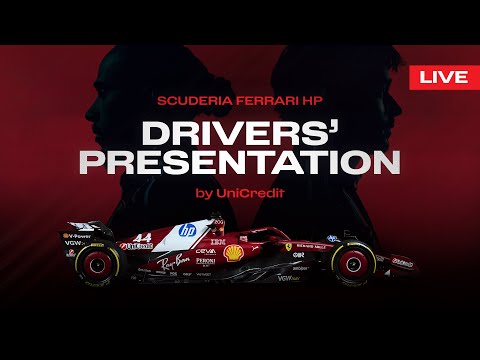
When Ferrari puts on an event, it’s never halfway. But this time, the Scuderia took things up a notch, turning Milan into the Formula 1 capital for a day. In front of 20,000 tifosi, Lewis Hamilton and Charles Leclerc kicked off the upcoming season with a spectacular show in the heart of the city. Between donuts, pit stops, fan interactions, and title ambitions, the event left a lasting impression. The energy was electric, and if Ferrari wanted to fire up the team before the first Grand Prix in Australia, mission accomplished!

Read more:

A classic Italian show to celebrate the Scuderia Ferrari’s new era

At dawn, the most dedicated tifosi had already gathered at Piazza Castello, hoping to catch a glimpse of their drivers. Ferrari didn’t disappoint: Leclerc and Hamilton arrived in style, each behind the wheel of an F1 car. The Monegasque driver took the 2019 SF90, while his British teammate drove a 2021 SF21. With roaring accelerations and precise burns, the two put on a thrilling performance for the crowd. But the show didn’t stop there. In addition to the on-track spectacle, Ferrari’s mechanics delivered lightning-fast pit stops, proving the Scuderia is ready for battle. After their demonstration, Leclerc and Hamilton paraded through Milan in a Ferrari SF90 Spider, waving to a crowd that was completely electrified.

Hamilton’s first taste of Ferrari madness

For Lewis Hamilton, this was his first official moment with the tifosi, and it didn’t take long for him to understand why Ferrari is unique in F1. “Wearing red and feeling this passion is something special,” he admitted on stage. Before a fired-up audience, he even attempted a few words in Italian, before dropping a statement that sent the crowd into a frenzy: “We have everything we need to fight for the title this season.” The seven-time world champion didn’t hide his excitement about starting this new chapter with Ferrari. “There’s something incredible about this team—the history, the legends who have raced here… I can’t wait to fight under these colors.” His words triggered a massive ovation from the crowd.

Leclerc & Hamilton Milan 2025 - © Scuderia Ferrari
Leclerc & Hamilton Milan 2025 – © Scuderia Ferrari

Leclerc and Ferrari ready to give it their all

Charles Leclerc, already used to the passionate Italian fans, was once again amazed by the atmosphere. “Milan has once again set the bar high,” he said. “Feeling all this love gives us incredible motivation. We’ve worked harder than ever this winter, and we really want to achieve great results this year.” Often referred to as “il predestinato“—the chosen one to bring Ferrari back to the top—Leclerc has grown significantly over the past few seasons. More mature, sharper than ever, he seems ready to fight for the world championship. But this year, he won’t carry the weight of expectations alone: with Hamilton by his side, Ferrari boasts one of the most formidable driver lineups in F1 history.

Lewis Hamilton & Charles Leclerc - © Scuderia Ferrari
Lewis Hamilton & Charles Leclerc – © Scuderia Ferrari

A new era begins for the Scuderia

If the tifosi’s excitement is at an all-time high, it’s not just because of Hamilton’s arrival. Over the past year, Ferrari has looked stronger than ever under Frédéric Vasseur’s leadership. After finishing second in the 2024 Constructors’ Championship, the team appears to have finally found the stability needed to challenge for the title. With a refreshed identity, a confident team, and promising preseason performance, 2025 is shaping up to be one of the most anticipated seasons in years. And if Ferrari delivers on its potential on track, we could be in for a legendary year.

This article covers Ferrari’s spectacular Milan event, the team’s growing momentum, Lewis Hamilton’s impact on the Scuderia, and the rising hopes of the tifosi ahead of the new season.

Images: © Scuderia Ferrari